Bedroom Design: What Actually Drives the Price of Solid Wood Furniture in Sing
I spent last month at a Tampines HDB flat where a 3-seater sofa was wedged diagonally across a 1.1-metre-wide corridor because the lift at Block 137A only opens to 0.9 metres. The buyer had spent SGD 4,200 on it. Eighteen months later the armrest had cracked along the grain. The frame, he was told by the showroom, was "solid wood" — which, on closer inspection, turned out to be a 12 mm plywood shell over a rubberwood skeleton. He learned the price lesson the expensive way. So this question matters more than most Singapore shoppers realise: what actually drives the price of solid wood furniture, and how do you tell whether the wood is paying for itself?
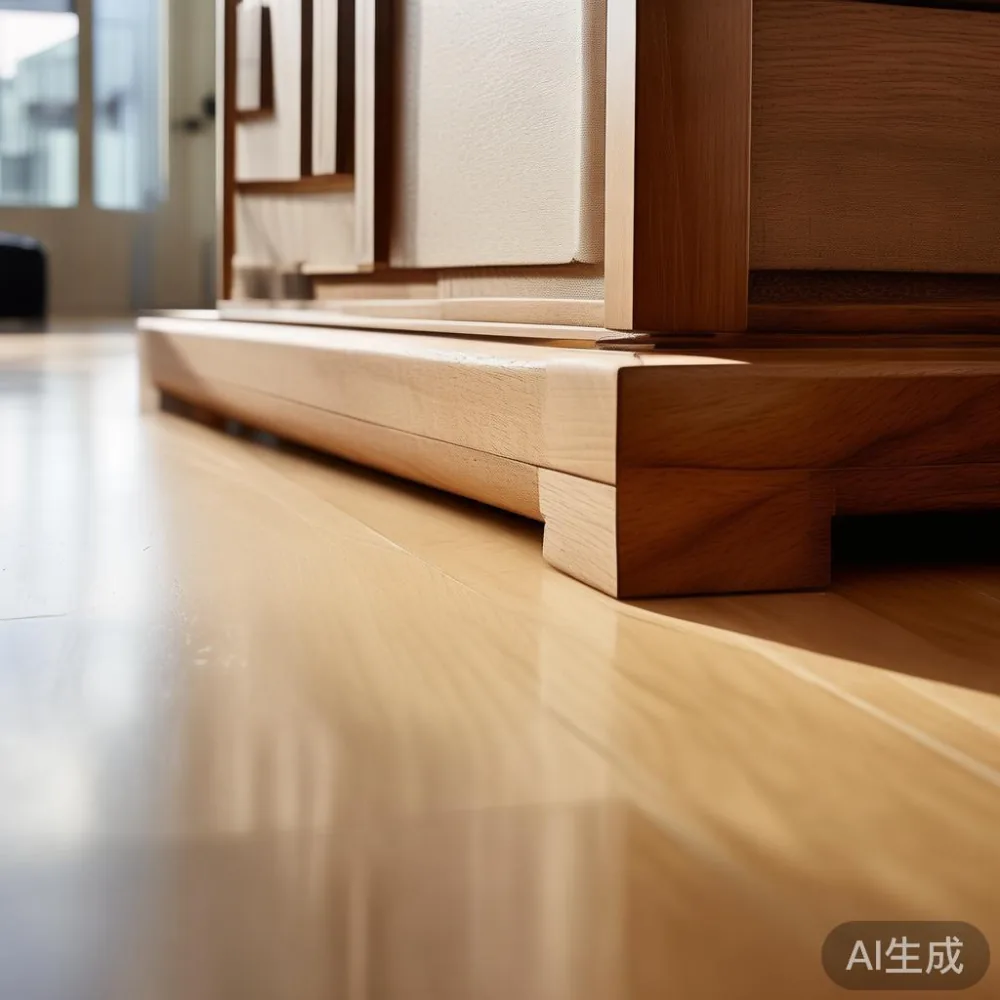
Why does solid wood cost more than engineered wood in the first place?
The honest answer is moisture. A solid oak board shrinks and swells with every monsoon season, and a maker who respects that has to kiln-dry it to between 6 and 10 percent moisture content, then acclimatise it in a Foshan warehouse for 30 to 60 days before cutting. Plywood, by contrast, is already dimensionally stable because its veneers are glued cross-grain. That glue line is also why plywood costs roughly 40 to 60 percent less per cubic metre in Singapore showrooms. The premium you pay for a solid wood bed frame, a solid wood sofa, or a dining table in genuine oak, ash, or walnut is paying for time: drying time, conditioning time, and the inevitable 8 to 15 percent material loss from boards that warp during acclimatisation and have to be culled.
Wood species matters too. In Singaporean retail, you commonly see rubberwood (SGD 80 to 180 per bed frame in wholesale cost), ash (SGD 220 to 380), white oak (SGD 280 to 460), and North American black walnut (SGD 480 to 720). For a queen-size bed frame made in solid black walnut, the raw timber alone is roughly SGD 900 to 1,400 before labour, hardware, finishing, packaging, and the GST that 10% adds at customs and 9% at the till.

How do I choose a standing desk for a HDB living room?
Pick a frame whose stated weight capacity is at least 1.5 times the weight of the tabletop you intend to buy, because HDB floor load limits cap live load at 1.5 kN per square metre, and a solid wood top of 120 cm by 60 cm in 4 cm oak already weighs 28 to 32 kg before a monitor arm or a 27-inch display. The single most useful filter is the cross-section of the steel column — anything under 70 mm diameter will wobble at full extension (around 110 to 120 cm). For lift access in a typical Bedok or Sengkang block, the motor housing plus a folded frame must clear a 0.9 m door, which rules out most L-shape standing desks unless they ship flat-packed in two cartons. If your block has a service lift that takes 1.6 m of depth, a single 150 cm solid oak tabletop will fit unassembled, and you save the SGD 80 to 150 corridor-fee that some movers charge for non-freightable pieces.
Look for dual motors rather than single motors — the failure rate on single-motor units climbs sharply after 18 months of daily sit-stand cycling — and check that the controller remembers at least four presets, because you will set one for sitting at 72 cm, one for standing at 108 cm, one for a bar-height stool on weekends, and one for a child's homework hour. A frame that ticks those boxes sits around SGD 550 to 950 for the mechanism alone; add a 4 cm thick solid oak top at SGD 320 to 520, and you are looking at SGD 870 to 1,470 for the complete standing desk — heavier than the 18 kg MDF equivalent, but quiet at the height of a midnight work session and free of the edge-chip problem that kills laminated tops within two years.
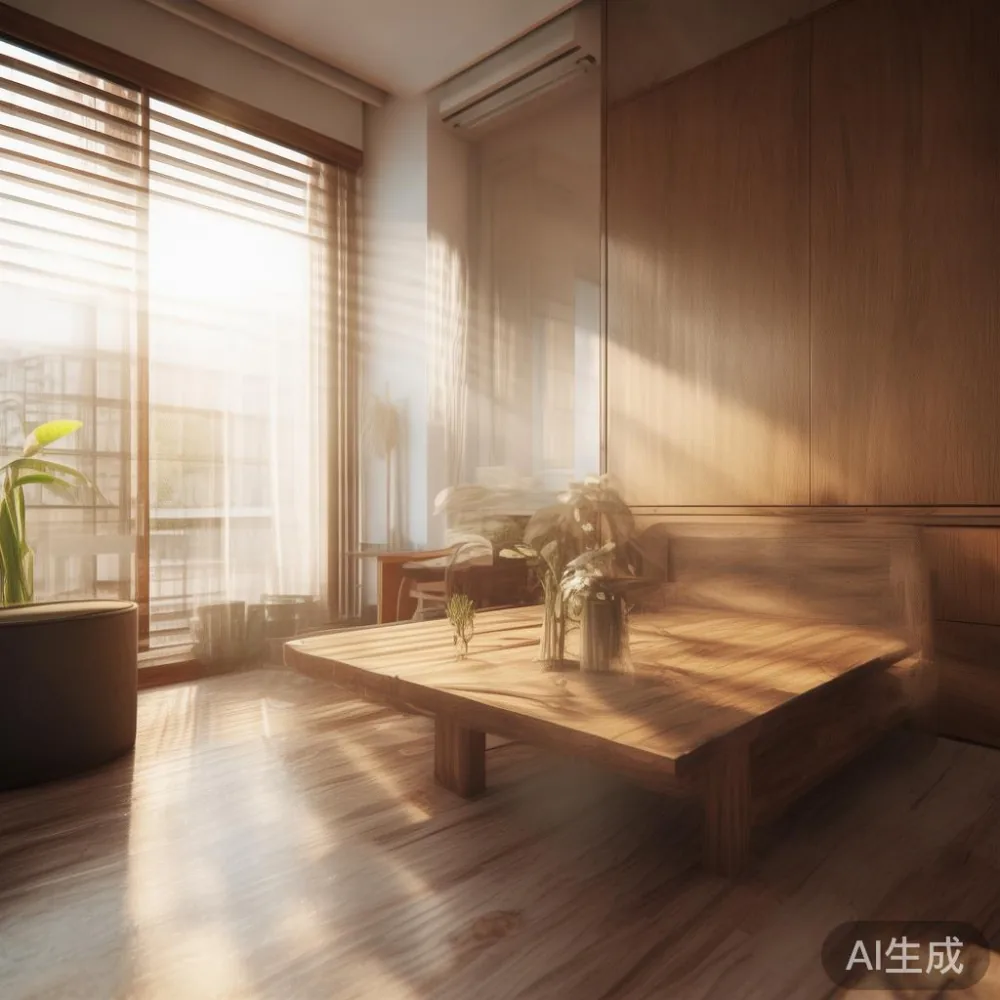
What you are really paying for in a solid wood bed frame
Most queen-size bed frames sold in Singapore between SGD 800 and 2,500 look identical on a product page, which is the single biggest reason shoppers feel confused. Open every spec sheet and check four numbers: the thickness of the side rails (real solid wood usually means 2.5 to 4 cm), the slat spacing (gaps above 7 cm will let a pocket-sprung mattress sag between slats within two years), the joinery (mortise and tenon, or dowel, or just screws), and the centre support rail (any queen frame over 160 cm wide without a centre leg will develop a sway within the warranty window).
A bed frame built from 3 cm white oak, with mortise-and-tenon joinery, kiln-dried to 8 percent moisture, and finished with three coats of hardwax oil will typically retail between SGD 1,800 and 3,200 in Singapore. A bed frame with the same dimensions but in 2 cm rubberwood with dowel joinery and a lacquer finish sits at SGD 800 to 1,400. The USD/SGD math is straightforward once you remember a single hardwood board of 3 cm by 18 cm by 2 m costs the maker SGD 65 to 110 — and a queen frame needs 6 to 9 such boards just for the visible structure, before drawer runners (SGD 18 to 45 per pair) and a 200 kg-rated hydraulic gas piston if you want lift-up storage.
One detail shoppers in Punggol and Yishun often miss: HDB master bedroom doors are typically 0.9 m wide and 2.1 m tall. A bed frame that ships assembled in a 2.2 m box will not enter the flat. Always check carton dimensions before paying.
Why a solid wood sofa is not the same category as a solid wood dining table
The stress profile is completely different. A dining table takes vertical load (plates, elbows, the occasional standing child) on a flat plane. A solid wood sofa carries torsion, side-load, and a 90 to 120 kg occupant who shifts weight every time they reach for the remote. That is why a sofa frame should be built from hardwood with a Janka hardness rating above 1,000 lbf — oak (1,290), beech (1,300), white ash (1,320), walnut (1,010) all qualify; rubberwood (960) is borderline, and pine at 420 lbf is a recipe for cracked arms within three years. If you are looking at a Nordic solid wood sofa bed, the convertible mechanism adds another SGD 220 to 480 of cost and another 18 to 26 kg of weight, which is why lift access and corridor width become the deciding factor at delivery, not at the showroom.
Upholstery makes up the bulk of a sofa price, which is why two sofas with identical hardwood frames can retail at SGD 2,400 and SGD 5,800. A 3-seater needs 11 to 14 metres of fabric at retail cost of SGD 18 to 65 per metre; full-grain leather at SGD 65 to 140 per square foot pushes a 3-seater leather sofa into the SGD 4,500 to 8,000 bracket even before the frame cost is counted. In the post-modern light luxury category — think of brands working with French light luxury proportions and American light luxury comfort cues — the cost driver is usually the leather grade and the down-blend fill (a 70/30 down-feather wrap over high-resilience foam costs SGD 280 to 460 more per sofa than a polyfill-only seat).
Wardrobes and nightstands: where the hidden costs hide
A 2-metre-tall, 3-door wardrobe in solid wood needs roughly 3.2 to 4.0 square metres of finished surface, plus 6 to 10 linear metres of edge banding that has to be hand-sanded on a curved profile. In Singapore, a custom wardrobe in solid ash or white oak starts at SGD 2,800 and climbs past SGD 7,000 once you add soft-close hinges (SGD 4 to 9 each, with 12 to 18 per wardrobe), drawer runners at SGD 18 to 45 per pair, and interior fittings such as pull-out trouser rails, jewellery trays, and LED strip lighting that adds SGD 220 to 480 per wardrobe.
Nightstands look cheap by comparison, but the same kiln-dry and acclimatisation cost is amortised over a tiny volume. That is why a solid walnut nightstand in Singapore retails at SGD 480 to 950 — sometimes higher than a comparable piece of the same wood in a dining chair, simply because the maker is spreading fixed costs across fewer boards. A marble table, by contrast, draws its price from quarry yield: Calacatta slabs with veining density high enough to book-match across a tabletop waste 50 to 65 percent of the slab, which is why a 1.4 m Calacatta marble dining table starts around SGD 3,800 and climbs past SGD 12,000 for statuario or blue de Savoie.
For HDB bedrooms, also factor the wardrobe's footprint against your floor area. A standard 3-door wardrobe at 1.8 m wide by 0.6 m deep occupies 1.08 square metres, which in a 10-square-metre HDB bedroom is more than 10 percent of the floor. That math, more than any showroom discount, decides whether a 3-door or a 2-door layout actually works for your room design and your daily routine.
How MIDHILL thinks about pricing — and what to ask before you pay
I visited the MIDHILL showroom in Foshan last year with a colleague who was fitting out a Punggol condo. What stood out was not the price tags but the questions the sales staff asked before quoting. They wanted the room dimensions, the corridor and lift measurements of the specific HDB block, the intended mattress size, and whether the buyer preferred hardwax oil (matte, repairable) or lacquer (glossier, harder to refinish). That kind of intake is what separates a 10-year structural warranty from a 12-month one, and it is why a MIDHILL bed frame or wardrobe in solid white oak is priced the way it is, rather than at the SGD 600 entry-point you see for veneered flat-packs.
Before you pay any supplier, ask for four things in writing: the wood species and its country of origin, the moisture content at the time of machining, the joinery method (with a photo), and the finish type with the number of coats. If the salesperson cannot answer those four questions, the price is probably being driven by something other than the wood itself. A genuine solid wood bed frame from a maker who kiln-dries and acclimatises properly will also typically offer a structural warranty of 8 to 10 years, lifetime refinishing on the wood surface, and shipping terms that include free delivery above a stated order value — common thresholds sit at USD 350 to 500, with door-to-door transit of 18 to 35 days from Foshan to Singapore including sea freight, customs clearance, and last-mile delivery to your HDB door.
One more number worth memorising: the cost difference between solid wood and the best engineered alternative, expressed as a percentage, usually lands between 35 and 80 percent for the same piece. Anything below that band and the "solid wood" label is doing a lot of quiet work. Anything above, and you are paying for design, finish, or provenance rather than the timber itself. Knowing which of those three you actually want is the difference between a bedroom that ages well and one that needs replacing in five years.