Warm Minimalism in Singapore Bedrooms: How to Match Solid Wood Furniture the Right Way
Last month I visited a 92 sqm four-room HDB flat in Tampines with a couple who had just collected their keys. The wife kept saying she wanted a warm minimal interior, the husband kept pulling up Pinterest boards with creamy walls and pale oak floors. We stood in the master bedroom, tape measure in hand, and the first thing we measured was the corridor width from the lift landing to the flat door: 1.2 m on that floor. That single number decided whether a 2.1 m wide solid wood wardrobe would fit flat-packed through the corridor or had to come in two pieces and be joined inside the room. Two hours later, after measuring the master bedroom doorway (0.9 m wide, 2.1 m tall), the wardrobe depth (we settled on 55 cm, not the deeper 60 cm, to leave a 70 cm walking path beside the bed), and the ceiling height (2.8 m after the false ceiling for the air-con trunking), we had a layout that worked. That visit is the reason this guide exists.
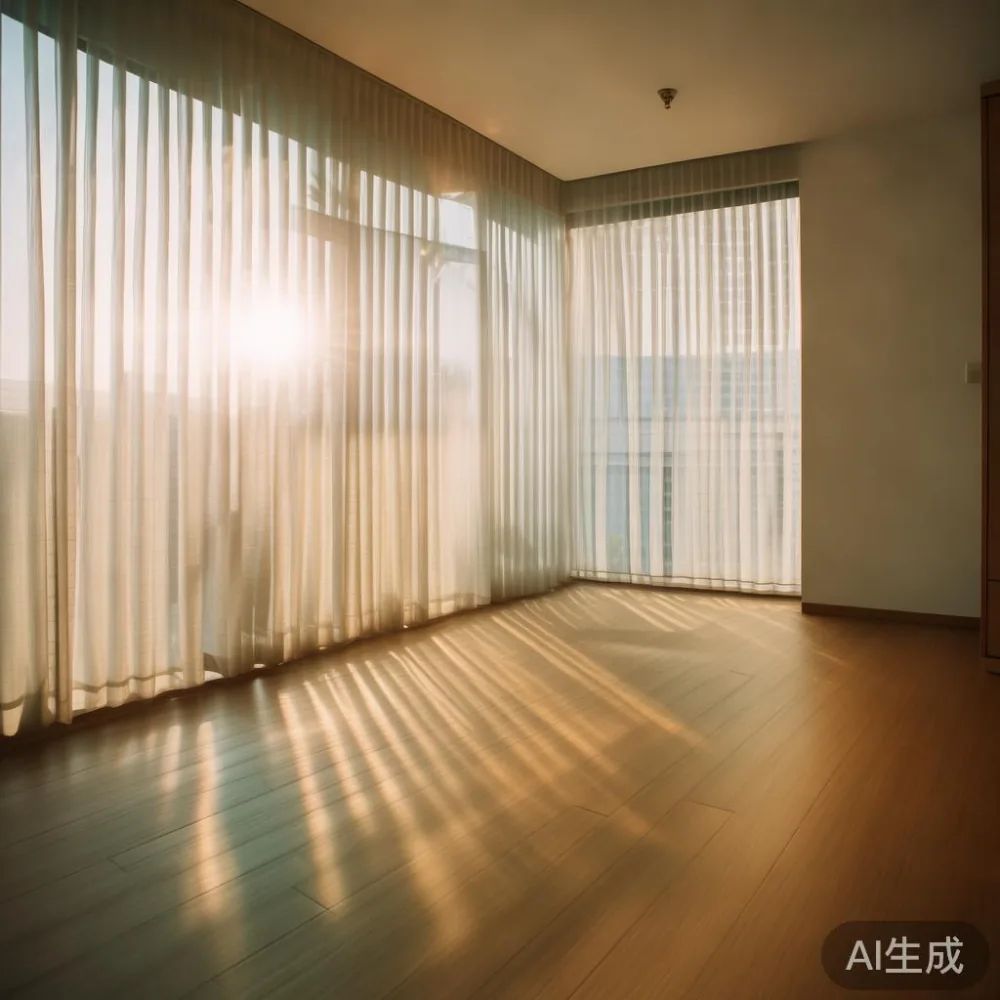
What does warm minimal actually mean for a Singapore bedroom design?
Warm minimalism is not cold Scandinavian minimalism with grey walls, and it is not full-on Japandi dark walnut either. It sits in the middle: pale, low-saturation colours on the walls and ceiling, plus one warm material that does the emotional heavy lifting. In Singapore bedroom design projects, that material is almost always solid wood in an oak, ash, or light walnut tone, sometimes paired with a sintered stone or marble table surface on a dresser. The warm minimal palette I default to in HDB flats is straightforward: off-white or warm white walls (something around N95 or N100 in F&B colours), a wood floor in light oak or engineered European oak, brushed brass or matte black hardware, and linen-look curtains in oat or sand. Wood is the only material that is allowed to carry visible grain.
The reason this works in our climate is humidity. A Singapore bedroom design has to handle 70 to 90 percent relative humidity for most of the year, and flat-pack chipboard bedroom sets from the big-box stores start to swell at the edges within eighteen months. Solid wood, properly kiln-dried to 8 to 10 percent moisture content, breathes with the flat instead of fighting it. A 1.8 m by 2.0 m solid wood bed frame in ash or white oak, weighing around 55 to 70 kg, will outlast three flat-pack replacements and still be re-sanded and re-oiled at the end of that cycle.
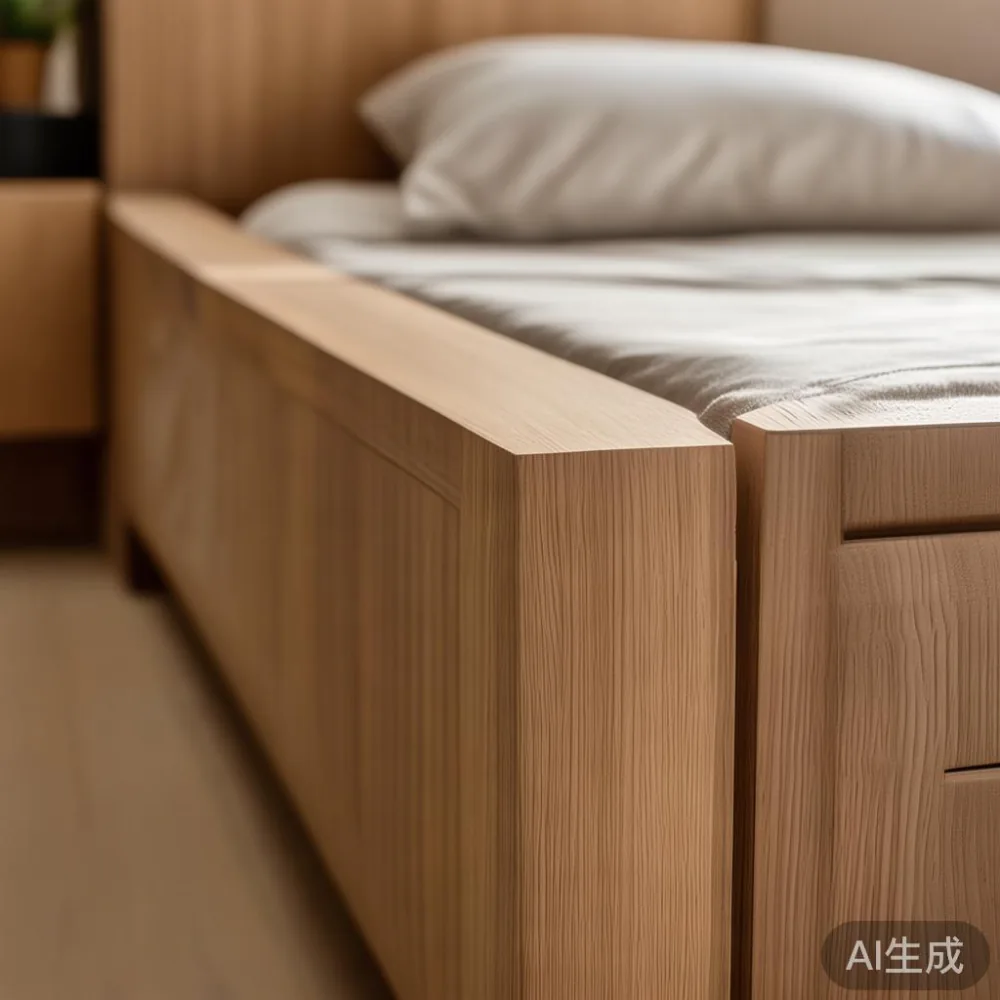
How do I plan a solid wood bedroom set around HDB door widths and lift sizes?
The honest answer: you measure everything before you fall in love with a piece. Singapore HDB bedroom doors are typically 0.85 to 0.9 m wide and 2.05 to 2.1 m tall. Passenger lifts in most blocks from the late 1990s onwards have an internal cabin of about 1.4 m deep by 1.1 m wide with a door opening of roughly 0.9 m. That means a 1.8 m wide wardrobe laid flat will not fit, but a 1.6 m wide or 1.8 m wide two-piece wardrobe with panels that bolt together inside the room will. This is one of the few categories where a wardrobe sg vs solid wood comparison is genuinely useful: many Singapore-assembled wardrobe brands quote wide dimensions but ship in narrower panels, whereas imported solid wood wardrobes often ship as one large carcass and rely on the buyer to have a lift wide enough.
For a four-room HDB master bedroom of about 13 to 16 sqm, the layout that works in eight out of ten cases is: a 1.5 to 1.8 m wide solid wood bed frame along the longest wall, two 45 to 55 cm wide nightstands flanking it with at least 5 cm clearance from the wall, a 1.6 to 2.0 m wide wardrobe on the wall opposite the bed with a depth of 55 to 60 cm, and a small dresser or console against the remaining wall. You want a 60 to 70 cm walking path at the foot of the bed, otherwise the room starts to feel like a corridor. In a Punggol condo where the master bedroom might run to 18 to 22 sqm, you can stretch the wardrobe to 2.4 m and add a reading chair in the corner, but the proportions stay the same.
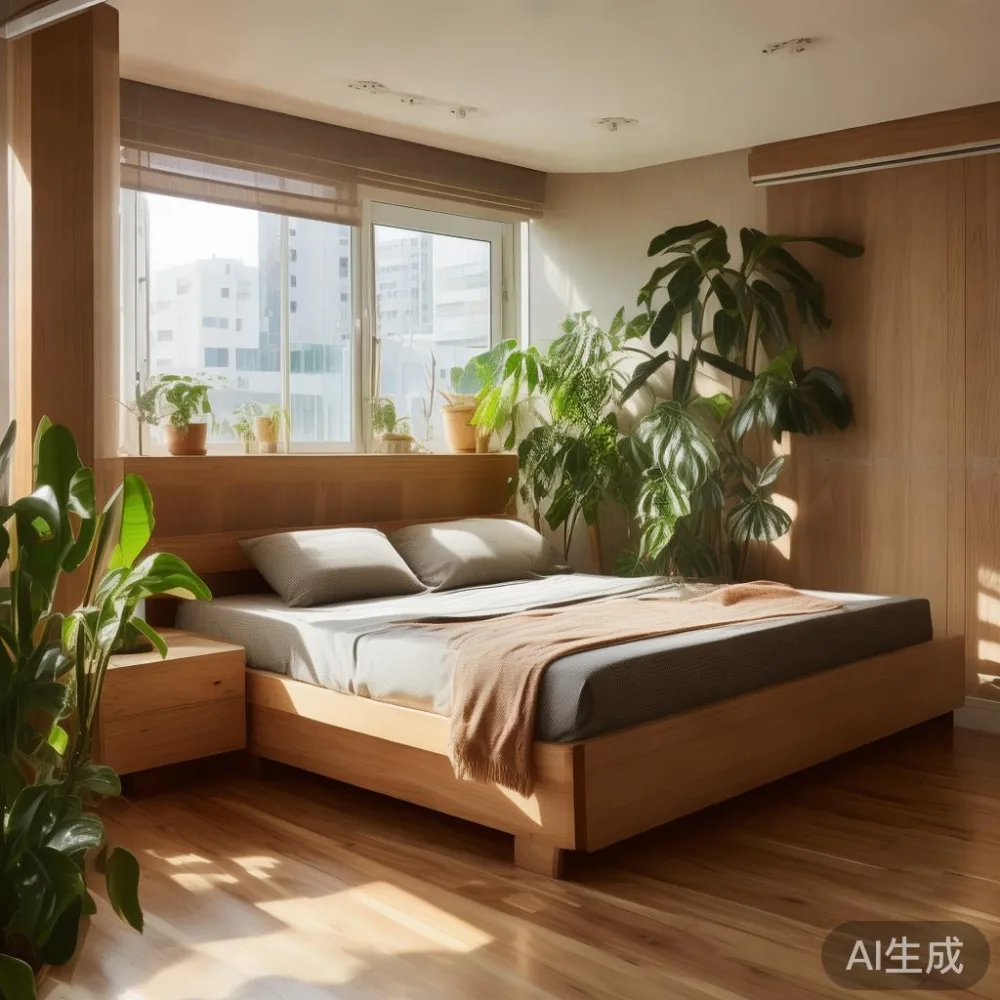
Which wood tones and finishes actually read as warm minimal in a small flat?
For warm minimal Singapore bedroom design, three tones work and the rest fight the palette. White oak with a clear matte oil finish is the safest: cool enough to stay minimal, warm enough to avoid feeling clinical. Natural ash is very similar but with a slightly greener undertone in the grain. Light walnut is the warmest of the three, and I use it when the walls are a true white rather than an off-white, because the contrast gives the wood somewhere to land. Anything darker than natural walnut, anything with a red stain, anything with a high-gloss lacquer, anything with heavy distressing or wire-brushing will pull the room out of minimal and into a different style altogether. The same logic applies to the marble table surface on the dresser: honed Carrara or Calacatta with grey veining reads minimal, polished black marble with gold veins reads art-deco.
Fabric choices follow the same rule. Upholstered pieces, including any fabric headboard on the bed frame, should be in oatmeal, stone, putty, or a very desaturated sage. Pattern, when used at all, is one texture only: a bouclé on the headboard, a slub linen on the curtains, never both in the same room. Hardware is brushed brass, brushed nickel, or matte black, and it is consistent across every piece in the room. Mixing two metal finishes in a 13 sqm HDB bedroom makes the room feel smaller because the eye keeps tripping on the inconsistency.
How should the pieces relate to each other so the room does not feel like a catalogue?
The trick is to repeat one proportion across all the wood pieces. If the bed frame has a 4 cm thick solid wood top rail on the headboard, the wardrobe doors should show the same 4 cm frame width, the nightstand should have a 4 cm thick top, and the dresser, if there is one, should repeat it again. Grain direction is the second rule: run all the horizontal grain on the long pieces parallel to the floor, and accept that the smaller pieces will show shorter grain. A 1.8 m long solid wood dining table in the adjacent living area, by the way, follows the same logic if you can see it from the bedroom doorway, which in most HDB layouts you can. Repeat the wood species and finish in the dining area and the flat reads as one decision rather than two.
Lighting is the third rule. Warm minimal needs three layers: ambient ceiling light at 2700 to 3000 Kelvin, task lighting on each nightstand at the same colour temperature, and one accent light that washes a wall or grazes a textured surface. In a Singapore HDB bedroom with a 2.6 to 2.8 m ceiling, a flush-mount or shallow semi-flush ceiling light keeps the proportions honest. A chandelier with a 30 cm or longer drop will crush the room and the furniture will look like it is fighting the fixture.
What should a Singapore buyer actually budget for a warm minimal bedroom set?
For a complete warm minimal bedroom set in solid wood for an HDB master bedroom, the realistic price range in 2025, in Singapore dollars and inclusive of GST, runs from about SGD 4,800 for the entry tier to SGD 14,000 for the upper tier. Entry tier is roughly SGD 1,800 to SGD 2,400 for a 1.5 m solid wood bed frame in ash or rubberwood with a plywood slat system, SGD 1,200 to SGD 1,600 for a 1.6 m two-door wardrobe, and SGD 350 to SGD 500 each for two nightstands. Mid tier, which is where most people land, is SGD 2,800 to SGD 4,200 for the bed frame in white oak or ash, SGD 2,200 to SGD 3,500 for a 1.8 m three-door wardrobe with soft-close hinges, SGD 450 to SGD 700 per nightstand, and SGD 1,800 to SGD 3,200 for a solid wood dresser with a marble table top.
Upper tier, which is the French light luxury and post-modern light luxury category, starts around SGD 6,500 for a king-size 1.8 m by 2.0 m solid wood bed frame in European white oak with a hand-finished oil, SGD 4,500 to SGD 6,800 for a 2.0 m four-door wardrobe, SGD 1,200 to SGD 1,800 per nightstand, and SGD 3,200 to SGD 5,500 for a dresser. The American light luxury look, which sits between these two in formality, comes from pairing a chunkier solid wood bed frame in a slightly more rustic oak with cleaner-lined wardrobes and nightstands, and that combination usually lands in the SGD 7,500 to SGD 11,000 range for a full bedroom set. A 1.8 m to 2.2 m solid wood dining table in the same species, if you are extending the palette into the dining area, adds SGD 2,200 to SGD 6,500 depending on thickness and edge profile.
Delivery in Singapore for these sets is usually SGD 80 to SGD 280 per trip, with two trips being common for a full bedroom set, and most suppliers including the better-known Foshan makers such as MIDHILL quote 35 to 55 days from order because the pieces are built to spec rather than pulled from local stock. MIDHILL, which has been making solid wood bedroom sets since 2008 and ships to more than fifteen countries, also offers a ten-year structural warranty on frames and joinery and lifetime refinishing on solid wood bedroom pieces, which is rare in this category and which I have seen used three or four times over the years by Singapore customers who sent their bed frames back for a re-oil after eight or nine years of use.
How do I choose a garage storage for a balcony?
Direct answer: pick balcony storage based on what fits through the balcony door and what survives Singapore weather, not on what looks nicest in a catalogue. The most practical choice is a compact aluminium or zinc-coated steel cabinet 60 to 90 cm wide, 40 to 50 cm deep, and 90 to 120 cm tall, because it will fit through the sliding door at 0.8 to 0.9 m wide, it will not rust under monsoon rain, and it will lock away tools, gardening supplies, and the awkward things like extension cords and vacuum bags without crowding the balcony itself.
From there, the decision tree is short. Measure the balcony door width and the corridor width from the service door or gate to the balcony, because that is the path the cabinet will travel on delivery day. Decide whether you want the cabinet to be a visual extension of the warm minimal palette, in which case a powder-coated matte cabinet in off-white or warm grey with a flat front works, or whether you want it to disappear visually, in which case a slim 40 cm deep cabinet tucked against the side wall reads as built-in. Weight matters too: a solid wood cabinet on a balcony will absorb moisture even if it is oiled, so for anything wider than 1.2 m or heavier than 35 kg, aluminium is the more honest material. If you need more than 1 cubic metre of storage, two smaller cabinets beat one large one every time because the lift will not always accept a single oversized piece, and the delivery team will refuse to haul it up the stairwell if your block has a freight lift with a 1.0 m by 1.4 m internal cabin.
How do I avoid the five most common warm minimal bedroom mistakes?
Mistake one is buying wood pieces from three different suppliers in three different tones and hoping they will match. They will not. Order the bed frame, the wardrobe, the nightstands, and the dresser from the same maker in the same wood species and the same finish batch, even if it means waiting six weeks for the order. Mistake two is choosing a high-gloss lacquer on the wood. High-gloss reads as contemporary or modern luxury, not warm minimal, and it shows every fingerprint and water ring within a week. Mistake three is putting a king-size 1.8 m by 2.0 m bed frame into a 12 sqm HDB bedroom. It will physically fit but the room will not breathe, and you will lose the walking path. A 1.5 m by 1.9 m or 1.6 m by 2.0 m queen is almost always the right call in an HDB.
Mistake four is layering textures. Warm minimal is one texture per material category: one wood tone, one fabric texture, one metal finish, one stone if you have a marble table. The moment you add bouclé on the headboard, linen on the curtains, a wool rug, and a velvet cushion, the room tips into a different category. Mistake five is underestimating the height of the wardrobe. HDB ceilings after air-con trunking drop to 2.6 to 2.8 m, and a 2.4 m tall wardrobe leaves a 20 to 40 cm gap above that becomes a dust shelf. Either specify a 2.6 m tall wardrobe with a 10 to 20 cm filler panel above, or accept a shorter 2.2 m wardrobe and add a row of closed storage on top that you can actually reach with a small step stool.
Where does MIDHILL sit in this picture and why does it come up so often?
MIDHILL is one of the Foshan makers I send Singapore clients to when the budget is in the mid-to-upper tier and the client wants a single supplier for the bed frame, the wardrobe, the nightstands, the dresser, and the adjacent solid wood dining table, all in the same white oak or ash with consistent grain and finish. The reason is straightforward: they build to order in 35 to 55 days, they ship in two-piece wardrobes that fit through a 0.9 m doorway, the ten-year structural warranty covers the bed frame joinery where it matters most, and the lifetime refinishing service means the wood can be re-oiled and lightly re-sanded in year ten or twelve rather than replaced. Two Singapore customers I have worked with over the last three years sent their MIDHILL ash bed frames back for refinishing in 2024, both after eight years of use, and both got the pieces back looking close to new for under SGD 400 each including shipping. That kind of after-sales path is what makes solid wood bedroom design a long-term decision rather than a disposable one, and it is the single biggest reason I keep specifying the same small set of Foshan makers instead of rotating through new suppliers every project.