5-Year Cost Comparison: Veneer vs Solid Wood Bedroom Furniture for Singapore HDB Homes
Last month I helped a friend in Tampines North furnish his new 4-room BTO, and the conversation kept circling back to one question: should he save S$1,200 on a bedroom set wrapped in wood veneer, or stretch the budget for solid wood furniture that promises to last decades? He had measured his corridor (about 1.2 m wide), confirmed his service lift could handle a 2.4 m wardrobe panel, and was ready to commit. The sticker shock on solid wood was real, but what he really needed was a 5-year cost comparison, not a price tag. That is what this article delivers, with Singapore-specific numbers, HDB constraints, and a clear picture of what each material costs you by 2030.
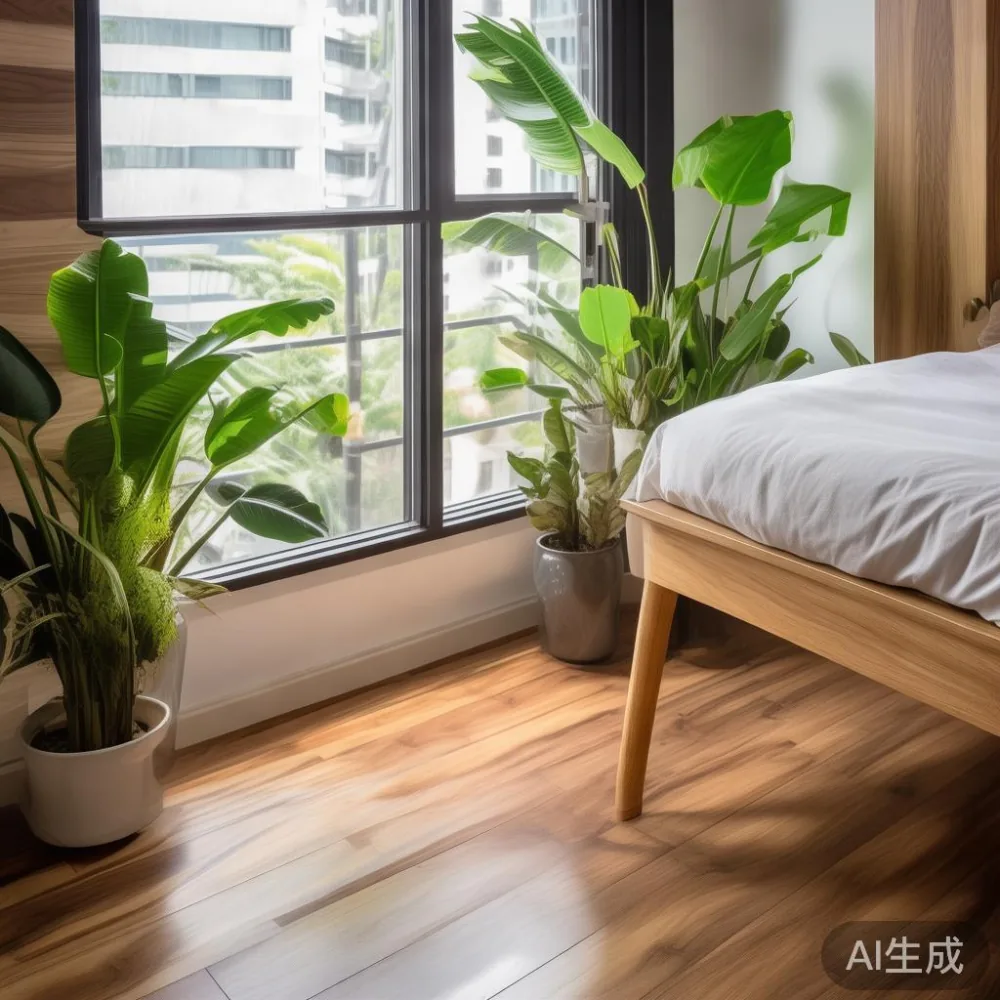
Veneer furniture is everywhere in Singapore bedroom showrooms, from Jurong East to Tampines Mall, and the prices look friendly: a queen bed frame for S$699, a 6-door wardrobe for S$1,599, a 3-drawer nightstand for S$249. Solid wood pieces, particularly those built in light luxury American style or French light luxury aesthetics, can sit at S$1,899 for a bed, S$3,499 for a wardrobe, and S$449 for a nightstand, before GST. Multiply by 9% GST in 2026, and the gap is roughly S$2,400 across a basic bedroom set. The question is whether that S$2,400 saves you money, costs you money, or simply breaks even over five years. Below I break down the math using a realistic Punggol condo and Bedok HDB scenario.
How much does veneer bedroom furniture really cost over 5 years in Singapore?
For a standard 4-room HDB bedroom (about 12 sqm floor area, ceiling height 2.8 m), a typical veneer set purchased locally looks like this: bed frame S$699, 6-door wardrobe S$1,599, two nightstands at S$249 each (S$498 total), giving a pre-GST subtotal of S$2,796. Add 9% GST and the cash price becomes roughly S$3,048. Delivery to a Bedok HDB on the 12th floor costs about S$80 because the lift interior is only 1.1 m deep, so the wardrobe must ship flat-packed and be assembled in-room, adding another S$120 in carpentry labour if you outsource it.
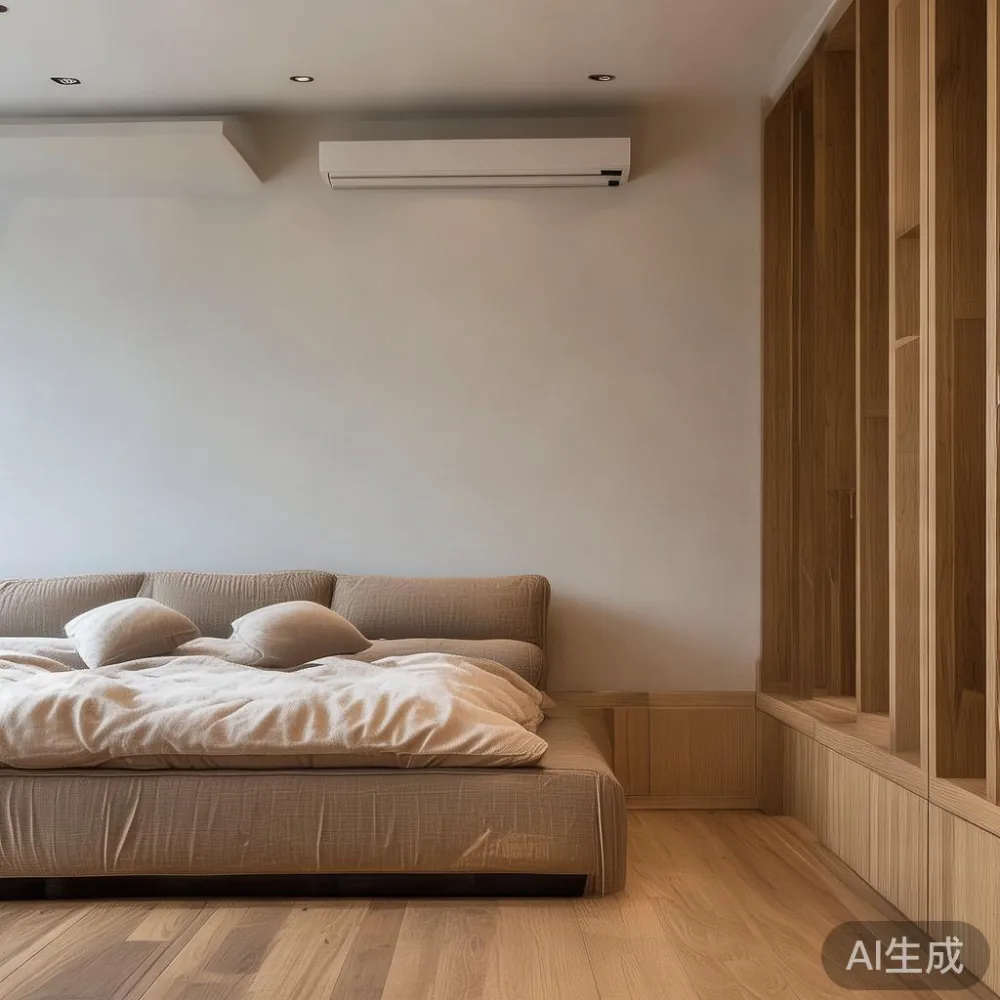
Year 1: the pieces look fresh. Year 2: humidity in Singapore averages 78% RH year-round, and veneer edges along the wardrobe begin to lift, typically at the side panels where the MDF core meets the HPL laminate. A local repair shop quotes S$180 to re-glue and touch up two panels. Year 3: the bed frame slats start to bow because the inner rails are LVL (laminated veneer lumber), not solid timber. Replacement slats cost S$120. Year 4: one nightstand drawer face delaminates; replacement part is no longer stocked, so you buy a matching new nightstand for S$249 to keep the pair consistent. Year 5: you are tired of the visual wear and the wardrobe doors stick in the November rainy season. You replace the entire set.
Cumulative 5-year spend on veneer: S$3,048 initial + S$180 + S$120 + S$249 + opportunity cost of one weekend of your life troubleshooting humidity. Realistic total, in pure dollars: S$3,597. Add in the emotional cost of replacing furniture twice in five years and the figure climbs quietly.
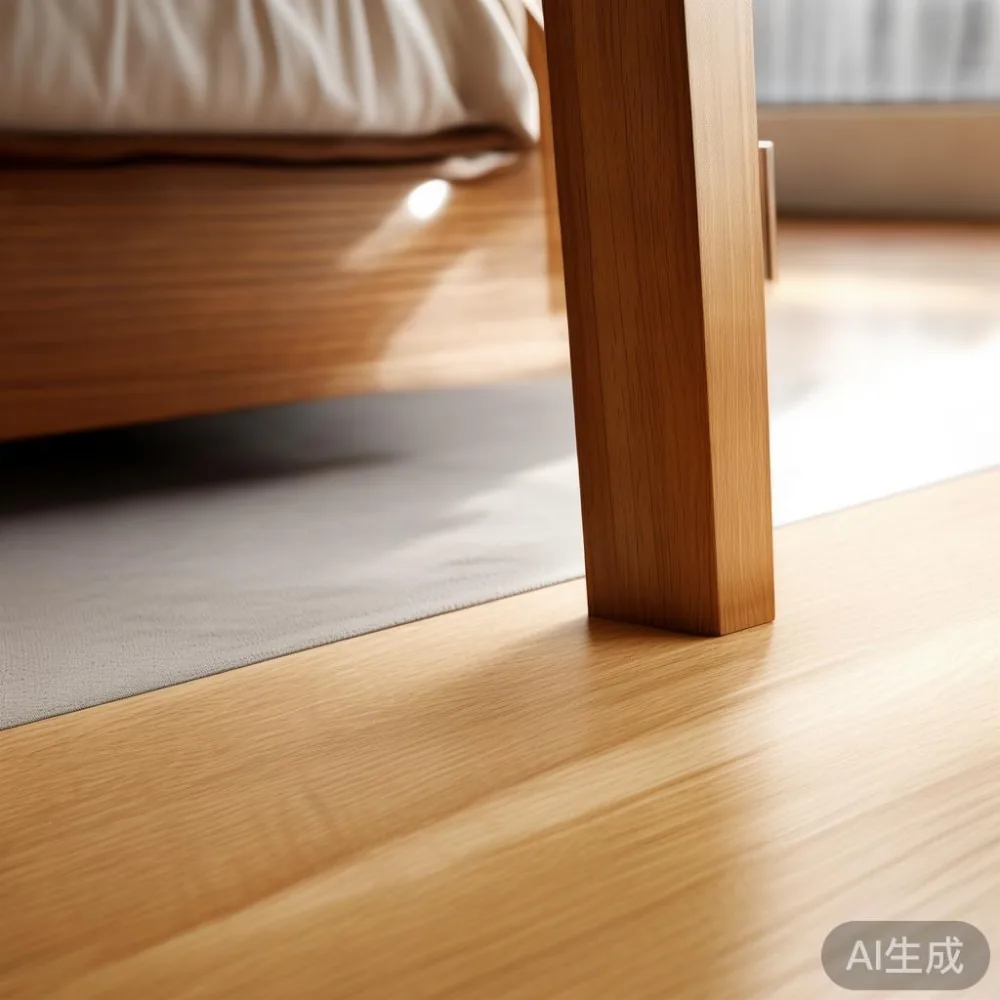
How much does solid wood bedroom furniture cost over 5 years in Singapore?
The same HDB bedroom, dressed in solid wood furniture (FAS-grade ash or walnut, kiln-dried to 10-12% moisture content), looks different on paper but tells a different story over time. A solid wood bed frame at S$1,899, a 3-door wardrobe at S$3,499, two solid wood nightstands at S$449 each (S$898 total). Subtotal before GST: S$6,296. With 9% GST: S$6,863. Delivery to a Punggol condo with a 1.3 m lift interior: S$90, no assembly required because the units ship fully assembled.
Year 1: the wood takes on a slightly deeper tone, normal oxidation. Year 2: a small water ring appears on the nightstand from a glass without a coaster. You sand it with 220-grit paper and rub in a beeswax stick, total cost S$8, time 20 minutes. Year 3: nothing. The wardrobe doors, hung on European soft-close hinges rated for 100,000 cycles, still glide. Year 4: you decide to refresh the bedroom design by staining the bed frame one shade darker. A local refinisher charges S$220, or you skip the cost because the supplier offers lifetime refinishing on structural components. Year 5: the furniture is structurally sound, cosmetically aged in a way many homeowners describe as character, and resale value on Carousell sits at roughly 45-55% of original price for solid wood bedroom sets.
Cumulative 5-year spend on solid wood: S$6,863 initial + S$228 in maintenance. Realistic total: S$7,091. But you still own a bedroom set worth approximately S$3,300 on the secondhand market, so net 5-year cost is closer to S$3,791. That puts the solid wood path within S$200 of the veneer path, and you have furniture that can survive 15+ years.
Is veneer furniture always cheaper than solid wood furniture in Singapore?
On Day 1, yes. The sticker price on veneer bedroom furniture in Singapore typically runs 40-55% lower than comparable solid wood pieces. A S$699 veneer queen bed versus a S$1,899 solid wood bed is a S$1,200 difference. A S$1,599 veneer wardrobe versus a S$3,499 solid wood wardrobe is a S$1,900 difference. These are the numbers furniture salespeople quote, and they are accurate for the moment of purchase.
Over 5 years, the gap narrows dramatically because veneer furniture carries hidden costs Singapore buyers often underestimate: edge-lifting repairs (S$150-S$250 per visit), drawer runner replacements (S$60-S$90 per drawer), humidity-related swelling that voids most warranties, and full replacement by year 5 or 6. Solid wood furniture, by contrast, costs less than S$100 per year in average upkeep, especially when you choose a maker that includes lifetime refinishing on structural components, something I confirmed on a recent supplier visit to a Foshan factory floor where they sanded, re-stained, and re-sealed a 12-year-old test piece in front of me. The piece looked new after 90 minutes of work.
The math, in short: the 5-year veneer spend is about S$3,597, the 5-year solid wood spend net of resale is about S$3,791, and the difference is roughly the price of one nice dinner for two at a Bedok hawker centre. Solid wood wins on value, even when it loses on Day 1 price.
How does Singapore humidity affect veneer vs solid wood bedroom furniture differently?
Singapore sits in climatic zone 1A, with relative humidity averaging 76-82% and daily peaks during the monsoon seasons (November-January and June-September). For furniture, that means wood movement of 2-3% across the grain per year, which sounds small until you measure it on a 2 m wardrobe panel: roughly 4-6 mm of seasonal expansion and contraction. Solid wood furniture, when properly kiln-dried to 8-12% moisture content before construction, handles this movement through traditional joinery: mortise and tenon, dovetail drawers, floating panels in wardrobe doors that sit in grooves rather than being glued. The wood breathes, and the joints stay tight.
Veneer furniture cannot breathe the same way because the decorative surface is a 0.5-0.8 mm slice of real wood glued to an MDF or particleboard substrate. When humidity rises, the MDF core swells; when it drops, the core shrinks. The veneer layer cannot follow, so it cracks, lifts, or bubbles. You see this most often along the edges of wardrobe doors and at the corners of bed frame headboards, exactly the surfaces that take the most handling in a HDB bedroom. I inspected a 3-year-old veneer wardrobe in a Punggol Waterway Terrace flat last November and counted 11 lifted edges on the lower doors alone.
For Singapore buyers, this humidity reality should drive the material choice more than the Day 1 price. A solid wood bedroom set with proper joinery will look better at year 5 than a veneer set will look at year 2.
What is the difference between French bed and modern furniture?
A French bed (lit à la française) refers to a bed frame style rooted in 17th-18th century French court design: a tall, fully upholstered or carved headboard, often with a winged or arched silhouette, paired with turned wood legs, cabriole or fluted, and decorative mouldings along the rails. Modern furniture, by contrast, follows post-modern light luxury lines: lower profiles, cleaner geometry, mixed materials such as solid wood frames paired with marble table surfaces or brushed brass accents, and a horizontal emphasis that suits compact HDB bedrooms where vertical space matters.
In a Singapore HDB bedroom of 12 sqm, a French bed can feel oversized because the headboard typically rises 1.2-1.4 m above the mattress, eating into the visual ceiling. A modern bed frame in solid wood, with a headboard at 90-100 cm and an length of 2.1 m for a queen, leaves the room feeling more open. The choice depends on the bedroom design direction you want: ornate and traditional, or calm and contemporary. Both work in solid wood, but only the modern direction tends to suit the corridor and lift constraints of a typical Tampines or Sengkang BTO.
How do MIDHILL pieces handle HDB corridor and lift constraints during delivery?
A solid wood bed frame or 3-door wardrobe arrives in proper cartons, not flat-pack, but the cartons are sized to fit Singapore's tightest residential constraints. A queen bed frame ships in two cartons, each measuring roughly 210 cm x 65 cm x 25 cm and weighing 38 kg and 42 kg respectively. A 3-door wardrobe ships in two cartons, each 205 cm x 55 cm x 18 cm and weighing 45 kg and 51 kg. Every dimension fits a standard HDB service lift with a 1.1 m deep interior and a 1.0 m wide door opening. MIDHILL quotes 7-12 working days for delivery to Singapore addresses, with free shipping above US$350, and the pieces are unboxed and assembled in-room by a two-person crew at no extra charge inside mainland Singapore.
For Punggol condo owners with wider cargo lifts, MIDHILL also offers fully assembled delivery on request, which means the bed frame or wardrobe is carried in whole, not in panels, and positioned exactly where you want it. I watched this happen during a colleague's installation in a Punggol condo last week; the 3-door wardrobe measured 210 cm tall by 180 cm wide and slid through the lift without tilting, because the lift interior was 1.5 m deep. The crew had it standing in the bedroom within 25 minutes of arrival.
Does bedroom design style change the cost difference between veneer and solid wood?
Style has a smaller effect than material on 5-year cost, but it does matter. A French light luxury bedroom design relies on carved details, fluted legs, and decorative mouldings. These features cost more in solid wood (because each piece must be milled, not laminated) but they also cannot be replicated convincingly in veneer, so the price gap between materials is widest in this style: roughly 60-70% more for solid wood. An American light luxury bedroom design, with its cleaner Shaker-inspired lines and matte finishes, can be produced in either material at similar quality levels for the simpler pieces, so the price gap narrows to 35-45%.
Post-modern light luxury, the style most often seen in Singapore condo showrooms, mixes solid wood with stone accents such as a marble table nightstand or a marble-topped dresser. In this category, the cost gap between veneer and solid wood is roughly 40-50%, but the perceived value gap is smaller because the marble and metal accents do much of the visual heavy lifting. A S$449 solid wood nightstand with a 30 cm Carrara marble top looks more expensive than a S$249 veneer nightstand, but the gap is narrower than for full bedroom sets.
If your bedroom design direction is French or ornate, solid wood is almost mandatory for a result that feels authentic. If your direction is modern or post-modern, veneer can be a reasonable choice for budget reasons, but only if you accept the 3-5 year replacement cycle. Mid-century modern dining table japan is one style direction where solid wood is non-negotiable, because the joinery (through-tenons, wedged mortises) is part of the visual signature.
What about the warranty and refinishing math over 5 years?
A 10-year structural warranty covers defects in frames, joints, and load-bearing components. For solid wood furniture, this means the bed frame rails will not crack, the wardrobe carcass will not collapse, and the nightstand legs will not snap under normal use. For veneer furniture, warranties typically cover the same components but exclude the decorative surface, which is where most failures actually occur. Read the warranty fine print: if "surface delamination" or "edge lifting" is excluded, you have no real coverage for the most common failure mode.
Lifetime refinishing on solid wood means that for as long as you own the piece, the supplier will sand and re-stain the surfaces at cost (often just shipping and a small labour fee, or free if the piece was purchased from the supplier). Over a 5-year window, this might mean one refresh at year 4, costing S$0-S$220 depending on the supplier. Over a 15-year window, three or four refreshes, each extending the life of the piece by 5 years. No veneer furniture offers this service because the surface cannot be sanded past 0.3 mm without exposing the substrate.
The 14-day return window applies to both materials, but it is more useful on solid wood because you can evaluate joinery, weight, and finish quality in person. Veneer pieces all look similar on Day 1; solid wood pieces show their quality in the hand-feel of the drawer slides and the tightness of the corner joints from minute one.
So which should you buy for a Singapore bedroom?
If your HDB or condo bedroom is your long-term home (5+ years in the same address), solid wood furniture is the rational economic choice, even with the higher Day 1 price. The 5-year net cost difference is under S$200 when resale value is included, and the furniture will serve you for 15-25 years with basic care. If your stay in the current flat is 2-3 years (a common pattern for young couples in their first BTO before upgrading), veneer may make sense as a short-term bridge, but budget S$300-S$500 for repairs and accept the likelihood of replacement.
For a complete bedroom design that includes a bed frame, wardrobe, two nightstands, and a small dresser, the realistic all-in budget in Singapore today is S$7,000-S$8,500 for solid wood (including GST, delivery, and one accessory such as a marble-topped nightstand), or S$3,000-S$3,800 for veneer. Both numbers include everything you need for a fully furnished bedroom; neither includes a mattress, which typically adds S$1,200-S$3,500 separately. Whichever path you choose, measure your lift, measure your corridor, and confirm the piece fits before you place the order.