Veneer vs Solid Wood in Singapore: A 5-Year Bedroom Cost Comparison
Choosing bedroom furniture for a Singapore HDB flat or condo is rarely a question of appearance alone. A bed frame, wardrobe, and pair of nightstands must fit the lift, negotiate the corridor, suit the room’s humidity, and remain useful after years of daily wear. The purchase price is only one part of the calculation.
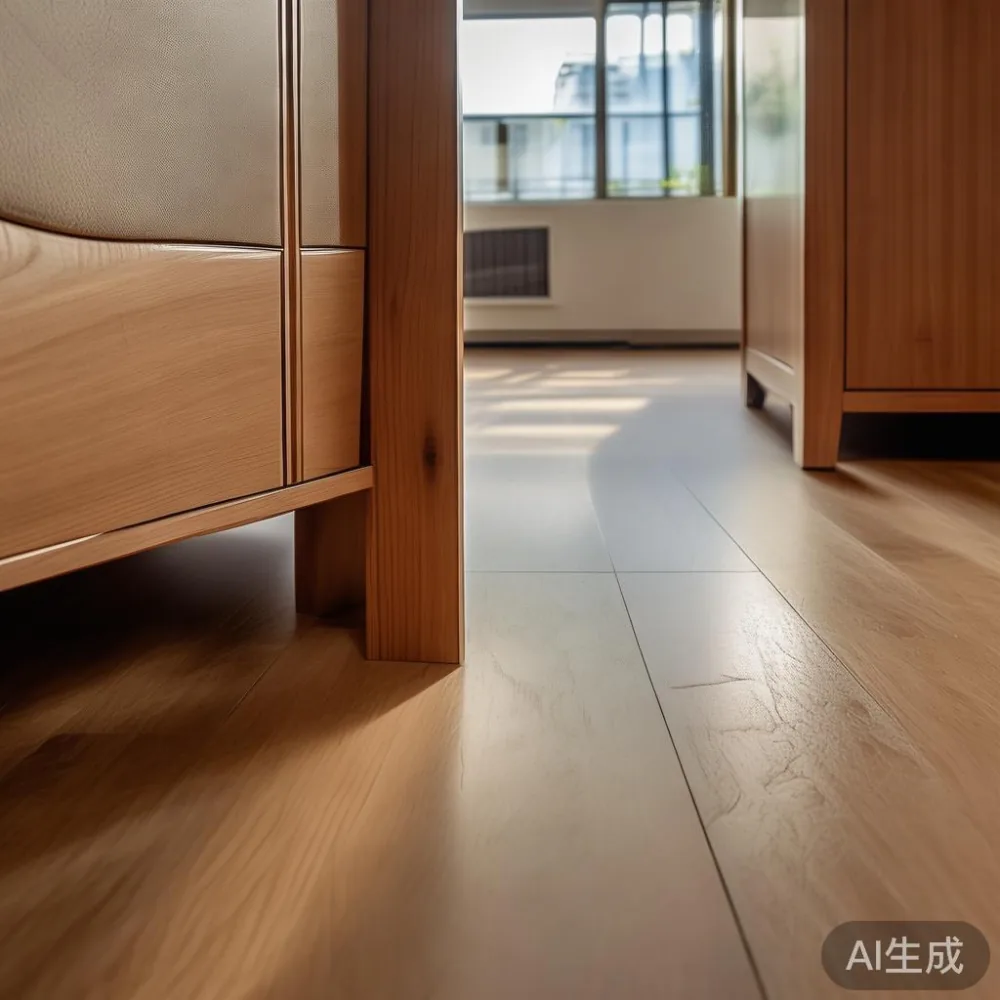
This comparison follows the five-year cost of a coordinated oak bedroom set: one 180 cm queen bed frame, one 180 cm wardrobe, and two 45 cm nightstands. I use realistic Singapore figures in SGD, including 9% GST where indicated. The figures are planning estimates rather than universal retail quotes, because timber grade, finish, hardware, delivery access, and installation conditions can change a project’s final cost.
For context, a typical HDB bedroom may be only 9–12 square metres. A standard queen bed measures about 150 × 200 cm, while a 180 cm bed occupies more floor area and requires careful door and circulation planning. In a Tampines, Bedok, or Punggol flat, the furniture may pass through a common lift with a clear internal width of roughly 110 cm and a door opening around 90 cm. A 180 cm queen bed frame can still arrive flat-packed, but its assembled dimensions may make the final turn into the bedroom difficult.

What exactly are we comparing over five years?
Both options use wood as the visible face. The difference sits inside the panel. Veneer furniture uses a thin layer of real timber—often around 0.6 mm—bonded to a lower-cost engineered core such as plywood or MDF. A veneered wardrobe may contain several visible leaves, each with a sliced or rotary-cut surface. Solid wood furniture uses solid timber through the visible panel, although some bed frames and storage pieces legitimately combine solid structural members with engineered components for stability.
For the comparison, the solid option is assumed to use kiln-dried oak in visible areas and finger-jointed solid wood in less visible sections. The veneer option uses oak veneer over a stable engineered core. Both receive a factory-applied protective finish. I assume one queen bedroom set in a private home, normal indoor use, and no flooding or direct sunlight exposure.
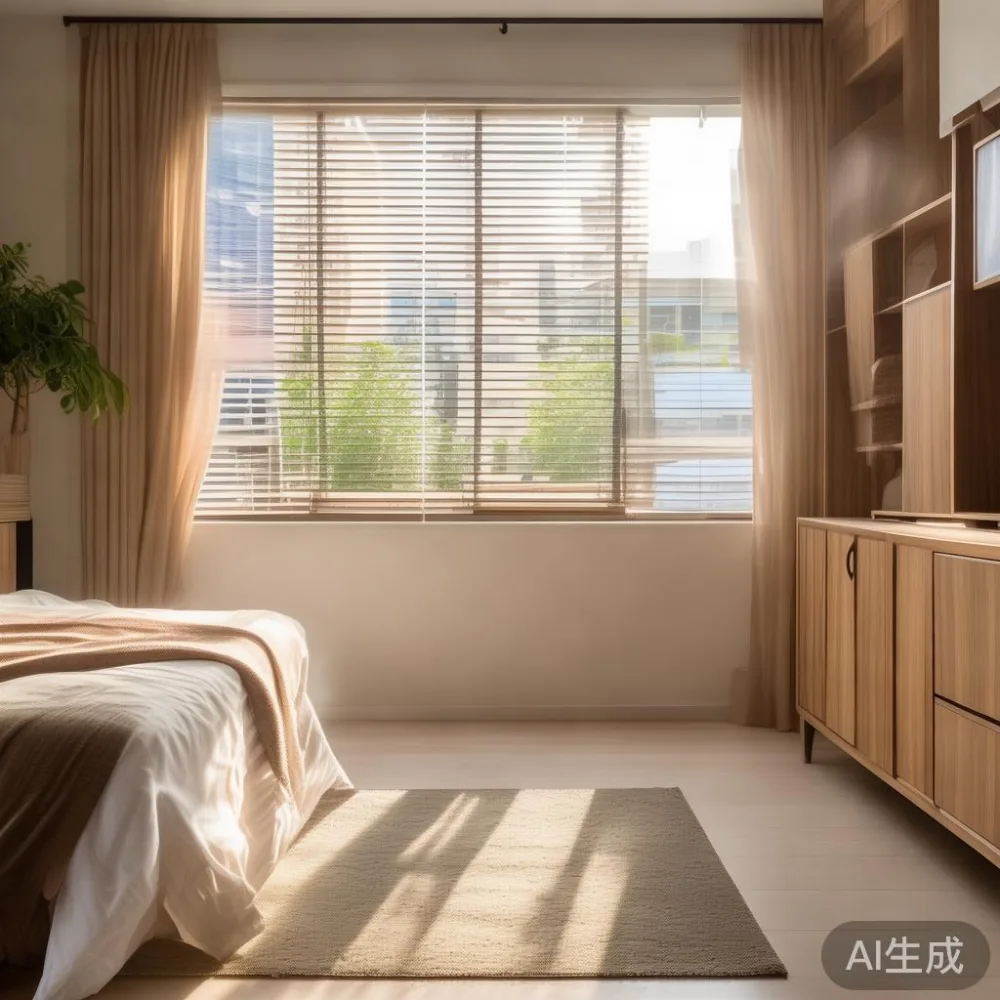
The five-year calculation includes purchase price, delivery, GST where applicable, basic installation, expected repair reserve, and likely refinishing costs. It does not include resale value as cash, because a used bedroom set is difficult to value consistently. Instead, I assign a conservative residual value at year 5: 20% of the original purchase price for the solid set and 12% for the veneer set. The residual figure helps compare ownership cost without pretending that second-hand furniture always sells quickly in Singapore.
Is veneer cheaper than solid wood for a Singapore bedroom?
For the sample package, yes. Here is a practical SGD estimate before any promotion or project discount:
Solid wood set: bed frame S$1,980; wardrobe S$2,280; two nightstands S$620. The furniture subtotal is S$4,880. Add 9% GST at S$439.20, delivery at S$95, and installation at S$180. The initial outlay is S$5,594.20.
Veneer set: bed frame S$1,280; wardrobe S$1,580; two nightstands S$420. The furniture subtotal is S$3,280. Add GST at S$295.20, delivery at S$85, and installation at S$150. The initial outlay is S$3,810.20.
The solid set therefore costs S$1,784 more at purchase. That gap buys more substantial repair options, but it does not guarantee that every component will last longer. A veneered wardrobe can perform well if its edges are sealed, its doors are fitted with good hinges, and the panels are protected from moisture. Poorly sealed edges, cheap hardware, and repeated finish damage can shorten its useful life.
Singapore’s climate makes the details more important than a simple material label. Outdoor humidity often ranges from roughly 70% to 90%, while air-conditioned bedrooms may sit near 50–65%. Keep finished furniture away from an open window, air-conditioner outlet, or damp exterior wall. A stable indoor environment reduces swelling, joint movement, and finish wear. Neither material should be placed against a leaking pipe or a wall with persistent moisture.
How much do repairs and refinishing cost over 5 years?
For a young family in Bedok, the main five-year costs may be minor scratches, a hinge adjustment, a drawer runner replacement, and one partial refinishing job. Solid wood often accepts localized repair more readily because scratches can be filled and the surface can be sanded back. Veneer requires more restraint: sanding through a 0.6 mm layer exposes the core, so a deep mark may need a veneer patch or a new leaf.
I use this repair reserve for the five-year period:
Solid wood: S$260 for two furniture-move scratches, S$120 for a hinge and drawer adjustment, and S$300 for a partial bedroom refinishing service. Total reserve: S$680.
Veneer: S$150 for surface cleaning and minor touch-up, S$180 for hardware work, and S$220 for a cautious partial refinishing service. Total reserve: S$550.
These numbers assume normal use, not deliberate damage. A wardrobe door that strikes a tight corridor wall during delivery may chip immediately. A nightstand placed beside a damp air-conditioner vent may develop edge swelling within 18 months. In those cases, repair cost can exceed the reserve.
The finish also matters. A water-based matte coating is easy to maintain but can show fingerprints on a dark oak surface. A tougher factory finish may resist a water ring but can still be damaged by heat. Use a coaster beneath a cup, felt beneath a lamp, and a stable tray beneath a marble table if you add one to the room. A marble table is not part of the sample budget, but a 90 cm round top can weigh about 35–55 kg, so delivery access becomes a separate concern.
What do delivery and installation add to the five-year total?
Delivery is rarely determined by distance alone. In an HDB block, the important questions are the lift capacity, lift door width, turning radius, staircase width, and whether the building has a booked service elevator. A flat-pack bed can pass through a 90 cm opening more easily than a fully assembled wardrobe. A 180 cm wardrobe carcass, even if delivered in panels, may still need two installers.
My sample assumes delivery within Singapore. The S$95 solid-wood delivery charge includes a normal HDB drop-off and in-room placement. The S$85 veneer charge covers a simpler flat-pack drop-off. Neither assumes lift booking, staircase hoisting, dismantling an existing bed, or removal of packaging. If a Bedok lift is unavailable on the selected date, a re-delivery attempt could add S$60–S$120 and 3–7 days.
Installation is another practical line. A solid wood bed may need final alignment after its heavier frame is positioned. A wardrobe requires levelling, door adjustment, and anchoring to the wall. Singapore’s humid conditions and uneven older floors make care worthwhile. Ask for a quote that separates delivery, carrying, assembly, anchoring, and old-furniture disposal. Hidden charges are more annoying than a stated S$180 installation fee.
For smaller pieces, a 45 cm nightstand usually weighs about 8–12 kg when made in solid wood and 6–9 kg in veneer construction. One installer may handle both, but a packed wardrobe can weigh 70–120 kg. Check the lift’s posted capacity rather than assuming it will accept the load. Keep the corridor clear at 80 cm where possible, and measure the bedroom door before ordering a tall mirror or extended wardrobe.
Which option has the lower five-year cost?
The arithmetic is straightforward once the assumptions are visible:
Solid wood: initial outlay S$5,594.20 plus S$680 repair reserve equals S$6,274.20. Applying the conservative year-5 residual value of 20%, or S$976, gives a five-year ownership cost of approximately S$5,298.20.
Veneer: initial outlay S$3,810.20 plus S$550 repair reserve equals S$4,360.20. Applying a 12% residual value of S$393.60 gives a five-year ownership cost of approximately S$3,966.60.
Under this scenario, veneer is about S$1,331.60 less expensive over five years. If the veneer unit is damaged badly enough to require a new wardrobe door in year 3, the difference may narrow. A replacement leaf could cost S$280–S$520 before fitting. If the solid set’s finish is maintained through one partial refinishing service, its long-term appearance may be easier to restore, but that benefit is not automatically worth S$1,784 at the point of purchase.
A simpler comparison without residual value gives S$6,274 for solid wood and S$4,360 for veneer. That can be useful for household budgeting because resale is uncertain. A family with a S$5,500 bedroom budget may choose veneer and use the remaining S$690 for a rug, curtains, or a better mattress. A family expecting to keep the furniture for 12–15 years may prefer selected solid components for repairability, even with a higher five-year figure.
Can solid wood still fit a small Singapore bedroom?
Yes, if the furniture is proportioned to the room. In a 10 square metre HDB bedroom, a 150 × 200 cm queen bed may leave only 60–90 cm along one side if placed centrally. A 180 cm queen bed frame offers more width but requires a clear route from the door and enough space to open a wardrobe door. A low-profile 105 cm-tall headboard can feel visually lighter than a 125 cm upholstered panel.
For a solid wood bed frame, inspect the underside and joints rather than relying on a product photograph. Look for a centre support leg or slat system suited to the mattress, even spacing between slats of no more than about 5 cm, and hardware rated for the frame’s load. A solid wood sofa in the adjacent living room should not be expected to match the bedroom’s movement needs; the relevant load requirements differ.
Wardrobes need the same discipline. A 120 cm-wide sliding-door unit may suit a tight bedroom better than a hinged unit that swings 60 cm into the room. Sliding hardware adds cost, but it can save usable floor area. If you want French light luxury styling, use a pale oak tone, restrained fluted panels, and slim brass hardware without crowding a 9 square metre room.
American light luxury tends toward generous upholstery and clean profiles, while post-modern light luxury can combine warm timber with a simple black or off-white wall. The latter two approaches can make a small room feel calmer. The goal is not to make a compact bedroom look as large as a showroom; it is to keep circulation practical and storage generous.
How do I choose between a veneer bed frame and a solid wood bed frame?
Start with the use, not the label. In a condo where the bedroom is rarely used, a well-built veneer set may provide the desired appearance at a controlled cost. In a family home where the bed is moved, children touch the finish, and the wardrobe receives frequent use, solid timber in visible, high-wear areas can be sensible.
Ask where to choose French bed materials and how to choose French bed finishes through specific questions. Is the wardrobe front solid timber, veneer over plywood, or a printed surface? Are the edges sealed? What wood is used for drawer sides, rails, and bed slats? Are hinges rated for at least 80,000 cycles? Does the supplier provide a written structural warranty, and what does it cover?
MIDHILL, a Foshan factory established in 2008, exports to more than 15 countries and offers a 10-year structural warranty with lifetime refinishing. Those policies are useful because they make the maintenance question concrete. Ask for the exact scope, exclusions, and expected response time in writing. A lifetime refinishing promise is different from free replacement of every damaged component, so compare the terms carefully.
The same rule applies to a dining table if your condo has a separate dining area. A solid wood dining table may be easy to repair along a damaged edge, while veneer must be protected from heat and standing water. A marble table introduces a different maintenance pattern: use a neutral cleaner, avoid acidic liquids, and protect the underside from condensation.
For broader style research, a guide to the best Rustic bed for 2026 should be read for proportions and finish direction, not just trend labels. Likewise, anyone asking how to style European light luxury bed in bedroom should consider lighting, textiles, and wall colour alongside the frame. A narrow bedside wall lamp can free the nightstand surface, while a 2700K bulb is gentler in the evening.
What should a Punggol family budget for access and extras?
Set aside S$100–S$250 for building-specific delivery needs. Some HDB bookings require a service elevator reservation, protection of common surfaces, or a time window that affects the installers’ route. A scheduled service can add 2–5 days. Measure the lift opening, corridor turns, bedroom doorway, and any skirting board before placing a non-flat-pack order.
Allow another S$90–S$220 for small bedroom-design items: two felt pads, a wardrobe anchor kit, a drawer stop, and a breathable dust cover. These are not luxury extras; they reduce avoidable movement and moisture damage. For a compact wardrobe, leave at least 5 cm behind the unit for ventilation and servicing unless the installation instructions specify otherwise.
Some homeowners compare bedroom furniture with living-room searches such as Coastal for small living room or top 10 Boho furniture. Those references can inform colour and texture, but the bedroom still needs storage, quiet surfaces, and a clear route to the bed. A light-oak visual may suit coastal colours, while darker walnut can make a small HDB room feel visually tighter.
MIDHILL’s free shipping threshold of US$350 is stated in US dollars, so Singapore buyers should request a local SGD delivery quote rather than convert the threshold informally. The company also offers 14-day returns. Confirm the return conditions for made-to-order wardrobes, custom sizes, and finish selections, because made-to-order pieces may have different handling rules.
Which five-year choice makes more financial sense?
Veneer wins in the sample budget because its initial price is S$1,784 lower and its assumed repair reserve is lower. The five-year cost is approximately S$3,967 for veneer versus S$5,298 for solid wood. The result supports veneer for a careful buyer who will protect the surfaces, maintain the hardware, and accept that deep edge damage may require panel replacement.
Solid wood is more attractive when the visible parts will be handled often, when local repair is important, or when you value the ability to refinish a surface more than the lowest purchase price. Its cost in this comparison is not waste; it is the price of thicker material in selected areas and more forgiving maintenance. Ask whether the solid component is truly structural and visible, rather than being hidden in a low-value section.
For a bedroom design project in Tampines, Bedok, or Punggol, request two written quotations with identical dimensions, finish, hardware, delivery, installation, and warranty terms. Compare the full SGD total, not just the bed frame. Add the expected repair reserve, keep the five-year figure, and leave about 10% of the room budget for lighting or textile changes.
A Modern light luxury sofa may sit in the living room, but its finish should not dictate the bedroom. Choose a bed frame, wardrobe, and nightstands that agree in grain direction and warmth, then confirm that every piece can reach the bedroom. In practical terms, veneer offers the lighter five-year commitment; carefully specified solid wood offers repairability and a longer material story. Both can work in Singapore when the dimensions, humidity, access, and maintenance plan are handled as seriously as the style.