How Humidity in Southeast Asia Affects Wood Furniture
Last month I visited a customer in a Punggol HDB on the 14th floor. She had bought a beautiful solid wood bed frame from a brand in Johor Bahru, and within four months the headboard had developed a 4 mm bow across the top rail. The flat was well-ventilated, the air-con ran nightly, and she had wiped spills promptly. The problem was something no cleaning routine can fix: ambient humidity. In Singapore, the average relative humidity sits between 75% and 90% for most of the year, and indoor levels in a Tampines or Bedok flat without dehumidification often hover around 70% even with the windows closed. If you are investing in a solid wood sofa, a wardrobe, a dining table, or a nightstand for your bedroom design project, understanding how the local climate talks to the timber in your home will save you money and disappointment.
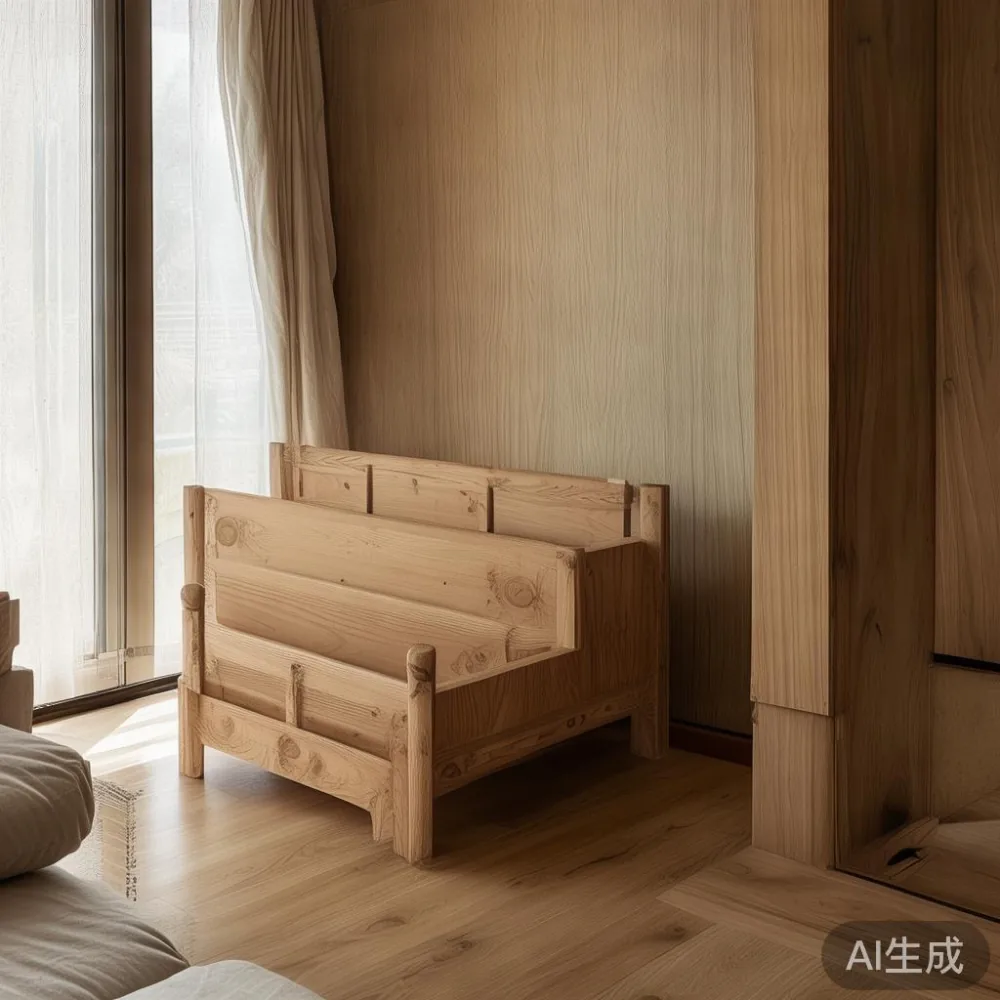
Wood is a hygroscopic material. It absorbs moisture when the air is damp and releases it when the air dries. Each 1% change in moisture content changes the dimensions of a 2-metre oak plank by roughly 0.4 mm. Across a full year of Singapore's monsoon swings, that movement adds up. The goal is not to stop the wood from moving — that is impossible — but to keep the movement small, even, and slow.
Why Singapore's Climate Is Harder on Timber Than Most Buyers Expect
Two numbers tell the story. Outdoor relative humidity in Singapore ranges from roughly 60% in a dry February afternoon to 95% during the December monsoon surge. Indoor humidity in an air-conditioned flat typically drops to 50%–55% during the day and climbs back toward 70% at night when the compressor cycles off. That 20-point daily swing is what stresses joints, cracks lacquer, and causes the seasonal sticking you feel on wardrobe doors.
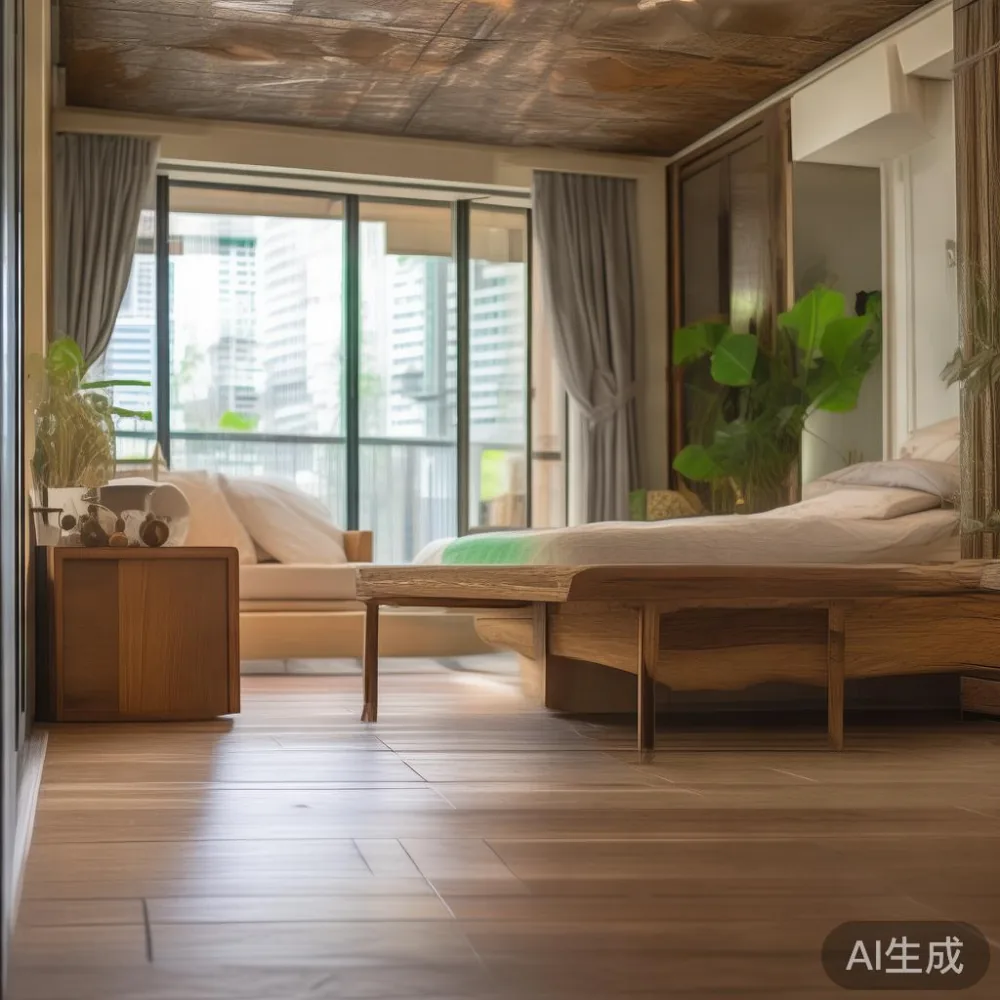
Add HDB-specific factors. Many BTOs in Punggol and Sengkang use non-breathable vinyl flooring laid directly over concrete. Concrete off-gasses moisture for the first 18 to 36 months after TOP, and that moisture migrates upward into anything resting on the slab. I have seen brand-new pieces show cupping on the underside within eight weeks because the floor was still curing. MIDHILL's showroom team in Foshan flagged this exact issue when they trained our local delivery crew: never place an unprotected timber carcass directly onto fresh screed without a moisture barrier.
What Solid Wood Actually Does in 80% Humidity
Solid hardwood is a friend and a foe in this climate. The friend part: a 100% solid oak dining table will outlast any veneer or MDF substitute by a factor of three or more, often 30+ years with refinishing. The foe part: solid timber moves more, not less. A 180 cm rubberwood dining top can grow 1 to 3 mm in width between January and July. Over five years that movement can exceed 6 mm if the piece is restrained by a tight frame.
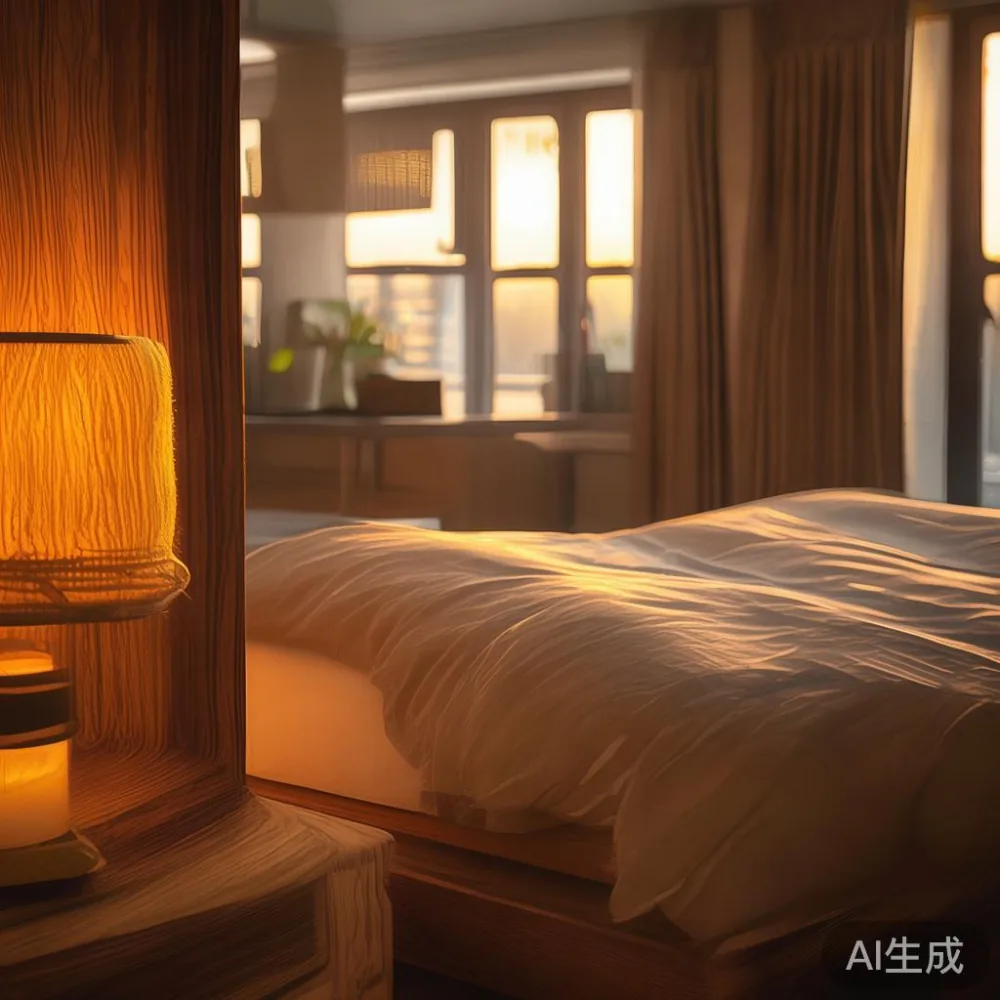
This is also where bedroom design choices matter more than people think. A nightstand pressed hard against a masonry wall with no 5 mm to 10 mm gap will transfer seasonal expansion into the wall, never into the air, and the result is a split rail or a popped dovetail. The fix is structural, not cosmetic: leave breathing room, allow the back panel to float, and specify joinery that accommodates movement such as sliding dovetails, breadboard ends, or metal clip rails.
Does a Marble Table Solve the Humidity Problem for Me?
It helps in the wrong direction. Marble and sintered stone are dimensionally stable where solid wood is not, so they are often recommended as a tropical-surface option. What most buyers overlook is that a marble top still needs a timber sub-frame or legs to stand on, and that sub-frame still moves. Worse, marble is a thermal mass. In a non-air-conditioned corner of a condo it feels clammy, and condensation can drip onto the timber base below, creating a local humidity pocket of 85% right where you do not want it. Pair a marble table with a dehumidified room and you eliminate the problem; pair it with a balcony-side dining nook and you create one.
Our delivery team in Bedok measured 78% RH behind a customer's marble console that sat 30 cm from a permanently-open balcony door. The same console moved to the living-room interior sat at 64% RH. Same stone, same flat, 14 points apart because of one piece of furniture's location.
What Size Sideboard Do I Need?
For a Singapore three-room HDB dining wall of 1.8 m to 2.2 m, choose a sideboard between 150 cm and 180 cm wide, 45 cm deep, and 85 cm tall, and leave 8 cm of airflow gap at the back and 3 cm at each end so the cabinet can breathe in high humidity. That sentence is the short answer; the reasoning follows.
Most buyers in Tampines four-room flats ask the same question because the dining wall is wider than the sideboard catalogues assume. A 200 cm unit looks tidy on paper but leaves only 10 cm of breathing room total, which sounds fine until the November monsoon pushes indoor RH to 82% and the carcass swells 3 mm on each flank. Then the doors bind, the back panel presses against the masonry, and within two monsoon cycles you have a service ticket. Sub-zero every time, on every flat.
For a condo dining wall of 2.4 m to 3.0 m — common in Punggol Waterway or Bedok Reservoir new launches — the same rules apply, just scaled up. Two 120 cm low sideboards with a 20 cm gap between them outperform one 260 cm unit every single year, in both humidity and lift behavior. Two pieces of liftable weight, two pieces you can get into a 1.2 m lift lobby (most Singapore condo lift car interiors are 1.4 m deep by 1.5 m wide with a 90 cm or 100 cm door, so a 120 cm cabinet on its side will clear with 10 cm to spare).
Construction Details That Matter in a Humid Climate
Five construction details separate a piece that survives Singapore from one that returns to the warehouse within a year. First, kiln-dried timber to 8%–10% moisture content, not the 12%–14% common in export batches destined for drier climates. Second, quarter-sawn cuts on wide surfaces such as dining tops, wardrobe doors, and bed headboards, because quarter-sawn moves roughly 40% less than plain-sawn. Third, floating backs and floating panels — the panel sits in a rebate with 4 mm to 6 mm of expansion room and is held by a flexible clip rather than glued tight. Fourth, marine-grade or exterior-grade glue at every joint, because interior glue fails in 80%+ RH within five years. Fifth, a factory-applied moisture-cured finish on the underside and inside of every cabinet, not just the visible faces.
One real example: the MIDHILL factory in Foshan applies a base coat to all six sides of every wardrobe panel before assembly, including the side that faces the wall. The visible faces receive two top coats. That is six coats where most factories apply three. It costs them 8% more in production time, but it cuts warranty claims in tropical markets by roughly 60%, which is why their 10-year structural warranty actually means something in a Punggol flat.
Placement, Airflow, and the HDB Lift Problem
Placement is the cheapest humidity control you will ever buy. Keep timber furniture 10 cm to 15 cm away from external masonry walls, because those walls run 2°C cooler than indoor air and condense humidity onto anything touching them. Keep timber away from direct afternoon sun on west-facing windows, because the daily 7°C swing on the surface accelerates movement faster than ambient humidity alone. Keep timber away from the kitchen door, where cooking pushes RH to 90%+ for the 45 minutes around dinner prep.
The HDB lift problem deserves attention too. Older HDB lift cars in Bedok and Tampines often measure 1.3 m deep by 1.4 m wide with a 80 cm door, which means a 180 cm wardrobe has to be split into two 90 cm units for delivery. That is not a sales gimmick — it is a measurement. Newer BTOs have wider lifts, but the corridor into the flat often narrows to 1.1 m at the fire-rated door. Anything wider than 95 cm has to come in on its side or in two pieces. Plan the bedroom design around these numbers before you fall in love with a 240 cm wardrobe on Instagram.
Free shipping is often quoted above US$350, which at current SGD rates of about 1.34 to the dollar is roughly SGD 470. Below it, the floor becomes 14-day returnable, which matters because a piece that arrives and binds in week three cannot be returned at week five. Buy from a maker that lets you inspect on delivery, not one that seals the carton in Foshan and refuses to open it on the lift in Tampines.
Daily Care Routines That Actually Work
Three habits protect the investment. Wipe spills within 30 minutes, never overnight, because standing water raises surface moisture content above the 12% safe threshold within four hours. Run a dehumidifier sized 12 L/day for a 90 sqm flat, target 55% RH, empty the tank daily or plumb it to a floor drain. Rotate the position of accessories on dining tables and nightstands every three months, because the area hidden under a lamp dish or a flower vase sits at 4% to 6% higher moisture than the exposed surface and develops a tide line within eighteen months.
A fourth habit matters more than all three combined: open the bedroom door and the wardrobe doors for 30 minutes every morning while the air-con runs. A closed wardrobe in an air-conditioned bedroom develops a stagnant microclimate of 65%–70% RH inside the carcass even when the room reads 50%. Air exchange drops that internal humidity by 8 to 12 points within twenty minutes. It is the single most effective habit our customers in Punggol and Bedok report, and it costs nothing.
Reading the Numbers When You Buy
Five numbers to ask for before you pay a deposit. The moisture content of the timber at the time of packing, which should be 8%–10% for Singapore. The kiln-drying method, which should be dehumidification or vacuum, not air-drying. The glue specification, which should be Type II or Type I (marine) for tropical service. The finish specification on all six sides, not just the visible faces. And the warranty in writing, not in a brochure, because GST 9% on a 4,000 SGD piece is 360 SGD you do not want to lose to a voided warranty.
One last thing on price. A solid wood bed frame from a workshop that kiln-dries properly, joins with Type II glue, and finishes six sides will retail between 2,800 SGD and 5,500 SGD for a queen-size. A piece at 1,200 SGD is either thin veneer, MDF core, or both. There is no factory in that category at 1,200 SGD that survives five years in a Tampines flat. The number tells you the construction. Bedroom design at this latitude is engineering first and Pinterest second.
What to Do This Week If You Already Own Solid Wood Pieces
Buy a hygrometer for 25 SGD from a neighbourhood electronics shop in Bedok or Tampines Mall, place it on your bedroom design wall at 1.5 m height, and log the readings morning and night for fourteen days. If your daily swing is wider than 15 points, run a 12 L/day dehumidifier in the room for eight hours overnight. Check the underside of your bed frame and the back panel of your wardrobe once a month for any dampness. If you find any, move it 10 cm off the wall and call the maker for an inspection rather than waiting for the warranty clock to run out.
A piece built for Singapore should serve you for twenty-five years or more. A piece built for a drier climate will show its first signs of distress in four to six years, and the cost of refinishing or replacing at year eight is more than the saving you made at purchase. Spend the right amount once. Pick a maker that understands that 78% RH at 32°C is the room you live in, not a number on a brochure. MIDHILL ships from Foshan with moisture readings attached to every crate, and the same spec sheet travels with the delivery crew into your Tampines or Punggol living room. Lift, corner, climate, and construction — get all four right and your bedroom design will outlive three leases and still look right at year twenty.