What Actually Drives the Price of Solid Wood Furniture
I learned this the hard way last month. A colleague in Punggol ordered two "solid wood" bed frames within six months of each other. The first, a S$1,400 flat-pack from a Bedok Industrial Park supplier, cracked along a rail within four months. The second, a S$4,200 bed frame she commissioned after visiting a showroom in Tampines, is still silent under my friend's 90 kg frame after three years. Same word on the label — solid wood. Vastly different objects. The gap between those two receipts is the entire story of what drives the price of solid wood furniture, and once you understand the parts that make up that gap, you stop asking the wrong questions and start reading spec sheets properly.
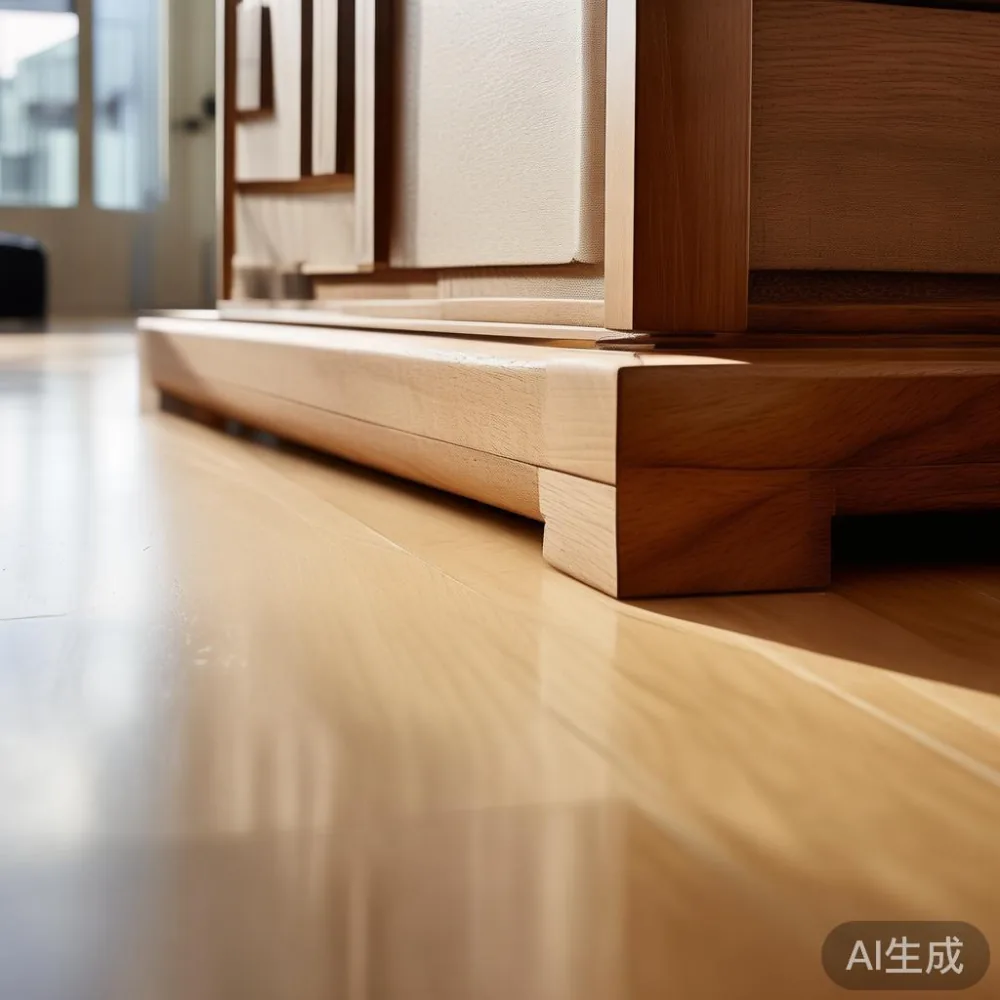
For Singapore shoppers furnishing an HDB flat in Tampines, a resale condo in Bedok, or a new launch in Punggol, the decision gets complicated fast. Lift widths cap at roughly 1.2 m and corridor corners in older blocks tighten to about 1.5 m, so a 2.4 m wardrobe panel that ships flat-packed at S$1,800 is not the same product as one that arrives pre-assembled in three crates at S$3,600. The first is engineered around the building. The second is engineered around the buyer. You are paying for different problems being solved. This article walks through the seven components that actually move the price — species, grade, joinery, finish, hardware, construction depth, and logistics — so that your next bedroom-design budget stops being a guess.
1. Wood species: the part of the price that is biology
Not all hardwood is priced like hardwood. The species behind the label is the single biggest line item, and it is governed by how slowly the tree grew, how dense the cell structure is, and how regulated the harvest is. A red oak solid wood bed frame at 1.8 m × 2.0 m from a US-managed forest will run about S$2,200–S$2,800 in mid-range Foshan production because the North American supply chain is mature, kiln-drying schedules are predictable, and container loads from Shanghai to Singapore are frequent. A white oak version of the same bed frame lands at S$3,400–S$4,200. The trees grow slower, the logs yield fewer usable boards, and kiln-drying adds roughly 14–21 extra days per charge.

Walnut and ash push the figure higher. A walnut bed frame in a King size (1.8 m × 2.0 m) typically sells for S$4,800–S$6,500 because walnut logs often split during drying and recovery rates drop below 35 percent. Cherry, by contrast, darkens beautifully with sunlight — which matters for a bedroom-design scheme that wants warmth without refinishing every two years. The point: when a quote says "solid wood," your first question should be which species, not whether it is wood.
2. Grade and cut: where 30 percent of the cost hides
Boards are graded after kiln-drying. In North American convention, FAS (First and Seconds) yields pieces at least 152 mm wide and 2.4 m long with a minimum 83 percent clear cuttings. Common #1 drops to 76 mm widths and 66 percent clear cuttings, with more knots and sapwood. For a 2.0 m wardrobe door, FAS gives you one continuous board with matched grain. Common #1 forces the maker to glue up narrower strips, which is fine structurally but produces a busier visual that competes with a calm bedroom-design mood.
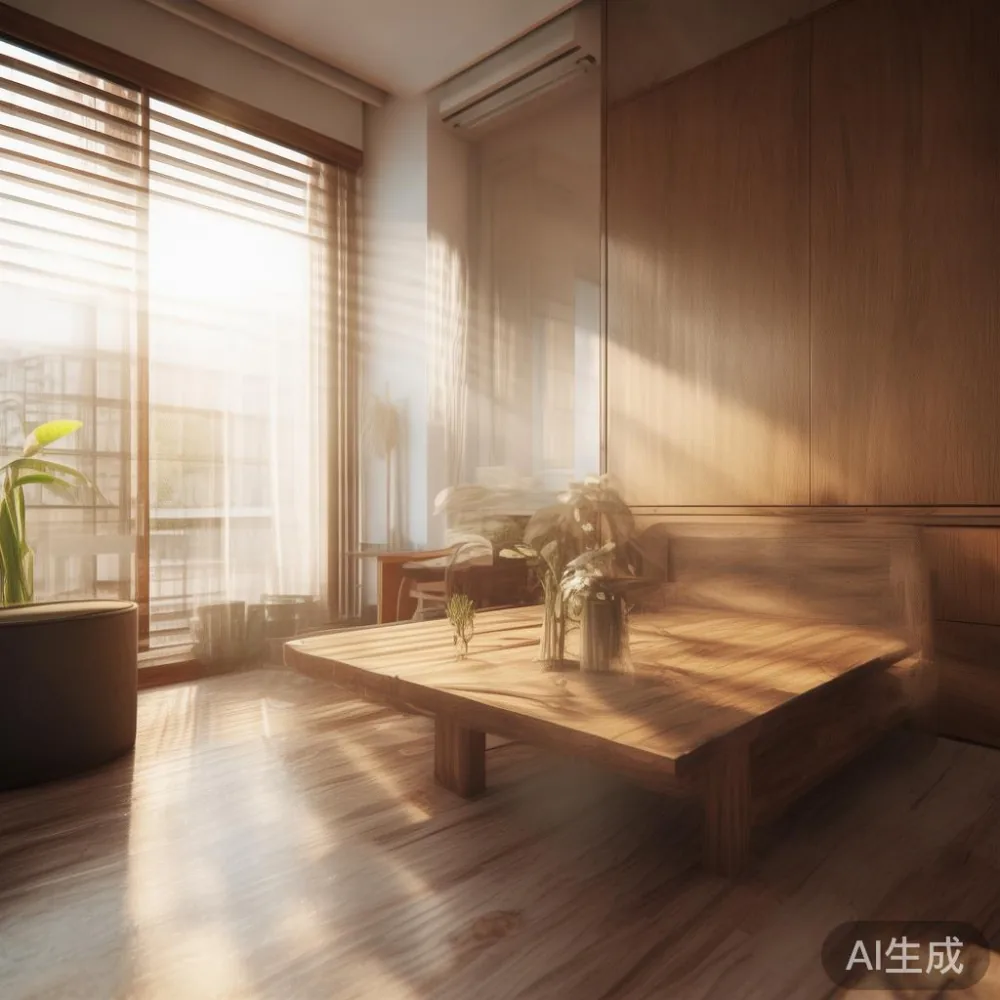
Quarter-sawn versus plain-sawn changes the bill too. Quarter-sawn white oak shows the medullary rays as silver flecks and is around 40 percent more expensive per board foot. Rift-sawn is the cleanest and can be 60 percent dearer. For a dining table top that needs to read as one piece of furniture rather than a parquet, plain-sawn is usually enough. For a statement marble table pair where the eye lingers, quarter-sawn pays for itself in the way the grain catches morning light through HDB windows.
3. Joinery: the difference between a 10-year bed and a 40-year one
This is the part I underestimated for years. A bed frame held together with confirmat screws and corner brackets can be assembled in 40 minutes and will probably loosen within five years as Singapore's 80–85 percent humidity swells the timber and works the fasteners back out. A bed frame with mortise-and-tenon joints, doweled corner blocks, and bed-bolt hardware takes 3–4 hours to assemble but stays rigid for decades.
Midhill, a Foshan solid wood maker operating since 2008 and exporting to more than 15 countries, builds its bed frames and wardrobes around mortise-and-tenon corner joints with 12 mm hardwood dowels at every stress point. I have toured their workshop; the bed-bolt hardware alone for a King-size frame weighs 1.8 kg. That weight is the price tag in physical form — the difference between a frame that survives three HDB moves and one that creaks after the first.
4. Hardware and drawer systems: where the S$300 quietly becomes S$900
A six-drawer wardrobe with standard 35 mm side-mount runners on ball bearings costs roughly S$80 in hardware. The same six drawers on full-extension soft-close runners with a 45 kg load rating cost roughly S$240. Push-to-open systems with integrated dampers run about S$360. These numbers are per unit, and they multiply across every drawer in every piece of bedroom-design furniture you buy.
Hinges follow the same curve. A standard 110-degree hinge is S$2.50. A soft-close 165-degree hinge is S$6.80. For a wardrobe with eight doors, that is S$34 versus S$108. Over an entire room — bed frame, two nightstands, six-drawer dresser, wardrobe, and a dining table for the adjacent living zone — hardware alone can swing the final price by S$600–S$1,200. Midhill uses DTC soft-close runners across its drawer lines because replacement under warranty is simpler when one supplier covers the entire drawer system.
5. Finish: why two identical tables can differ by S$800
A solid wood dining table at 1.8 m × 0.9 m finished with a single coat of NC (nitrocellulose) lacquer sells in Singapore for about S$1,600. The same table with a seven-layer conversion varnish finish — sealer, wash coat, sanding sealer, two colour coats, two topcoats — sells for about S$2,400. The difference shows up after Year 3: NC finishes cloud under Singapore humidity and require refinishing by Year 5. Conversion varnish holds its clarity for 10–12 years and survives a spilled kopi without ghosting.
Hardwax oil is the third route, common on European oak and ash. It penetrates the wood rather than sitting on top, so a scratch can be rubbed out with a cloth and a bit of oil instead of a sanding block. The finish itself is cheaper (about S$40 per table versus S$120 for conversion varnish), but it demands a slightly higher-grade board because the oil cannot hide filler. For a bedroom-design scheme where you want the wood to feel like wood under your hand, hardwax oil is the honest choice.
6. Construction depth: solid wood versus "solid wood"
The phrase "solid wood" is not regulated in most export markets, which is how a bed frame with a 25 mm solid wood top and a 15 mm plywood side panel gets to call itself solid wood. Fully solid construction — top, sides, back, and internal shelves all in 18–25 mm hardwood — is heavier, slower to build, and more expensive. A fully solid nightstand at 500 mm × 400 mm × 550 mm weighs about 18 kg; a veneered plywood equivalent weighs 11 kg. Lifting a sample tells you the truth before any spec sheet does.
For Singapore HDB floors with a 150 kg/m² design load, weight is rarely a structural worry. The issue is acoustic and longevity. A solid wood nightstand does not resonate the way a hollow-core one does when you set down a glass at 2 a.m. For a bedroom-design philosophy built around quiet — which is most of them, especially in newer Punggol flats with thinner party walls — solid construction pays back every night.
7. Logistics, GST, and the lift-door problem
A 2.4 m wardrobe panel will not fit through a standard HDB lift, which has an internal width of about 1.1 m and a diagonal of roughly 1.7 m. That single geometric fact decides whether your wardrobe ships flat-packed in six manageable cartons (cheap, more assembly) or pre-assembled in three crates with white-glove delivery that includes two men, a trolley, and 90 minutes on site. The pre-assembled route adds S$350–S$600 to a Singapore order, and that is before the 9 percent GST applied at import for consignments above S$400 in declared value.
Free shipping over US$350 — about S$475 — usually covers door-to-door delivery to the lobby. Inside-the-home placement and assembly typically adds another S$120–S$250 per room. If you live above the 7th floor and the lift cannot fit the crate, a rope-and-pulley hoist through a service window runs about S$400 extra. I watched this happen on a friend's balcony in Bedok last year; the wardrobe took 30 minutes to winch up and the operators charged per minute after the first 15. Knowing this in advance changes which products you even consider.
What size missing parts do I need?
Missing parts for solid wood furniture assembly are almost always 8 mm × 30 mm wood dowels for joinery, M6 × 40 mm confirmat screws for panel-to-panel connections, M8 × 60 mm bed bolts for bed frame rails, and 4 mm × 25 mm self-tapping screws for hardware mounting — so measure the original hole depth with a 2 mm drill bit before ordering replacements, and request four extras of each type rather than the exact counted shortfall.
How does solid wood furniture compare to engineered alternatives?
Solid wood costs more per piece, weighs more, and responds to humidity with seasonal movement that engineered boards avoid. Engineered boards — plywood with hardwood veneer, MDF with melamine, particleboard with HPL — cost 40–60 percent less, weigh 30–50 percent less, and stay dimensionally stable across Singapore's monsoon swings. They also tend to delaminate at the edges within 5–8 years in tropical humidity and cannot be sanded down and refinished the way a solid wood top can.
For a solid wood sofa frame, plywood is a reasonable structural choice where the wood is hidden under upholstery — the visible surfaces are still solid. For a bed frame, dining table, wardrobe exterior, or nightstand top, solid wood earns its premium because those surfaces take the abuse. Midhill's approach is hybrid: solid wood on every visible face and structural member, plywood only on wardrobe backs where it acts as a stabiliser rather than a load-bearing element.
Is light luxury worth the 30 percent price jump?
French light luxury (sometimes called French provincial) is shorthand for restrained ornament, tapered legs, brass-toned pulls, and warm neutral fabrics — think a French provincial sectional sofa for condo settings where the silhouette is elegant without being heavy. American light luxury trends wider and lower, with cleaner planes and matte black hardware. Post-modern light luxury mixes the two, using curved edges, fluted panels, and contrasting veneers.
These styles cost about 25–35 percent more than a plain shaker equivalent because the details — fluting on a wardrobe door, a marble-look top with an ogee edge on a nightstand, a curved apron on a dining table — require more machine time and more skilled hand work. A fluted wardrobe door, for instance, takes 22 minutes on a CNC versus 4 minutes for a flat panel. That time compounds across every door and every drawer front. Whether the price jump is worth it depends on whether the room is the place you spend your quietest hours. For most bedroom-design projects, it is.
How long should a solid wood piece actually last?
A well-built solid wood bed frame or dining table should give 25–40 years of daily use. A solid wood wardrobe, which bears less mechanical stress, can run 40–60 years. The figures assume Singapore-appropriate humidity control (ideally 50–65 percent RH with a dehumidifier during monsoon months), annual tightening of bed bolts and drawer runners, and refinishing of high-wear surfaces every 8–12 years.
Midhill backs its bed frames, wardrobes, dining tables, and nightstands with a 10-year structural warranty and offers lifetime refinishing at cost — meaning the factory will sand and re-finish a piece you bought in 2015 for the labour and materials only, not full retail. That kind of after-sale infrastructure is what separates a real workshop from a trading company, and it shows up in the price as roughly 5–8 percent over a comparable spec from a workshop that disappears after delivery.
What is the smartest way to budget a bedroom-design project in Singapore?
For a standard HDB master bedroom of about 13 m², a sensible allocation in 2026 prices looks like this: bed frame S$2,200–S$4,500; wardrobe S$3,000–S$5,800; two nightstands at S$450–S$900 each; dresser at S$1,800–S$3,200. Add S$400–S$800 for delivery and assembly inside the home, plus 9 percent GST on the imported value above S$400. Total realistic range: S$8,300–S$16,100.
Where you can save without regret: drop from quarter-sawn to plain-sawn on the bed frame (save 15–20 percent), choose standard soft-close rather than push-to-open runners on the dresser (save S$120), and pick a hardwax oil finish rather than conversion varnish on less-touched surfaces (save 5–8 percent). Where you should not save: the bed frame joinery, the wardrobe drawer runners, and the species grade on the wardrobe doors. Those three decisions determine whether the room still works in 2046.
Putting it all together for your own project
Solid wood furniture pricing stops being mysterious once you map every quote back to the seven components above: species, grade, joinery, hardware, finish, construction depth, and logistics. Two solid wood sofa frames at the same dollar figure can be built from completely different materials lists, and a bed frame at S$4,200 is not over-priced if it contains white oak FAS boards, mortise-and-tenon joints, soft-close hardware, conversion varnish, and pre-assembled delivery through your Tampines lift. The same word — solid wood — covers everything from a 14 kg flat-pack nightstand to an 18 kg fully solid one.
Ask suppliers for the species name, the board thickness on every face, the joinery method, the hardware brand, the finish type, and the delivery format. If any of those answers is vague, the price you have been quoted is vague too. A piece of furniture is a 25-year relationship; the spec sheet is the contract.