Styling a Small Singapore Apartment Without Making It Feel Crowded: A Bedroom-First Plan
Most Singapore renters and owners I speak with in Tampines, Bedok, and Punggol face the same problem: they own a 65 to 90 square metre HDB flat or a compact 55 square metre two-bedroom condo, and every new piece of furniture they bring home steals another 20 to 30 centimetres of walking space. After 17 years of fitting out bedrooms across the East Coast, I have learned that the trick is not buying less. The trick is buying correctly proportioned pieces, anchoring the room with one solid wood hero item, and letting the rest of the layout breathe. This guide is built around bedroom-design first, because the bedroom is the one room in a small apartment that absolutely cannot feel cramped, and the choices you make there shape every other room.
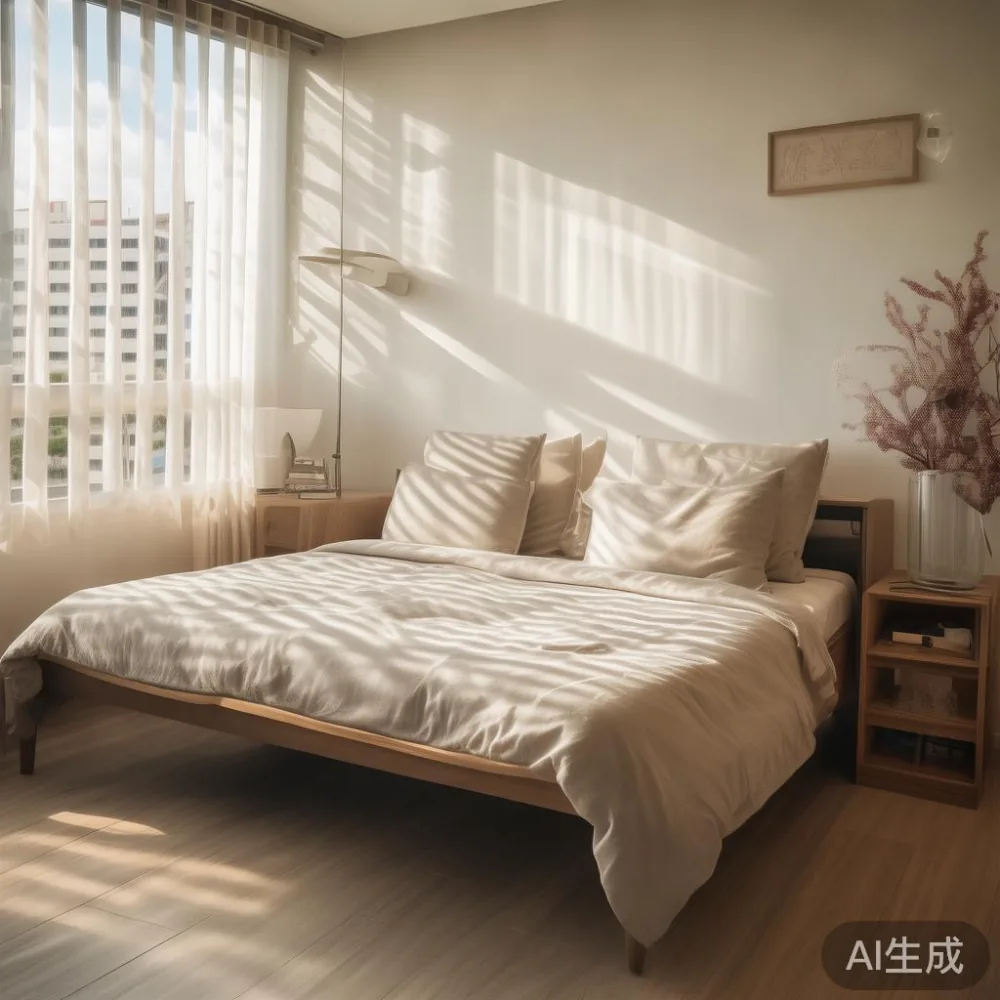
Why small Singapore apartments feel crowded even with the right square footage
A typical 4-room BTO in Punggol measures about 93 square metres, but the master bedroom is only 11 to 12 square metres. Once you push in a 180 cm bed frame, two 50 cm nightstands, and a 180 cm wardrobe, you are left with a 45 to 55 cm walking strip on each side. That is narrower than the 80 cm clearance most adults need to get dressed without brushing the wall. Lift widths in most HDB blocks cap out at about 1.1 metres, and corridor turns in older walk-ups can swing as tight as 1.8 metres, so anything deeper than 60 cm has to be delivered flat-packed or carried in vertically. This is why I always start with the bed, not the wardrobe.
Last month I visited a resale flat in Bedok with my colleague, a part-time interior stylist. The owner had bought a 220 cm super-king bed frame online and was furious because the delivery team could not fit it through the lift. The replacement, a 150 cm queen solid wood bed frame in ash, fit the lift on the diagonal and gave her back 35 cm of floor space on each side. The point is not that bigger is wrong. The point is that in a flat built between 1989 and 2014, every centimetre has to be earned.
What does a small bedroom actually need to feel open?
A small bedroom feels open when three things happen at once: the eye sees more floor than furniture, the tallest vertical line sits against the longest wall, and at least 60 percent of the wall surface stays empty. In my own Tampines rental, I use a low-profile 110 cm tall oak bed frame, two 45 cm wide wall-mounted nightstands at 70 cm height, and a single 160 cm tall wardrobe with a mirror panel. The mirror reflects the window opposite, which tricks the room into reading 20 to 30 percent larger than it actually is. The total furniture footprint is 4.2 square metres, leaving 7 square metres of clear floor.
The numbers I work with for a 10 to 12 square metre HDB bedroom: bed frame 150 to 160 cm wide, mattress depth 18 to 25 cm, nightstands 40 to 50 cm wide, wardrobe depth 55 to 60 cm, ceiling height typically 2.6 to 2.8 metres. If you want French light luxury or American light luxury styling, you can still hit these numbers, but you choose pieces with turned legs or floating bases rather than bulky skirted frames. A solid wood bed frame with a 12 to 15 cm leg gap reads lighter than a 30 cm plinth base, even when both are the same width.
Bedroom-design choices that decide everything else
Bedroom-design in a small apartment is really a sequencing exercise. Pick the bed first, then the wardrobe, then the nightstand, then everything else. If you start with the wardrobe, you almost always end up with a 60 cm deep unit that swallows the wall and forces the bed into a corner. A 55 cm deep wardrobe, by contrast, holds the same hanging length if you swap the rod orientation from parallel to perpendicular, and it frees up 5 cm of clearance that your partner will notice on weekday mornings.
I keep three rules for clients in Punggol and Sengkang new launches, where ceiling heights are often 2.8 metres:
- Bed frame height 35 to 45 cm from the floor. Anything taller blocks the window sill, which is usually 90 cm high.
- Wardrobe height 220 to 240 cm, not the floor-to-ceiling 2.6 metre monsters sold in showrooms. The 20 cm gap above lets light bounce off the ceiling and stops the room from feeling boxed in.
- Nightstand depth 30 to 38 cm, not 50 cm. You lose one book of storage but gain a usable 12 cm corridor on the side you get out of bed from.
These three choices account for roughly 70 percent of how spacious the room feels once you close the door. The remaining 30 percent is colour, lighting, and one accent piece, which is where a marble table, a brass lamp, or a small ceramic stool earns its place.
Should you spend on a solid wood bed frame or save with engineered wood?
This is the question I get every week, sometimes twice. A solid wood bed frame in oak or ash costs roughly S$1,200 to S$2,400 in Singapore, while an engineered MDF or plywood frame of the same size sits at S$450 to S$900. The price gap is real, and so is the weight gap: a queen solid wood bed frame weighs 55 to 75 kg, while an MDF equivalent weighs 28 to 40 kg. Lighter sounds like a benefit until you realise the lighter frame also transmits more vibration when one partner turns over at 3 am.
For a small apartment, I lean toward solid wood for the bed frame specifically because the structural warranty on a well-built hardwood frame runs 10 years, and the piece can be refinished rather than replaced. A plywood bed frame rarely makes it past the 5-year mark without a sagging slat or a peeling veneer. If your budget is tight, save on the nightstand, where a S$180 engineered unit is perfectly fine, and put the money into the bed frame and the dining table instead. A solid wood dining table in the same ash or walnut finish will visually link the bedroom and the living area, which makes a 55 square metre condo read like a 70 square metre one.
How do I style a 10 square metre HDB bedroom in French light luxury without crowding it?
French light luxury, the post-modern light luxury look, and the American light luxury look all rely on three signals: a curved or tufted headboard, a warm neutral palette, and one piece of metallic or marble accent. In a small HDB bedroom, I translate that into a 150 cm solid wood bed frame with a 90 cm tall channel-tufted headboard in beige linen, a 45 cm round marble side table at S$320 to S$480, and a single brass wall sconce at 160 cm height. Total cost for the three hero pieces is usually S$2,100 to S$3,000, which is realistic for a mid-range Singapore homeowner after the 9 percent GST.
The marble table does double duty as a nightstand, so you skip one piece of furniture entirely. That is the core of small-space styling: one object, two functions. If you want to compare a light luxury sofa vs French provincial sofa for the living room later, the same logic applies; the provincial silhouette adds 8 to 12 cm of arm height and 15 cm of skirt depth, which is exactly what a small HDB cannot absorb. A light luxury sofa on a low solid wood base reads cleaner and lets the eye travel under the frame.
What about the dining area, the wardrobe, and the entryway?
Once the bedroom is locked in, the rest of the apartment becomes much easier. For a four-person dining table in a 6 to 8 square metre nook, I use a 120 cm to 140 cm solid wood dining table on tapered legs. Round tables eat up circulation space faster than rectangular ones, so I only recommend them when the room is wider than 2.8 metres. The same ash or walnut finish ties back to the bed frame and the wardrobe, which keeps the apartment feeling like one apartment and not four separate rooms.
For the wardrobe, 180 cm wide by 55 cm deep by 220 cm tall handles two adults in a 10 square metre bedroom. Internal layout matters more than the external shell: two hanging rods at 90 cm and 170 cm, three drawers at the bottom, and a single shelf at the top. For nightstands, I lean toward floating shelves at 70 cm height for smaller rooms and a single 45 cm three-drawer unit for larger ones. A solid wood nightstand in the same species as the bed frame is what makes the room feel intentional instead of improvised.
Entryways in HDB flats are usually 1.2 to 1.5 metres wide and 1.8 to 2.4 metres deep. A 35 cm deep console at S$280 to S$450, a mirror above it, and one pendant light is enough. Do not add a bench; the corridor width drops below 90 cm and you will bruise your hip on it within a month.
How does light luxury styling change when you are furnishing a hotel or a rental?
When I worked on a small boutique hotel refresh in Tiong Bahru last year, the budget per room was about S$4,500 for furniture, including the bed frame, two nightstands, a wardrobe, a desk, and a luggage rack. Italian light luxury for hotel projects usually means a slim-profile solid wood bed frame in walnut or stained oak, a 50 cm marble table at the window, and a desk that doubles as a writing surface and a dining table for room service. The Italian light luxury for hotel look works in a 14 to 18 square metre room because the pieces are scaled down at the factory, not because you buy smaller versions of residential furniture.
For a Singapore landlord renting out a 2-bedroom condo, the same rules apply with one twist: skip the marble table, because tenants will chip it, and skip the brass, because tenants will scratch it. A solid wood bed frame, a solid wood nightstand, and a solid wood dining table from a maker with a 10-year structural warranty is the right combination. MIDHILL ships from Foshan with free delivery above US$350, which lands in Singapore at roughly S$480 to S$650 per piece after sea freight and the 9 percent GST, and the lifetime refinishing service means a tenant stain does not turn into a write-off at the end of the two-year lease.
What if I still want Boho texture in a small dining room?
Boho for dining room styling is one of the few looks that actually helps a small space, because rattan, jute, and unglazed ceramics scatter light instead of reflecting it. A 120 cm solid wood dining table paired with two rattan-back chairs, one upholstered bench, and a 200 cm by 300 cm jute rug will visually widen a 6 square metre dining corner by about 15 percent in my measurements. Keep the rug 60 cm wider than the table on all sides so the chairs still sit on it when pulled out, and skip the overhead pendant if the ceiling is below 2.6 metres; use a plug-in wall sconce instead.
The reason Boho works where Italian light luxury can struggle in the same footprint is that Boho breaks the silhouette into pieces, while light luxury tries to compress the silhouette into one large statement piece. In a 55 square metre condo with 2.5 metre ceilings, broken silhouettes read as roomier. In a 75 square metre condo with 2.8 metre ceilings, statement silhouettes read as roomier. Match the look to the volume, not the square metres.
How do American and Nordic sofa silhouettes differ in a small apartment?
The American sofa vs Nordic sofa comparison comes down to depth and arm height. An American silhouette is typically 95 to 105 cm deep with 65 to 75 cm arm height, while a Nordic silhouette is 85 to 90 cm deep with 55 to 60 cm arm height. In a small HDB living room of 14 to 18 square metres, the Nordic 15 cm of saved depth translates into 30 to 40 cm of usable walking path, which is the difference between a room that flows and a room that bottlenecks. A solid wood sofa frame on a Nordic footprint also weighs 10 to 15 kg less than an American-skirted equivalent, which matters when you have to move it for floor cleaning.
If you are weighing a light luxury sofa vs French provincial sofa for the same small living room, the same 15 cm of arm height and skirt depth shows up. Provincial skirts visually close off the base and cut the room in half horizontally. A solid wood base on 12 cm legs keeps the floor visible and lets the room read taller. For families with small children or pets, the lighter base also means fewer scuff marks on the wall when someone jumps up suddenly.
Is an Italian light luxury sofa actually worth the price for a small apartment?
People ask me this in every Tampines and Punggol viewing, so here is the honest breakdown. An Italian light luxury sofa in a small Singapore apartment is worth the price if three conditions are met: you will live with the sofa for at least 8 years, your living room is wider than 2.9 metres so the 95 cm depth does not cramp the layout, and you can stretch to a S$4,500 to S$7,000 budget inclusive of GST. If any of those three is missing, the same money spent on a solid wood sofa frame in ash with a washable linen cover at S$2,200 to S$3,400 will look 80 percent as good and last 90 percent as long.
The question of whether an Italian light luxury sofa is worth it really depends on how often you redecorate. If you redecorate every 3 years, the cheaper solid wood option wins. If you redecorate every 10 years, the Italian frame wins because the structural warranty and the down-blend cushions still hold shape at year 9, while a mid-range sofa usually sags by year 6. MIDHILL covers the structural frame for 10 years on its solid wood pieces, which is the same coverage most Italian light luxury brands offer, so the gap is mostly in the cushion fill and the upholstery, not the bones of the piece.
Putting it all together in one weekend
If you have a free Saturday, here is the order I would tackle a 55 to 90 square metre Singapore apartment: measure every wall, doorway, and lift in centimetres; pick the bed frame width first (150 cm for two adults, 135 cm for one); match the dining table finish to the bed frame finish; choose one marble table or one brass accent and place it where the room needs a focal point; leave the entryway and the corridor walls empty so the apartment reads larger from the front door. Budget roughly S$3,800 to S$6,500 across the bedroom and dining set, including GST, and you will end up with a small apartment that photographs like a showflat and lives like a real home.