What Actually Drives the Price of Solid Wood Furniture
Last month I visited a Tampines HDB where the owner had just paid SGD 1,400 for a 1.8 m solid wood bed frame she found on Carousell. Eighteen months later, two of the side rails had cracked along the grain, and the headboard was bowing 12 mm away from the wall. Her neighbour down the corridor, who paid SGD 2,250 for a different brand at the same size, has the same frame looking almost new after three years of a young child's daily gymnastics. Both pieces were marketed as "solid wood." Both sat in identical 32 °C bedrooms with 80% humidity. Yet the price gap was real, and so was the lifespan gap. That gap is what this piece is about: what actually drives the price of solid wood furniture in Singapore, and how that relates to your bedroom-design plan.
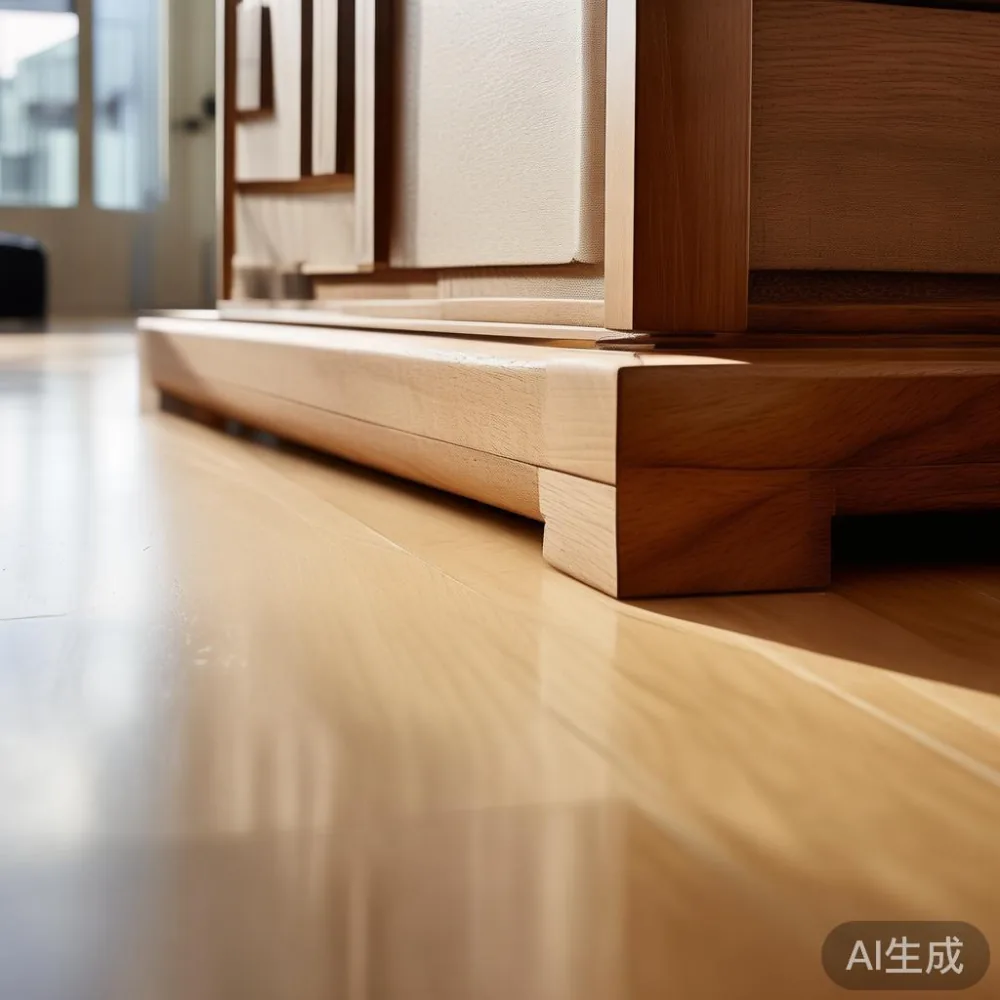
Price tags on solid wood pieces are wildly inconsistent in our market. You can find a six-drawer solid wood wardrobe for SGD 1,288 on one site and SGD 3,800 for something that looks identical on another. The honest answer is that the visible product is only 40-50% of what you're paying for. The rest is wood species, joinery, finish chemistry, logistics, and warranty infrastructure. I'll walk through each driver with the numbers, the lift constraints of a typical Punggol Build-To-Order block, and a few bedroom-design considerations specific to HDB and condo layouts in the East.
Wood species and how much it actually costs per cubic metre
The single biggest driver is the species of wood, and Singapore buyers are often paying for names they cannot verify. Rubberwood (Hevea brasiliensis) is the most common in budget solid wood furniture, sourced from Malaysian plantations after their latex yield declines around year 25-30. A kiln-dried rubberwood board runs roughly SGD 580-720 per cubic metre landed in Singapore. White oak, by contrast, is imported from Appalachia and costs SGD 2,100-2,600 per cubic metre. Walnut from the American Midwest sits around SGD 2,800-3,400 per cubic metre. Ash and beech fall between, at SGD 1,450-1,900 per cubic metre.

For a 1.8 × 2.0 m bed frame using roughly 0.18 m³ of lumber, that means the raw material alone spans from SGD 104 (rubberwood) to SGD 612 (walnut). A dresser that uses 0.25 m³ of oak already has SGD 525-650 of wood in it before a single screw is driven. When you see a 1.8 m solid wood bed frame advertised under SGD 1,000 in Singapore, the math only works if it is rubberwood, plantation pine, or — increasingly — a veneer-core panel with a 2 mm solid outer layer. None of those are lies per se, but they are not what a Bedok couple imagines when they hear "solid wood."
There's a second layer here: drying. Properly kiln-dried wood drops to 8-12% moisture content, which suits our 24/7 air-conditioned bedrooms. Wood that is air-dried or only surface-dried will move 4-6% across seasons, opening joints and cracking panels. Kiln drying adds roughly SGD 80-140 per cubic metre, but it is the difference between a piece that survives 15 years and one that fails in three.

Joinery, hardware, and what your hands can feel in the showroom
Pick up the corner of any solid wood piece and feel underneath. If you feel exposed screws, recessed cam locks, or thin dowels, you are holding a flat-pack assembly piece. If you feel a flush shoulder joint, a sliding dovetail, or a mortise-and-tenon with a wooden peg driven through it, the price you are paying includes labour hours — typically 3-8 hours per dining table, 4-6 hours per bed frame — at a Foshan workshop rate of SGD 18-32 per skilled hour.
A mortise-and-tenon joint on a dining table apron resists racking because the tenon is wedged inside a precisely cut mortise. A dowel joint relies on glue and a 10 mm wooden pin. A pocket-screw joint relies on a 6 mm screw angled into end grain. Under the cyclic humidity of a Singapore condo (we run the AC at 22-25 °C for eight months and leave windows cracked during Chinese New Year visits), the pocket-screw joint will loosen in 2-4 years, the dowel joint in 5-8 years, and the mortise-and-tenon will still be tight at year 15.
Hardware matters equally. A soft-close hinge from Blum or Hettich runs SGD 6-9 per pair, while a generic no-name hinge costs SGD 1.20-1.80. A wardrobe with six doors has 18 hinges, so the hardware bill alone differs by SGD 80-130. Drawer slides rated for 45 kg cost SGD 22-34 per pair; budget slides rated for 15 kg cost SGD 5-9. For a five-drawer dresser, that is a SGD 130-250 difference that determines whether your partner's winter sweater drawer will droop after a year.
How does shipping from Foshan actually work, and what does it cost per cubic metre?
Solid wood is heavy. A 1.8 m bed frame in oak can weigh 78-95 kg; a six-door wardrobe can weigh 220-310 kg. Shipping from Foshan to Singapore is overwhelmingly sea freight — Yantian or Shekou to PSA, then a Singapore-side truck to your address. The volume-to-weight ratio matters: oak runs roughly 720 kg per cubic metre, rubberwood 560 kg per cubic metre.
Current 40-foot high-cube container rates from South China to Singapore sit around USD 380-520, with transit of 5-8 days port to port. LCL (less-than-container) rates for furniture typically run USD 85-130 per cubic metre, with a 0.5 m³ minimum. Customs duty on finished wooden furniture is 0% under the China-Singapore FTA when the certificate of origin is correct, but GST of 9% still applies on the CIF value. For a SGD 3,000 wardrobe, that is SGD 270 of GST before the piece reaches your door.
Last-mile delivery inside Singapore is the part nobody talks about. A Punggol HDB corridor is typically 1.2 m wide, and the lift opening is usually 0.9 m wide. A flat-packed wardrobe might fit in the lift but arrive with 14 boxes that you must carry up five flights if the service lift is booked. A fully assembled wardrobe delivered by a workshop that does its own routing, like MIDHILL's Singapore-side logistics partners, can pre-measure the lift and pre-disassemble only the panels that won't clear, then reassemble in your bedroom. That is a real cost difference of SGD 80-220 per delivery, and it explains why "free shipping" only kicks in at the SGD 350 threshold that most serious pieces easily exceed.
How do I choose a return policy for a balcony?
A balcony is not a bedroom, but Singapore buyers often evaluate a furniture brand's return policy while standing on one, so it's worth answering directly: choose a return policy that is written in plain SGD figures, names the party responsible for return shipping, and gives you a defined inspection window measured in calendar days from the moment of delivery, not from the order date. The policy should specify who pays the disassembly fee if the piece has already been built, what happens to custom dimensions, and whether the refund is issued to the original payment method within a stated number of business days. A 14-day return window is the Singapore norm for made-to-order solid wood pieces; a 30-day window is more common for stocked items. Anything shorter than 7 days is a red flag because you cannot realistically inspect a 95 kg bed frame, move it twice, and re-pack it within a working week. MIDHILL publishes its 14-day return terms in the same place it publishes the structural warranty length, which is the kind of pairing you want to see before paying.
Surface finish, VOCs, and the bedroom-design air quality question
In a Singapore bedroom-design plan, the air you breathe for eight hours a night depends entirely on what was sprayed onto your wood. The two common paths are conversion varnish (a catalyzed acid-cured system) and water-based polyurethane. Conversion varnish lays down a hard, furniture-grade film 0.05-0.10 mm thick; it costs SGD 28-42 per square metre to apply but off-gases formaldehyde and xylene for 7-14 days. Water-based poly costs SGD 18-26 per square metre, off-gases for 3-5 days, and carries lower VOC totals — typically under 50 g/L versus 350-450 g/L for solvent finishes.
For a wardrobe with 14 m² of external surface, the finish line item spans SGD 252 (water-based) to SGD 588 (conversion varnish). Wax and oil finishes are a third path: they cost only SGD 8-14 per square metre, but they require reapplication every 18-24 months, and they will mark if you put a wet glass on the nightstand. If you have a child with eczema or asthma, the finish choice matters more than the wood species.
Warranty structure and what it tells you about the workshop behind the piece
A 10-year structural warranty is meaningful only if the workshop still exists in year 11 and has spare capacity for a claim. MIDHILL has run its Foshan workshop since 2008 and exports to 15+ countries, which is the kind of track record a 10-year structural warranty is designed to back. A two-year warranty from a marketplace seller with no factory visibility is a different product, even when the wood species and dimensions look identical.
Lifetime refinishing is the second warranty layer worth pricing in. A solid oak dining table that costs SGD 2,800 new, with a lifetime refinishing offer, has a different 20-year cost than a SGD 1,900 oak table you must sand and re-oil yourself or pay SGD 280-420 per refinish at a Singapore workshop. Over 20 years, refinishing adds SGD 800-1,400 of value to the higher-priced table.
How light-luxury positioning changes the price conversation
French light luxury, American light luxury, and post-modern light luxury are three design languages you will see in Singapore showrooms, and they each carry different price drivers. French light luxury leans on carved aprons, cabriole legs, and brushed brass — it adds 15-25% to the base price because the carving is done by hand or a five-axis CNC with hand-finishing. American light luxury runs toward clean Shaker lines, white oak, and blackened steel — it adds 8-12% because the construction is simpler but the materials are pricier. Post-modern light luxury pairs curved silhouettes with high-gloss lacquer or marble accents, which adds 20-35% due to multi-coat lacquer work and marble-table fabrication. A marble-top nightstand in post-modern light luxury can run SGD 1,150-1,650; a Shaker oak nightstand of the same dimensions runs SGD 480-720.
The light-luxury frame also tells you the kind of bedroom-design layout a piece wants. A French light luxury solid wood sofa with a tufted back anchors a master bedroom reading nook in a Punggol EC; an American light luxury bed frame suits a minimalist four-room HDB; post-modern light luxury with marble tables tends to land in condo master suites where the wardrobe is built into a false wall.
The Singapore-specific variables nobody prices online
Three local variables change the real cost. First, GST of 9% is included in the displayed price on most local sites but added at checkout on cross-border ones; check before comparing. Second, lift access on upper floors: a 95 kg bed frame that won't fit in a 0.9 m lift opening must be hand-carried up the service staircase, which adds SGD 60-140 per trip and is sometimes impossible after 9 pm under MCST rules. Third, monsoon season humidity spikes: pieces delivered in November-January need 7-10 days of acclimatisation in the bedroom before assembly, otherwise the joints will be tight in December and gappy in March.
For a Tampines four-room HDB bedroom-design project at 12 m², the realistic budget for a complete solid wood set — bed frame, two nightstands, six-door wardrobe, and a dressing table — runs SGD 6,800-9,200 in rubberwood, SGD 11,500-15,800 in white oak, and SGD 18,000-26,000 in walnut. The dressing table category in particular rewards careful shopping: a piece sold as a French dressing table japan style can mean very different things across vendors, so verify the joinery and finish separately from the silhouette.
A short checklist before you pay
Ask for the species in writing, the moisture-content reading, the joinery method on each corner, the hardware brand on hinges and slides, the finish chemistry with a VOC number, the warranty length with the workshop's years of operation, and the delivery plan with measurements of your lift and corridor. If the seller cannot answer three of those seven within 24 hours, the price was never realistic. A solid wood wardrobe from a workshop that has been shipping since 2008 will always cost more than one from a fly-by-night reseller — and it will still be cheaper than replacing the cheap one in seven years.