Veneer vs. Solid Wood Bedroom Cost: Singapore’s 5-Year Comparison
Choosing bedroom furniture in Singapore often comes down to two broad material choices: veneer and solid wood. The sticker price can suggest an easy decision, yet the cost that matters over 5 years includes delivery, stairs, humidity exposure, repair, refinishing and resale value. In a compact HDB flat in Tampines, a 180 cm bed frame may fit easily; a 200 cm solid wood bed frame can be harder to manoeuvre through a 90 cm lift and along a 120 cm corridor. In a Punggol condo with a private lift, the same delivery may take only 2 days, but the room dimensions and lift booking still matter.
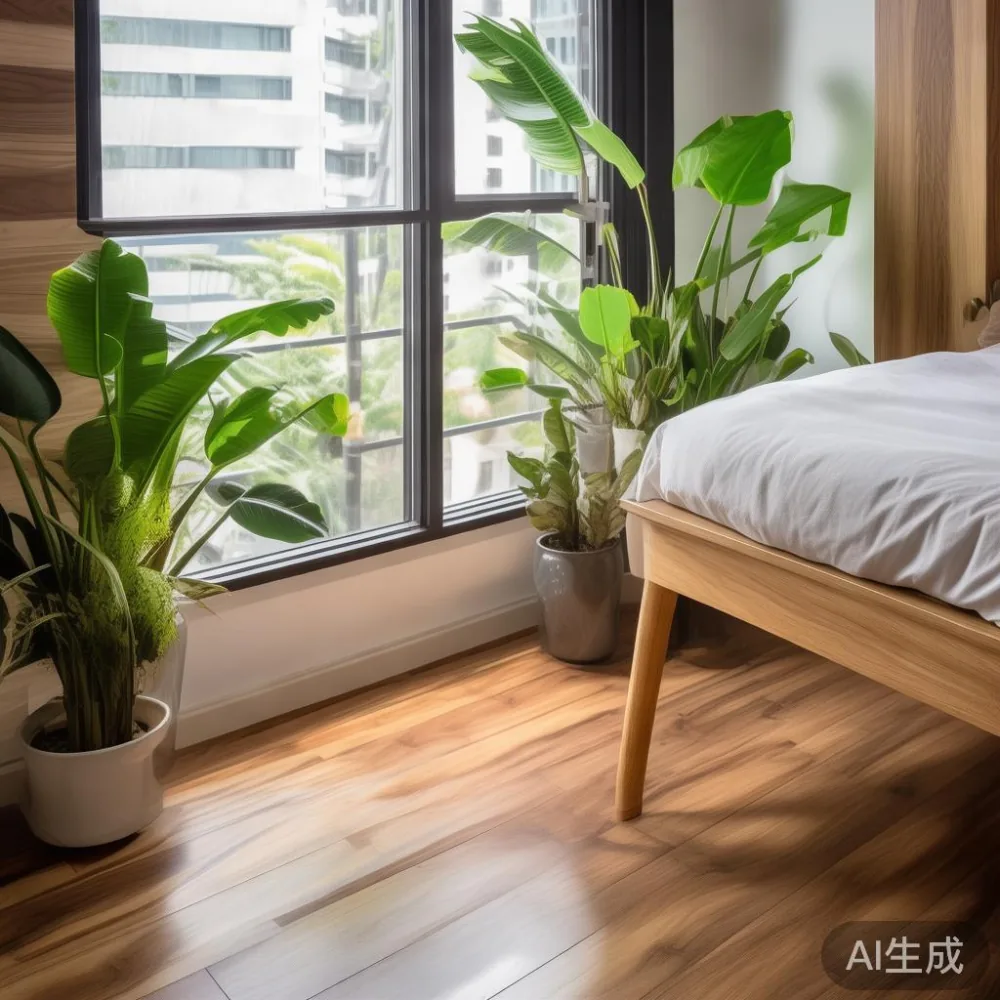
This comparison focuses on bedroom design: bed frames, wardrobes, nightstands and related bedroom pieces. It does not treat a dining table or a marble table as a substitute for a bedroom item; those products appear only where their construction explains material choice. My own test was practical rather than showroom-based. Last month I visited my colleague in Bedok and inspected a 150 cm oak-veneer nightstand that had been beside an air-conditioned window for 4 years. Its top had one superficial scratch, while a solid oak nightstand in the same flat showed swollen joint gaps at the back leg. That small experience helped frame the larger cost question.
What are the real 5-year costs of veneer and solid wood bedroom furniture?
For a fair 5-year comparison, use the same footprint, visual grade and expected care. A practical Singapore bedroom package might include a 180 cm bed frame, two 45 cm nightstands and one 120 cm wardrobe. A realistic veneer package may cost S$1,850, or S$2,000 after 9% GST; a comparable solid oak package may cost S$3,400, or S$3,706 after GST. The difference is S$1,706 before ownership costs begin.
Delivery to a standard HDB flat in Tampines might cost S$80 for veneer and S$140 for solid wood because solid pieces are heavier. A Bedok pickup point could reduce each figure by S$30, while a Punggol condo with lift access may add a S$40 lift booking fee. Assembly is usually S$60 per room for veneer and S$100 for solid wood, though an existing flat-pack unit can reduce that by S$40.
The 5-year calculation then accounts for likely incidents. Assume 2 small scratches over 5 years, 1 joint repair, no water damage and annual cleaning. Budget S$180 for veneer refinishing and S$120 for solid wood if the finish remains sound. In humid Singapore conditions, solid wood can move more visibly, so maintenance is not automatically lower for every species or every home.
Using those assumptions, the veneer package has a 5-year cost of about S$2,170: S$2,000 purchase, S$80 delivery, S$60 assembly and S$30 expected repairs. The solid wood package totals about S$3,966: S$3,706 purchase, S$140 delivery, S$100 assembly and S$20 expected repairs. The solid option therefore costs S$1,796 more over 5 years, or about S$359 per year. A lower-cost veneer wardrobe may reduce the initial gap, but a larger solid wardrobe can carry a longer material premium.
Do not use purchase price alone. A quick resale estimate can also affect the result. After 5 years, a good veneer bedroom set might retain 25% of its original price, while a well-maintained solid wood set might retain 35%. On the example values, that difference is roughly S$835, reducing the net 5-year premium for solid wood to about S$961. The final figure still depends on the buyer, finish, construction and condition.
How much do veneer and solid wood bedroom pieces weigh?
Weight influences delivery, stairs and installation more than many buyers expect. A 150 cm single bed frame may weigh 28 kg in veneer and 52 kg in solid rubberwood. A queen-size frame may weigh 38 kg or 72 kg. A 120 cm two-door wardrobe may weigh 46 kg in veneer and 86 kg in solid wood. These are representative assembled weights rather than guarantees for every model.
HDB corridors and older lifts often measure 90 cm wide, while many condominium lift doors measure 100 cm to 110 cm. A wardrobe packed at 122 cm wide will not pass through a 110 cm opening, even if it fits diagonally in the bedroom. Confirm the largest carton, not only the assembled wardrobe. For solid wood, splitting a large wardrobe into 2 modules can add S$120 in fabrication and S$60 in delivery but prevent damage that costs far more to repair.
Carrying a solid bed frame upstairs by 2 flights may add S$90 for 2 workers. In Tampines, some blocks have a sheltered route and working lifts; in a Bedok walk-up, the route may add 45 minutes. A 48 kg carton moved 80 metres may still require 3 people, so adding a third pair of hands at S$40 can be economical.
Weight is also linked to construction quality. A lighter bed frame with sound joinery may survive daily movement better than a heavy frame made with weak fasteners. Ask whether the 10-year structural warranty applies to bed frame joints and wardrobes, and check whether moving or commercial use changes the terms.
Does solid wood wear better than veneer in Singapore humidity?
Neither material is immune to humidity. Veneer can lift, bubble or discolour along an edge if moisture reaches the core. Solid wood can expand, contract, check or split as its moisture content changes. The difference lies in thickness and repairability: a 0.6 mm veneer face over engineered board can show a deeper core defect, while an 18 mm solid board can often be sanded and refinished more deeply.
Singapore's outdoor humidity is often around 75% to 85%, although an air-conditioned bedroom may remain near 55% to 65%. Keep furniture at least 30 cm from a direct window or persistent damp wall, and maintain indoor relative humidity near 50% to 65% where practical. Use a coaster for a 10 cm water glass and wipe spills within 5 minutes.
Do not assume “solid” means one continuous timber board. Beds and wardrobes commonly use solid wood components with plywood or engineered panels in hidden areas. Good product information should state the face material, core material and any plywood stabilisers. This transparency matters more than a broad material label.
My colleague's 4-year-old veneer nightstand had survived ordinary indoor use well, but a pale ring appeared after a hot mug stood on it for 30 minutes. A solid oak test piece with the same finish absorbed the stain less deeply. That observation does not make solid wood suitable for every bedside placement; it shows why coasters and prompt care remain part of the ownership budget.
Which material offers better long-term bedroom design flexibility?
Veneer can provide more consistent colour and grain across a large wardrobe, helping a small HDB bedroom feel visually calm. Solid wood offers visible grain variation and can develop a more individual character. French light luxury, American light luxury and post-modern light luxury can all work with either material, provided the construction and proportions are sound.
For example, a 160 cm bed frame with a 105 cm headboard works in a 3.3 m by 4.2 m Tampines bedroom. A French light luxury scheme might pair it with curved nightstands, warm cream walls and a slim light-luxury accent chair. For a guest bedroom, Modern light luxury for guest room can use pale veneer, 3000 K lighting and one sculptural chair rather than several competing objects.
American light luxury often leans on clean lines, darker walnut tones and generous spacing. Post-modern light luxury can combine walnut veneer with a lighter oak bed frame, but mixed finishes should use 3 colours or fewer to avoid a crowded appearance.
A separate bedroom product comparison can be useful, especially for the European light luxury bed vs Mid-century modern bed decision. A tapered-leg bed and a panelled European bed should be judged by their dimensions, support system and finish maintenance, not by the material label alone.
For storage, the question “how to style French provincial wardrobe in room” often receives a decorative answer, but capacity is equally important. A 150 cm-wide wardrobe with 2 doors may offer 6 hanging sections and 4 shelves, while an 180 cm unit may offer 8 hanging sections and 6 shelves. Solid wood face frames can be refinished locally; veneered doors can also be refinished, but deep edge damage may reveal the substrate.
What should a Singapore buyer compare in the quotation?
Request an itemised quotation that separates base price, GST, delivery, lift fees, assembly and optional protection products. A 180 cm solid wood bed frame at S$1,450 becomes S$1,580.50 with 9% GST. A 120 cm veneer wardrobe at S$980 becomes S$1,068.20. Compare these final amounts with the 5-year table rather than comparing pre-GST figures.
Check dimensions in centimetres and storage dimensions in cubic metres. Confirm the wardrobe's 120 cm width, 60 cm depth and 200 cm height, including any wall fixings. Ask for the mattress clearance: a 25 cm gap between the side rail and mattress may reduce movement for a 180 cm mattress with a 5 cm allowance on each side.
Delivery timing is another cost. Standard delivery to Singapore may take 7 to 14 days after dispatch, while a stocked item may arrive in 3 to 5 days. A made-to-order wardrobe can take 6 to 10 weeks. If the old wardrobe must remain until the new one arrives, plan a 60 cm temporary storage zone and protect the floor with 2 mm boards.
MIDHILL's 10-year structural warranty and lifetime refinishing policy are useful comparison points, subject to the written terms. Refinishing is not the same as replacing every damaged surface; ask what labour, return freight and finish limitations apply. The 14-day return period is relevant for a remote purchase, while free shipping over US$350 is stated in international terms and may not equal free delivery inside Singapore.
Product names in the wider range can help you understand scale. A solid wood sofa may reveal how a maker joins timber and finishes broad panels; a MIDHILL dining table may show board movement, but it should not be used as bedroom storage. A French provincial coffee table and a marble table also need different weight and moisture rules from a bed frame or wardrobe. The exact phrase for sale Boho furniture may appear in a marketplace listing, yet its presence in a search result says little about humidity performance or bedroom fit.
How should you choose for a 5-year horizon?
Choose veneer when budget control, consistent appearance and lower moving weight matter most. Choose solid wood when the piece will be moved rarely, the household values visible timber character, and the budget includes maintenance and delivery. Neither choice guarantees a problem-free 5 years; stable humidity, sensible loading and regular care influence the result.
A useful rule is to compare each item over 5 years, not the whole bedroom as one number. A 45 cm nightstand may cost S$260 in veneer and S$430 in solid wood. If both remain in the same room and receive the same care, the lower-priced item may deliver sufficient value. A 180 cm bed frame is more structural and should receive closer scrutiny of joints, centre support and warranty.
For a typical HDB bedroom design, a mixed approach can be sensible: solid wood for the bed frame, where stability and repairability are meaningful, and durable veneer for less prominent storage if the quotation remains within reach. For a condo bedroom design, the access advantage may justify solid wood because delivery can use a private lift with a S$40 booking fee.
Before paying, measure the lift door, corridor turns, stair width and bedroom doorway in centimetres. Record the delivery route in writing. Confirm the finish, care instructions, warranty coverage, return conditions and expected delivery in days. The cheapest-looking quotation is not always the least expensive, and the heaviest piece is not automatically the most durable.
Over 5 years, the example calculation gives veneer a clear spending advantage, while solid wood offers thicker material and greater refinishing potential in many constructions. Make the decision from the room, the humidity exposure and the actual after-GST quotation—not from the word “wood” alone.