Singapore Bedrooms: Veneer vs. Solid Wood Cost Comparison
Choosing bedroom furniture in Singapore rarely comes down to appearance alone. A solid wood bed frame may cost SGD 1,800 today, while a carefully made veneer bed frame may cost SGD 1,200. Over 5 years, the cheaper option can become more expensive if veneer edges lift, engineered boards lose stability, or a piece cannot be refinished.
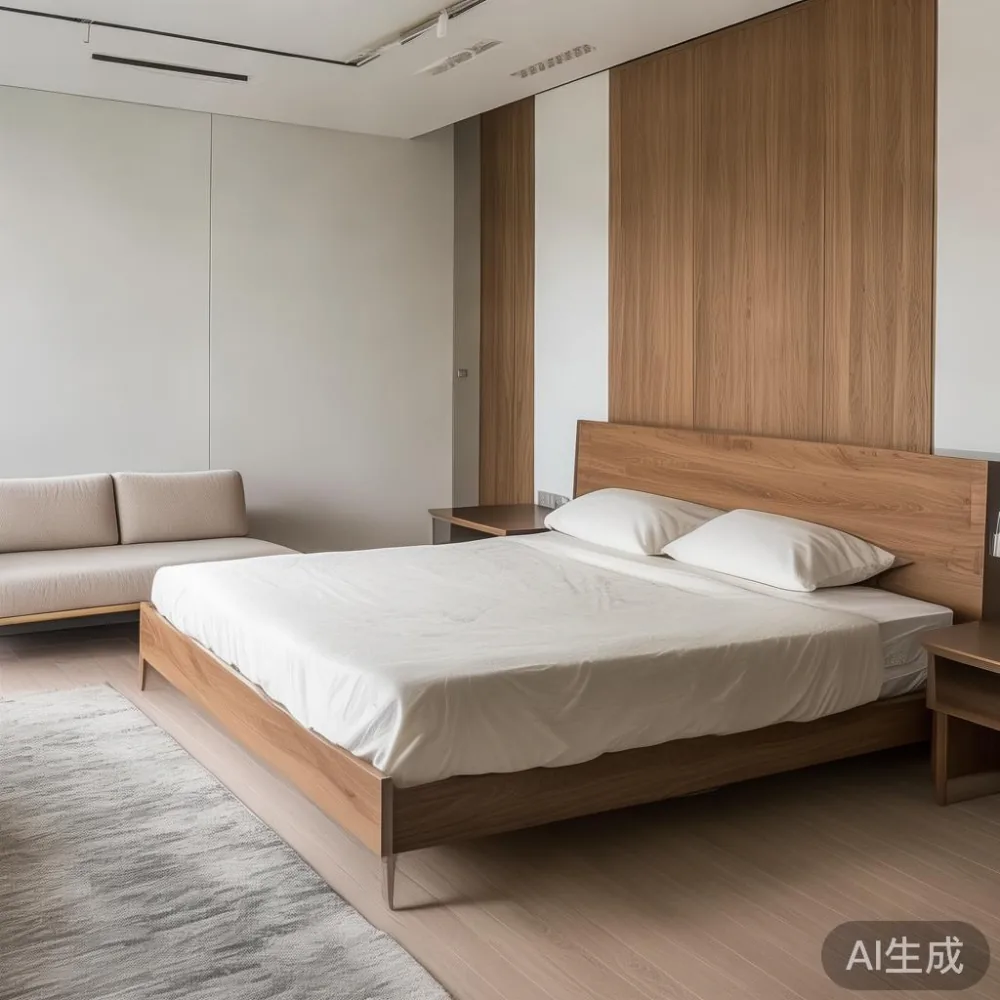
This comparison covers wardrobes, bed frames, nightstands, solid wood sofas used at the foot of the bed, and occasional marble tables. All prices include Singapore GST, with delivery assumed within Singapore. Installation, removal and disposal are excluded because they vary too much between HDB flats and private condos to calculate responsibly.
What does veneer cost over 5 years compared with solid wood?
Veneer is a thin layer of real timber, usually 0.6-1.2 mm thick, bonded to an engineered board. The visible face can look convincing because it is genuine wood, but the structural core is not solid timber. The panel may contain particleboard, MDF or plywood, with each option affecting stability differently.
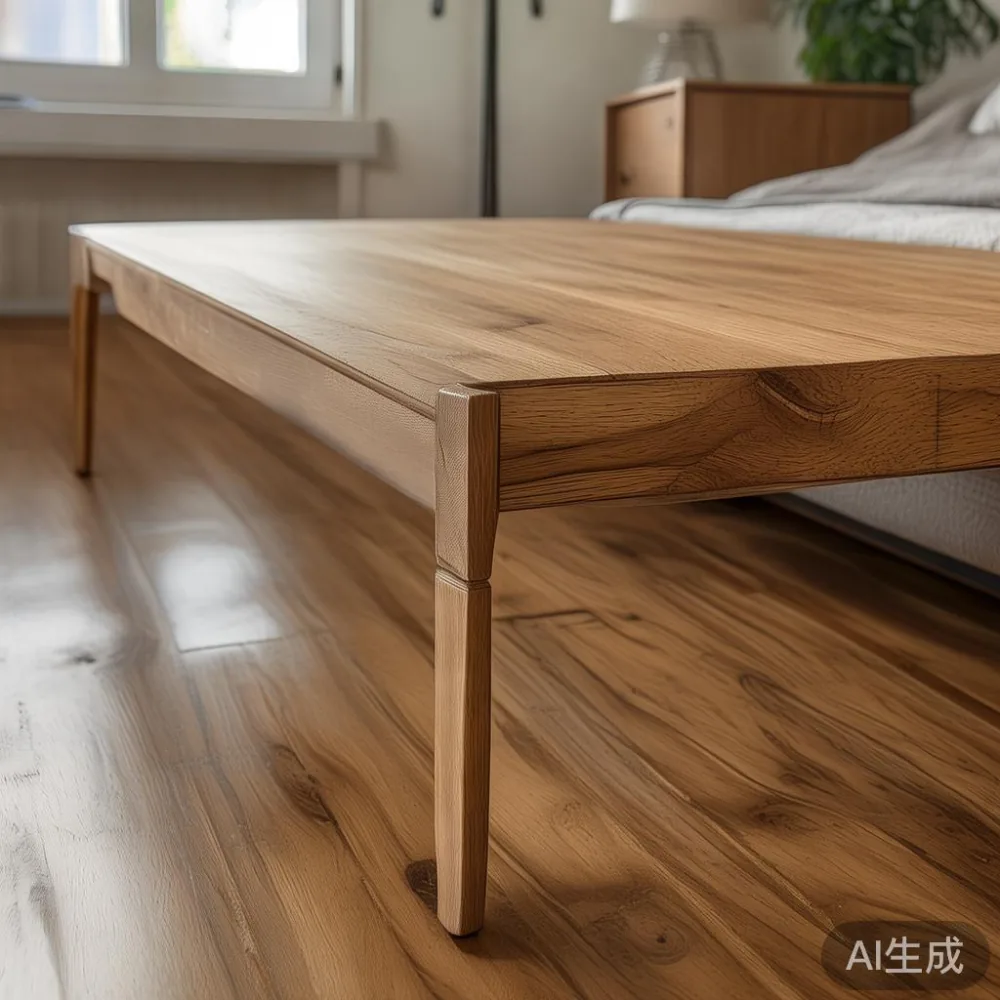
For a Singapore bedroom, here is a practical 5-year estimate for a queen bed frame measuring 150 cm by 200 cm:
- Solid oak or solid walnut bed frame: SGD 1,800 purchase price, SGD 45 delivery and assembly, SGD 120 for one careful refinishing, SGD 60 for minor hardware, and SGD 80 for moving within the flat. Total: approximately SGD 2,105.
- Veneer over plywood bed frame: SGD 1,200 purchase price, SGD 40 delivery and assembly, SGD 180 for edge repair or one replacement panel, SGD 50 for hardware, and SGD 80 for moving. Total: approximately SGD 1,550.
- Veneer over particleboard bed frame: SGD 950 purchase price, SGD 40 delivery and assembly, SGD 280 for repairs or a replacement side panel, SGD 60 for hardware, and SGD 80 for moving. Total: approximately SGD 1,410.
The initial veneer saving is SGD 600 on the example. If a major panel needs replacement in year 3, the saving can fall to roughly SGD 265 after repair costs. If the entire frame must be replaced in year 5, solid wood can cost less over that period.
Humidity is the real issue. Singapore's outdoor air often carries 75-90% relative humidity, while air-conditioned bedrooms may sit near 50-60%. Direct measurements are more useful than labels such as “water-resistant.” Look for a plywood or solid timber core, sealed edges on all 6 faces, and a finish that can tolerate damp finger contact.
For HDB homes in Tampines, Bedok and Punggol, fit should be checked before purchase. A 150 cm by 200 cm bed may fit a 220 cm room, but the frame, nightstand and wardrobe opening still need circulation space. A standard lift lobby may be 110-140 cm wide, while older condo corridors can narrow to 90-105 cm. A 150 cm long bed can be turned upright if it is not too heavy, but a 75-90 kg solid timber frame is less convenient than a 35-50 kg engineered alternative.
The calculation also depends on what is being replaced. Veneer can be appropriate for flat-pack storage and low-impact pieces. Solid wood becomes more compelling when a bed frame supports daily loading, sits against a wall without ventilation, or needs to survive several moves and tenanted use.
Is European light luxury bed worth it for a Singapore home?
The question “is European light luxury bed worth it” usually involves curved headboards, tapered legs, oak tones and a softer visual language than a heavy traditional bed. It can suit a 3-room HDB bedroom if the frame measures 150 cm by 200 cm and the headboard is no more than 105 cm high. This keeps visual space open beneath ceiling heights of about 240-260 cm.
A French-inspired solid oak bed priced at SGD 2,400 with a 12 mm solid wood slat system, centre support leg and reinforced side rails can remain in service for at least 10 years. Its estimated 5-year ownership cost is SGD 2,685, including SGD 45 delivery, SGD 120 refinishing, SGD 60 hardware and SGD 60 moving.
A visually similar veneer version at SGD 1,600 may total SGD 1,935 after delivery, repairs and moving. That is SGD 750 less over 5 years. The difference becomes difficult to ignore if the veneer is bonded to particleboard and a 150 cm rail begins to soften.
This style should not be confused with bulky French provincial decoration. If you are searching for luxury French provincial furniture, expect carved details, deeper profiles and more visual weight than a modern light-luxury bed. For compact Singapore rooms, restrained curves, pale oak and slim supports are usually easier to maintain. A knowledge of how to style French provincial sofa in bedroom layout matters only if that sofa is part of the sleeping area; a 180-200 cm sofa can overwhelm a 9-12 m² bedroom, while a 140-160 cm loveseat or bench is more manageable.
MIDHILL furniture uses solid timber construction and offers a 10-year structural warranty, which makes ownership costs easier to forecast. The 10-year period exceeds this article's 5-year comparison because structural failure and normal surface wear are not the same issue. Lifetime refinishing is valuable in Singapore, where lacquer can be renewed rather than requiring replacement after furniture moves.
How much do wardrobes, nightstands and dressing tables cost?
A bedroom wardrobe is often the largest purchase and the main source of installation friction. For a 180 cm wide, 220 cm high and 58 cm deep wardrobe, realistic Singapore prices are:
- Solid wood wardrobe: SGD 2,800 to SGD 4,800 before installation.
- Veneer over plywood wardrobe: SGD 1,800 to SGD 3,200.
- Veneer over particleboard wardrobe: SGD 1,350 to SGD 2,400.
Over 5 years, add about 5% of purchase price for solid wood finishing and 8-15% for veneer repair risk, plus actual service costs. A 2,800 SGD solid wood wardrobe with 2 doors would total approximately SGD 2,940 after a 2% finish allowance and moving. A 1,800 SGD plywood-backed veneer wardrobe might total SGD 2,045 after a 12% repair allowance and moving.
The lower repair allowance for solid wood does not mean timber is maintenance-free. Singapore dust, hand oils and sunlight can dull a finish. Cleaning a lacquered surface with a damp cloth takes about 10 minutes; harsh cleaners can cloud it. Veneer has a different risk: a 2-4 mm chip at a handle or exposed corner cannot be filled invisibly with ordinary paint.
For nightstands, a 45 cm wide solid wood unit costs SGD 320-650. A veneer unit costs SGD 180-380. Five-year totals generally range from SGD 370-710 and SGD 220-430 respectively. A small marble table used as a bedside surface may cost SGD 450-900, and marble needs sealing rather than refinishing.
Dining tables can inform material selection because the same moisture lessons apply, but this comparison stays focused on bedroom design. If a round table is needed in a dining area, a 120 cm diameter solid oak model usually weighs 45-60 kg, while an engineered model may weigh 30-40 kg. Neither should be moved alone through a 90 cm corridor.
Which bedroom furniture survives Singapore humidity better?
Neither material is completely immune to humidity. Solid wood can expand and contract across its grain, while veneer can peel or its adhesive can weaken when moisture enters an exposed edge. The deciding factors are timber species, board construction, edge sealing and ventilation.
For solid wood, kiln-dried oak with moisture content near 8-12% is suitable for air-conditioned interiors. Walnut and other denser timbers may move less but cost more. For veneer, plywood with at least 9-11 plies offers better screw holding and dimensional stability than particleboard or basic MDF.
Measure a bedroom before ordering. Leave at least 60 cm between a bed side and wardrobe face, 75 cm in front of drawers where possible, and 90 cm beside a bed if a person walks through that zone daily. These are planning allowances, not building-code claims. Check skirting boards, power outlets and window projections because a 58 cm wardrobe that is mathematically correct may still hit a projecting window frame.
Delivery is another measurable cost. Singapore furniture deliveries commonly take 7-14 calendar days after production, with peak periods adding 3-7 days. MIDHILL provides free shipping over US$350, though the final Singapore invoice remains denominated in SGD and must account for GST and local handling.
Installation may add SGD 80-220 for a flat-pack bed, SGD 150-350 for a wardrobe and SGD 40-100 for a nightstand. Older HDB lifts sometimes measure only 80-90 cm across the car, while newer lifts can accept 140-180 cm furniture. If the lift is unsuitable, stair carrying is not automatically cheap; a 75 kg bed frame carried up 8 flights may cost SGD 250-500.
How do I compare a Mid-century modern bed with an American bed?
The American bed vs Mid-century modern bed comparison is about proportions and construction, not nationality. An American-style solid wood bed may use substantial rails, a 35-45 mm headboard and a broad stance. A Mid-century modern bed often has tapered legs, a lower profile and visually lighter supports. A mid-century inspired solid wood frame may cost SGD 1,500-2,600, while a veneer version costs SGD 950-1,700.
Do not assume thin legs mean low strength. Inspect the centre rail, slat spacing and fasteners. For a queen mattress, supports at intervals of no more than 7-10 cm can reduce sagging, depending on the mattress type. The frame's rated load should also match the mattress, because a dense foam mattress and a spring mattress exert different loads.
A post-modern approach can combine rounded edges, mixed textures and asymmetry. Under 2000 Post-modern furniture searches often return a bed frame below SGD 2,000, but material description needs close attention. A solid wood bed frame with engineered internal supports at SGD 1,780 may offer a better balance than an all-veneer frame at SGD 1,180 if both have comparable warranty terms.
For a related bedside accent, a Mid-century modern coffee table may be adapted for a bedroom, but its dimensions should remain compact. A 90 cm by 45 cm table can sit beside a bed; a 120 cm by 60 cm version needs more floor area. Use it for books, a lamp and a tray rather than placing a hot cup directly on marble or lacquer.
Light-luxury styling can make either material look similar at a distance. The material difference becomes clearer over time through edge condition, fastener stability and repairability. For frequent moves, lighter construction is convenient. For a permanently fitted bedroom and a 5-year horizon, solid wood offers more control over long-term costs.
What is the realistic 5-year cost difference?
Consider a complete bedroom package: one queen bed frame, one 180 cm wardrobe, two 45 cm nightstands and one small marble table. Typical Singapore prices are:
- Solid wood package: SGD 4,200-7,200 initially. Delivery and assembly add roughly SGD 250-500. A finish refresh near year 4 adds about 3%. Total after 5 years: approximately SGD 4,575-7,739.
- Veneer package: SGD 2,900-5,000 initially. Delivery and assembly add roughly SGD 220-420. A 10% repair and replacement allowance brings the total to approximately SGD 3,438-5,920.
The apparent saving from veneer is often SGD 1,000-1,800. For a package with plywood-backed panels and careful use, most of that saving may remain. For particleboard-backed panels in a humid, frequently used room, 2 panels may need replacement during 5 years, reducing the saving to SGD 500-1,100.
Solid wood wins financially when the furniture moves several times, children or adults use the bed daily, pets scratch surfaces, or a resale decision occurs near year 5. Veneer wins when the budget is fixed, the room is dry and well ventilated, and the buyer prefers new panels without accepting future edge repairs.
Owners can reduce risk in either case. Keep the bedroom between 24-27°C where practical and below about 65% relative humidity, leave 5 cm behind movable furniture where space allows, and avoid direct contact with wet towels. Use coasters, lift items rather than dragging them, and inspect moving joints every 6 months. A 5-minute check can reveal a loose wardrobe hinge before the panel bows.
Returns and warranties also affect the calculation. MIDHILL offers a 14-day return period and a 10-year structural warranty. These terms reduce the probability of paying to replace an item that arrives damaged or develops a qualifying structural fault. They do not cover every scratch, so maintenance remains part of the 5-year budget.
How should you choose for bedroom design in an HDB flat or condo?
Start with the room and the use pattern, then select material. Measure wall-to-wall dimensions at 3 points because older flats are not always perfectly square. Record door openings, lift dimensions and the route from the loading area. A solid wood bed frame that fits the room but cannot enter the lift may require partial disassembly or professional hoisting.
For a Tampines or Bedok HDB bedroom, where storage and frequent moving are common, plywood-backed veneer can be sensible if the panels have sealed edges and the warranty is clear. For a Punggol condo bought as a long-term home, solid wood is easier to maintain and refinish. Choose solid wood for the bed and frequently touched pieces if the budget allows, then use good-quality veneer for less demanding components.
Do not judge by the sample alone. Ask for the panel core, veneer thickness, finish type, moisture treatment and structural warranty. A credible specification should identify a 0.6-1.2 mm veneer, 9-11 ply core where relevant, and hardware such as dowels, screws and corner braces rather than relying on concealed particleboard fixings.
The financial break-even is usually within 5-7 years for a frequently used bed frame, but not necessarily for every wardrobe. Calculate a repair reserve of 10% for veneer and 2-4% for solid wood. Add the actual delivery quote, installation, removal and expected refinishing. Those numbers give a more useful answer than comparing catalogue prices alone.
For a light-luxury bedroom, material should support the style rather than dominate it. French light luxury, American light luxury and post-modern light luxury can all work with restrained solid wood profiles, natural grain and warm neutral textiles. The result is calmer, easier to maintain and less dependent on short-lived surface finishes.
After 5 years, a well-built solid wood package may carry a smaller total bill because it can be repaired and refinished. A well-engineered veneer package can remain less expensive if it is used gently and kept dry. The soundest choice is not a universal rule but a documented one: verified construction, protected edges, suitable room conditions and a realistic maintenance reserve.