Singapore Bedroom Cost Breakdown: Veneer vs. Solid Wood, 5-Years Unveiled
Choosing bedroom furniture in Singapore often comes down to 2 material routes: veneer or solid wood. The sticker price can favour engineered veneer, while the 5-year bill depends on moisture resistance, repair time, replacement parts and resale value. In a compact HDB flat in Tampines, Bedok or Punggol, those issues matter because a damaged panel must move through the same lift and corridor system as the original delivery.
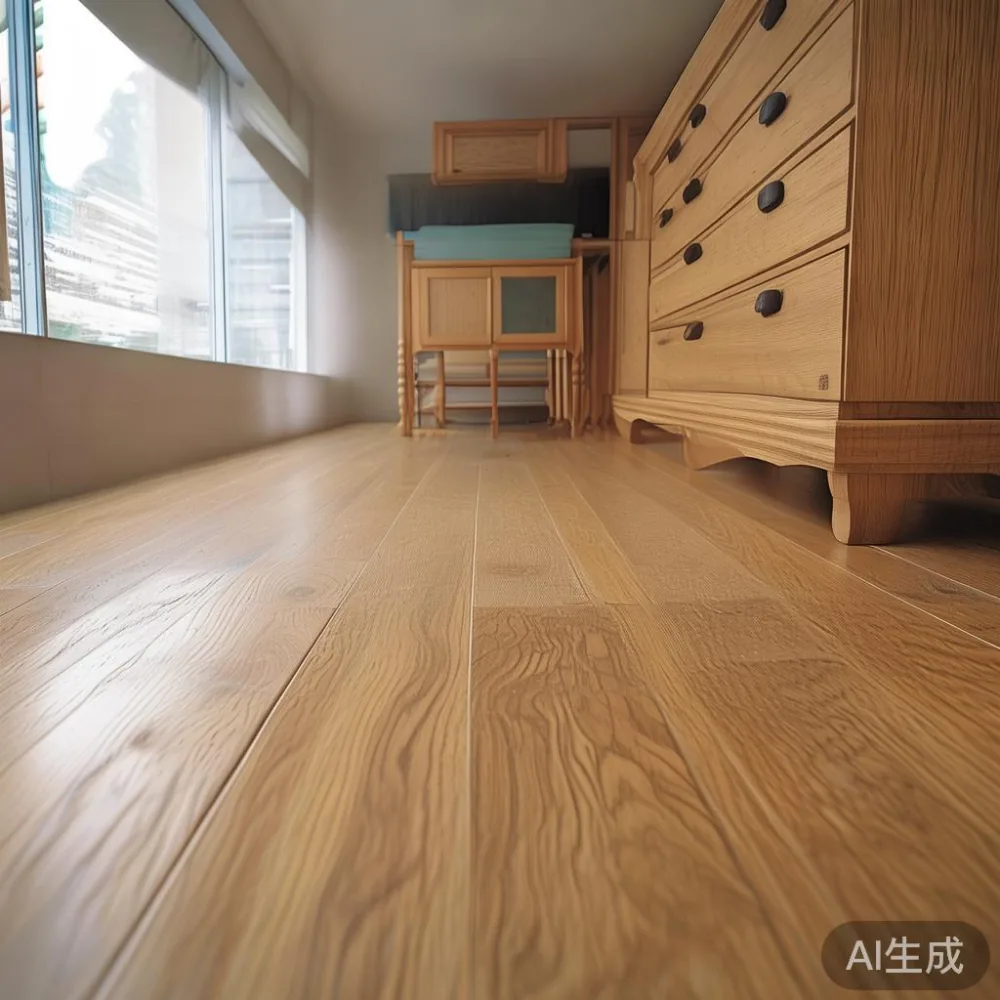
This comparison covers a typical bedroom package: 1 bed frame, 1 wardrobe, 2 nightstands and 1 dressing table or slim desk. All prices below are illustrative Singapore retail estimates in SGD before GST unless stated otherwise. Furniture dimensions, brands and installation charges vary, so use the figures as a planning model rather than a quotation.
MIDHILL makes solid wood bedroom furniture and supports its products with a 10-year structural warranty and lifetime refinishing. Established in 2008 and exporting to more than 15 countries, the company serves customers with practical questions about sourcing, finish care and long-term value. Its free shipping threshold of US$350 applies to qualifying international orders; Singapore delivery arrangements should be confirmed directly.
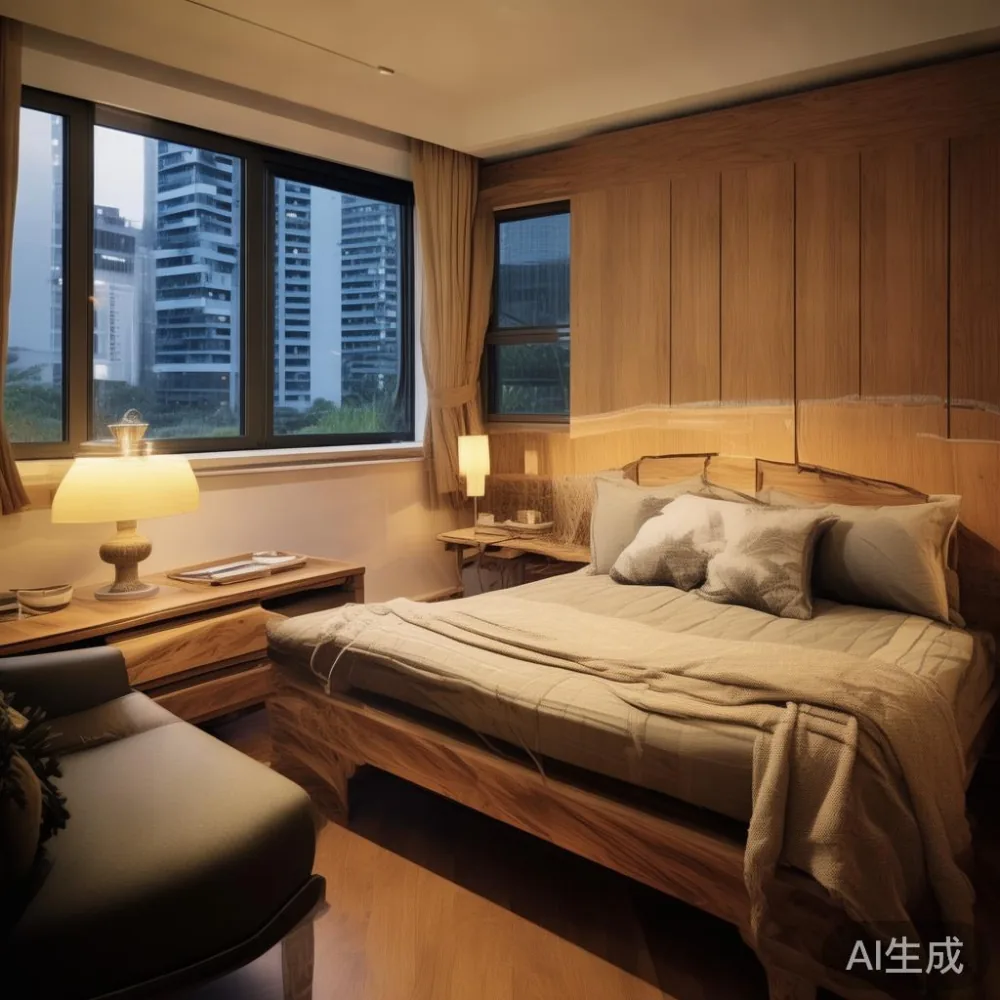
What does veneer cost compared with solid wood over 5 years?
For a compact Singapore bedroom, assume a 150 cm-wide bed frame, a 180 cm-wide wardrobe, 2 nightstands at 45 cm each, and 1 table at 120 cm. The usable room depth is often only 300-360 cm after accounting for door swings, skirting and circulation. Lift doors commonly measure about 90 cm wide and 210 cm high in older HDB blocks, while corridor turns can restrict long cartons even when the individual panels fit.
A representative engineered-veneer package might cost S$2,450 including basic delivery and assembly. A comparable solid-wood package might cost S$4,200. At a 9% GST rate, the base amounts become approximately S$2,671 and S$4,578 respectively, before any applicable Singapore delivery charge. Over 5 years, the simple ownership cost is S$534 per year for veneer and S$916 per year for solid wood, excluding repairs, refinishing and disposal.
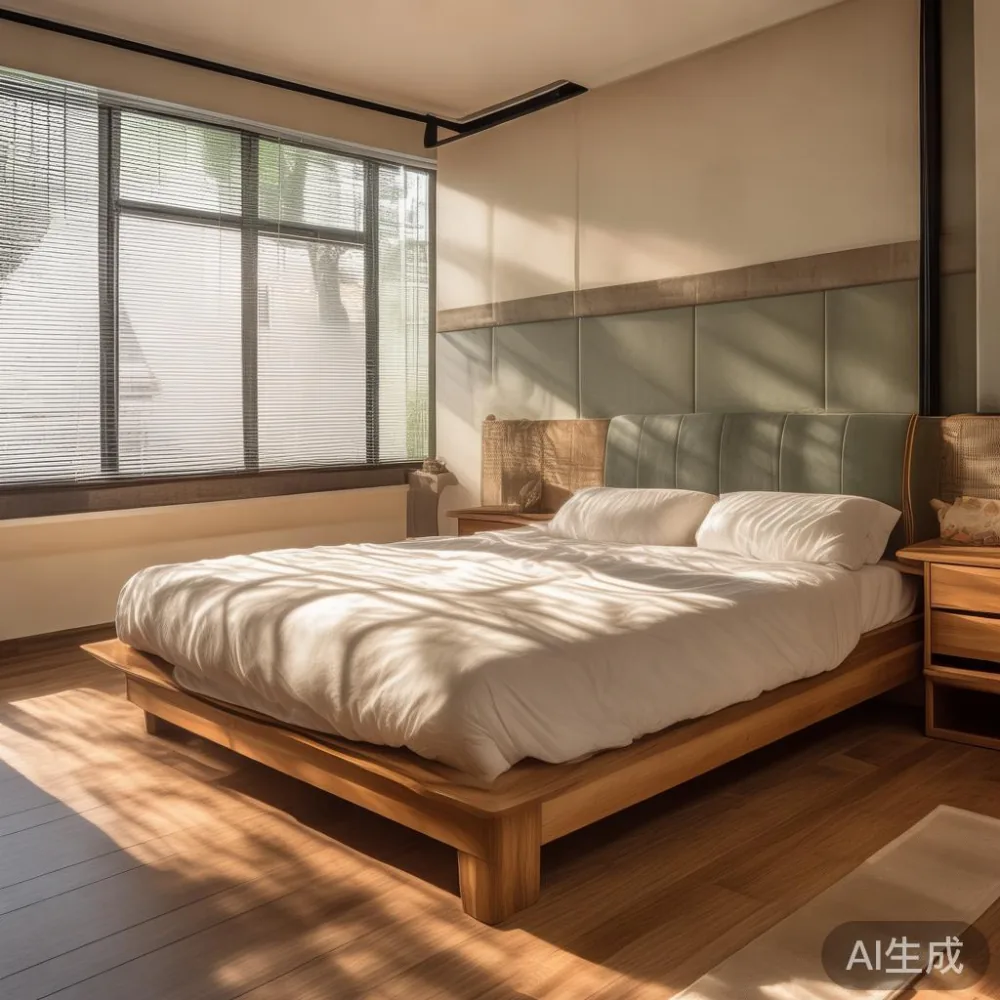
Those figures do not settle the choice. Veneer can make sense for a low-use room, a rental unit or a frequently refreshed interior. Solid wood can offer a longer repair life, better joint retention and more stable appearance in humid conditions when species and construction are suitable. The right comparison is not material label alone; it is cost per usable year under Singapore conditions.
How much can repairs and humidity change the 5-year total?
Singapore’s outdoor humidity often sits around 70-85%, with daily variation influenced by rain, air-conditioning and building orientation. Bedroom humidity managed between 45-65% is more comfortable for timber and finishes. A veneer wardrobe with chipboard or MDF cores may swell at exposed edges if its seal is broken. Repair can require edge banding, filler, colour matching and 2-4 days of room downtime.
Use a planning allowance of S$260 in year 2 for one swollen drawer front or delaminated panel, plus S$90 for a technician visit. If the same wardrobe needs another S$210 intervention in year 4, the cumulative maintenance reaches S$560. Add 2 days of temporary inconvenience per event and a new wardrobe handle costing S$35, and the veneer case rises to roughly S$3,266 including GST over 5 years, excluding the original assembly premium.
The solid-wood case may need less intervention. Budget S$95 in year 3 for a drawer runner adjustment, S$70 in year 5 for wax or polish, and S$120 for 1 minor surface repair. Its 5-year maintenance allowance is S$285, producing a planning total of about S$4,863 including GST. The difference has narrowed from about S$1,907 initially to about S$1,597.
This is a planning example, not a guarantee. A sealed, well-installed veneer wardrobe may incur S$0 repairs, while an untreated solid-wood product stored beside a leaking window can warp. Solid wood is not moisture-proof, and engineered veneer is not automatically weak. Construction, edge sealing, wood species, finish thickness and maintenance determine performance.
What should a Singapore buyer pay for delivery and installation?
Delivery can erase part of the material saving. A flat-pack veneer bed frame may fit in 3 cartons of 160 × 45 × 18 cm and require a S$90 delivery fee within Singapore. A solid-wood bed frame may arrive in 5 heavier cartons of 165 × 50 × 22 cm, with each carton weighing roughly 24-32 kg. The installer may need 45-75 minutes longer because alignment and joint tightening take more time.
For a full package, a realistic allowance is S$180-320 for veneer delivery and assembly, or S$240-450 for solid wood in a standard HDB block. An upstairs move without a usable lift can add S$120-260. A narrow common corridor below 120 cm may require the panels to be turned on their sides; a curved staircase or 198 cm ceiling restriction may require a second crew.
Measure before buying: the lift car, lift door, landing turn, stair width, bedroom door and final assembly space. Leave at least 60 cm beside a wardrobe for drawers and doors to open fully. Allow 75-90 cm at the side of a bed where a person sits, and keep at least 60 cm between the bed foot and opposite furniture. These clearances make bedroom design safer and reduce the chance of damaging a new piece during its first month.
For a condo with a loading bay and reserved lift, delivery can be simpler but may involve booking fees, access permits or parking charges of S$25-80. Confirm whether the quoted service includes carrying, unpacking, assembly, carton removal and stair protection. A lower product price paired with an unclear labour allowance is not a lower household cost.
Is solid wood worth the higher price for a bedroom in Tampines, Bedok or Punggol?
It depends on the use pattern. A child’s room may need a solid, repairable bed frame, while a study may favour a lighter visual profile. A resale unit may benefit from neutral finishes and straightforward replacement parts. A master bedroom used daily for 8-10 hours can justify solid wood if the household values refinishing, replacement rails and stable joints.
Consider a 160 × 200 cm queen bed. An engineered-veneer frame might retail at S$1,050, while a solid-oak frame might retail at S$1,980. After 9% GST, that is S$1,145 and S$2,158 respectively. Over 5 years, the veneer figure is S$229 per year before maintenance; solid oak is S$432 per year. If a damaged veneer rail costs S$180 to replace and a solid-wood rail can be sanded for S$75, the solid option gains a useful cost advantage over repeated high-impact use.
Material also affects acoustics and perceived quality. A 22-25 mm solid-wood side rail has a different feel from a 18-20 mm veneered rail, but weight alone does not prove durability. Solid wood sofa and solid wood dining table products elsewhere in the home should not dictate bedroom specifications; this comparison remains focused on bedroom design and the furniture used inside it.
A practical decision rule is to place solid wood in high-touch pieces such as the bed frame and frequently opened nightstands. A well-sealed wardrobe can still be considered if its panels are stable, edges are protected and the household will replace damaged sections rather than discard the whole unit. Ask for sample chips, construction details and a written warranty before selecting.
Which finish costs less to maintain over 60 months?
Finish maintenance depends on the coating, not merely the words “solid wood” or “veneer.” Matte lacquer may require careful cleaning and occasional recoating; hardwax oil may need periodic renewal; polyurethane can be durable but can chip. Avoid steam cleaning, ammonia-based cleaners and standing water. Wipe timber with a soft cloth, keep a 30 cm buffer from open windows, and maintain indoor relative humidity around 45-65% where possible.
Plan a 5-year care budget. For veneer, allow S$50 for cleaning cloths, S$80 for touch-up compound and S$130 for 1 professional repair, total S$260. For solid wood, allow S$70 for maintenance oil or wax, S$95 for sanding and S$120 for a minor repair, total S$285. These figures include materials but not transport or a major component replacement.
Finish colour changes are normal. Pale oak may move towards honey tones under daylight; dark walnut may fade near a balcony. Ask whether replacement boards are available and how colour variation will be handled. This is especially important for a bedroom design built around a calm French light luxury palette, where a large wardrobe can show uneven sheen more clearly than a small nightstand.
For a Japanese-inspired room, lower furniture and warm, quiet finishes often work better than heavy gloss. If you are working out how to style Japanese bed in apartment layouts, measure the mattress height before buying a frame. A 25-30 cm frame is easier to combine with a platform bed than a 40 cm traditional design, but the chosen frame must still suit the mattress and occupants.
What is the 5-year cost of the whole bedroom package?
Use a mid-range comparison that includes GST but leaves delivery as a separate variable. Veneer: bed frame S$1,050, wardrobe S$1,400, nightstands S$400 and dressing table S$350. The subtotal is S$3,200, or S$3,488 after 9% GST. Add S$260 for planned repairs, S$260 for care supplies and S$250 for delivery and assembly. The 5-year planning total is S$4,258.
Solid wood: bed frame S$1,900, wardrobe S$2,150, nightstands S$650 and dressing table S$650. The subtotal is S$5,350, or S$5,832 after 9% GST. Add S$285 for maintenance, S$160 for care materials and S$380 for delivery and assembly. The 5-year planning total is S$6,657.
The difference is about S$2,399, or S$480 per year. For a family that expects to keep the furniture for 10 years, the gap becomes easier to absorb if the solid-wood pieces can be refinished. At the end of year 5, the veneer set has used 20% of its planning horizon; the solid-wood set has used 50%. Compare the remaining service potential, not only the first invoice.
Some shoppers search for cheap Modern light luxury furniture and focus on a low purchase price. That approach can work for occasional rooms, but a bedroom receives daily handling: a bed frame is assembled, disassembled and moved during cleaning; a wardrobe opens 5-10 times daily; a nightstand supports a lamp, phone and water glass. Paying more for replaceable rails, drawer hardware or a refinishable surface may reduce replacement frequency.
How do different bedroom styles change the material decision?
French light luxury often uses pale oak, cream upholstery, curved silhouettes and reflective surfaces. A solid-wood bed frame with restrained carving can become a focal point, while a veneer wardrobe may be acceptable when its doors are flat and its edges are sealed. Keep the bed frame under 180 cm wide if the room is narrow, and use a 120 cm dressing table rather than a bulky 150 cm unit.
American light luxury tends to pair larger proportions with darker timber. A 180 cm queen or king bed may suit a condo bedroom with a 300 cm clear width, but it can overwhelm a 260 cm HDB bedroom. Choose solid wood for the main frame if the design depends on visible grain, or select high-grade veneer with a reinforced core if the room is rented and the finish will be replaced after several years.
Post-modern light luxury can tolerate mixed materials, but the bedroom should still have one material logic for the main pieces. A solid-wood bed frame, a marble table with a compact 80-100 cm top, and a veneer wardrobe can share a warm grey palette if edges and hardware repeat. The marble table should not be treated as a benchmark for bedroom furniture durability; stone, timber and engineered panels have different care needs.
Wardrobes deserve their own inspection. Look for a 15-18 mm carcass, 18-22 mm shelves, full-extension runners and back panels that are not merely thin decorative boards. Confirm whether wardrobe doors are framed, how the handles project and whether the unit is floor-standing or wall-fixed. A European light luxury sideboard may have a similar visual language, but its wider carcass and longer unsupported spans need different construction checks.
For dining-area cross-reference, Minimalist for dining room plans often use 140-180 cm tables and fewer visual objects. The same restraint helps a small bedroom, though product selection must remain appropriate to the room’s storage and sleeping needs. Do not squeeze in a full dining table or an oversized wardrobe just because a catalogue layout appears orderly online.
What questions should you ask before ordering bedroom furniture?
Ask what wood species is used and whether the wardrobe core differs from the visible veneer. Request the panel thickness, drawer construction, joint type, finish name, warranty exclusions and estimated delivery days. Confirm whether replacement rails, drawer fronts and hardware are stocked in Singapore or require overseas shipping.
Ask how the supplier handles Singapore humidity, finish variation and small scratches. A 10-year structural warranty may cover joinery failure, but it may not cover ordinary colour change, accidental impact, water damage or movement caused by unstable floors. Read the terms instead of treating a warranty number as a promise of zero maintenance.
For local purchasing, confirm the currency treatment: SGD prices should include GST where the seller is GST-registered and the transaction is in Singapore. Compare the final payable amount, not an overseas pre-tax figure. For a direct enquiry, MIDHILL can be contacted at midhillco@gmail.com for specifications and shipping questions. The brand’s lifetime refinishing service is worth discussing for solid-wood pieces that will remain in one home for many years.
One last practical check is the route from vehicle to bedroom. Record the lift dimensions, corridor turns and doorway widths. Ask for carton sizes and weights, and request two delivery appointments if the building requires booking. If a supplier cannot answer these questions, the apparent saving may disappear in access charges, delays or damage claims.
How should you choose between veneer and solid wood for 5 years?
Veneer can be financially sensible when the room is low-use, the budget is fixed and the buyer accepts recoating or replacing panels after 5 years. In the sample model, veneer costs about S$1,599 less after routine maintenance. That saving is meaningful for a tenant who expects to move after 24-36 months and who will not refinish furniture.
Solid wood is more compelling when the furniture will be used daily, repaired over time or passed between family members. In the sample model, the extra S$2,399 buys a different maintenance profile and greater repair potential, not a guaranteed return. The economic case strengthens if the same bed frame and wardrobe remain in use for 10 years, provided the finish is maintained and the pieces are not exposed to persistent dampness.
For a neutral recommendation, choose a solid-wood bed frame if the frame is moved, assembled often or visible from multiple angles. Use a well-sealed veneer wardrobe if the budget must be controlled and the room has stable humidity. Consider solid-wood nightstands when surfaces receive daily contact. Select the dressing table according to clearances and storage needs rather than material alone.
Measure twice, compare the final installed footprint, and keep a small repair reserve of S$250-500. Good bedroom design accounts for touch, moisture, access and future refinishing. In a Singapore home, the best material decision is the one whose 5-year maintenance plan matches how the room will actually be lived in. If a search brings up for sale Coastal furniture or a question about where to buy sofa from MIDHILL, check the bedroom specifications separately rather than assuming a living-room purchase will fit the same room dimensions.