Comparing Veneer vs. Solid Wood: 5-Year Costs for Singapore Bedrooms
Choosing a bed frame, wardrobe, or nightstand for a Singapore home often comes down to two familiar categories: veneer or solid wood. The sticker price makes comparison easy, but a fair 5-year calculation must include replacements, maintenance, delivery constraints, remodelling work, and the way each material performs in a humid HDB flat or condo bedroom.
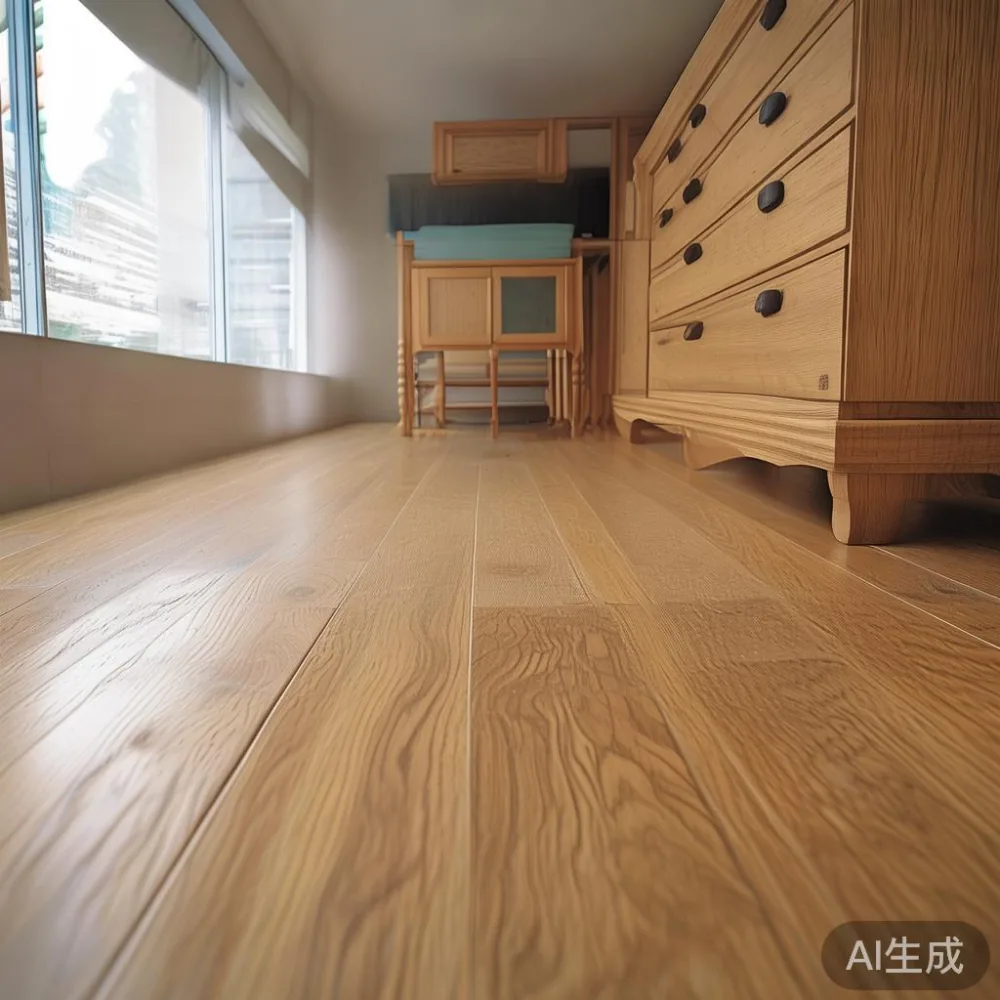
At MIDHILL, we work with solid wood bedroom furniture and see these decisions play out in projects across Tampines, Bedok, and Punggol. This comparison uses realistic Singapore figures in SGD, including 9% GST where applicable. It also considers narrow lift doors, common corridor widths, and compact rooms where every centimetre affects the bedroom design.
The short answer is that veneer can make sense for certain budget-led layouts, while solid wood usually offers stronger long-term value when the furniture is moved, repaired, refinished, or kept for more than 5 years. The numbers below show where the difference comes from.
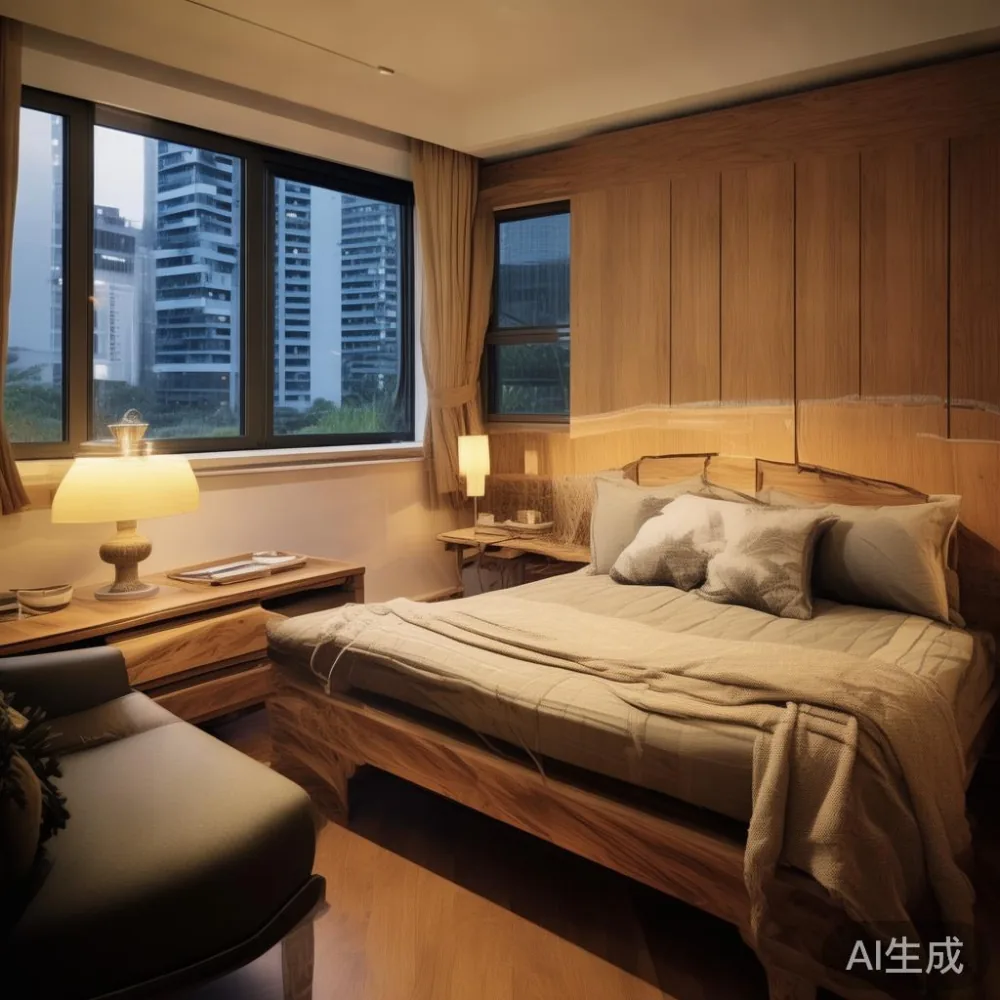
What does a 5-year veneer and solid wood cost comparison include?
A proper comparison starts with the purchase price on 1 January 2026 and ends on 31 December 2030. It includes the furniture, delivery, assembly, taxes, maintenance products, one expected repair, and a realistic replacement cycle. It excludes interior painting, electrical work, and any renovation unrelated to the furniture.
For this exercise, I compare a 180 cm king-size bed frame, a 180 cm wide wardrobe, and a pair of 50 cm nightstands. These are practical dimensions for Singapore master bedrooms, although a 150 cm frame would suit many HDB flats more comfortably. Veneer furniture is assumed to use a 18–20 mm engineered board with a 0.6–1.2 mm wood veneer. Solid wood furniture uses kiln-dried hardwood with visible grain and joinery.
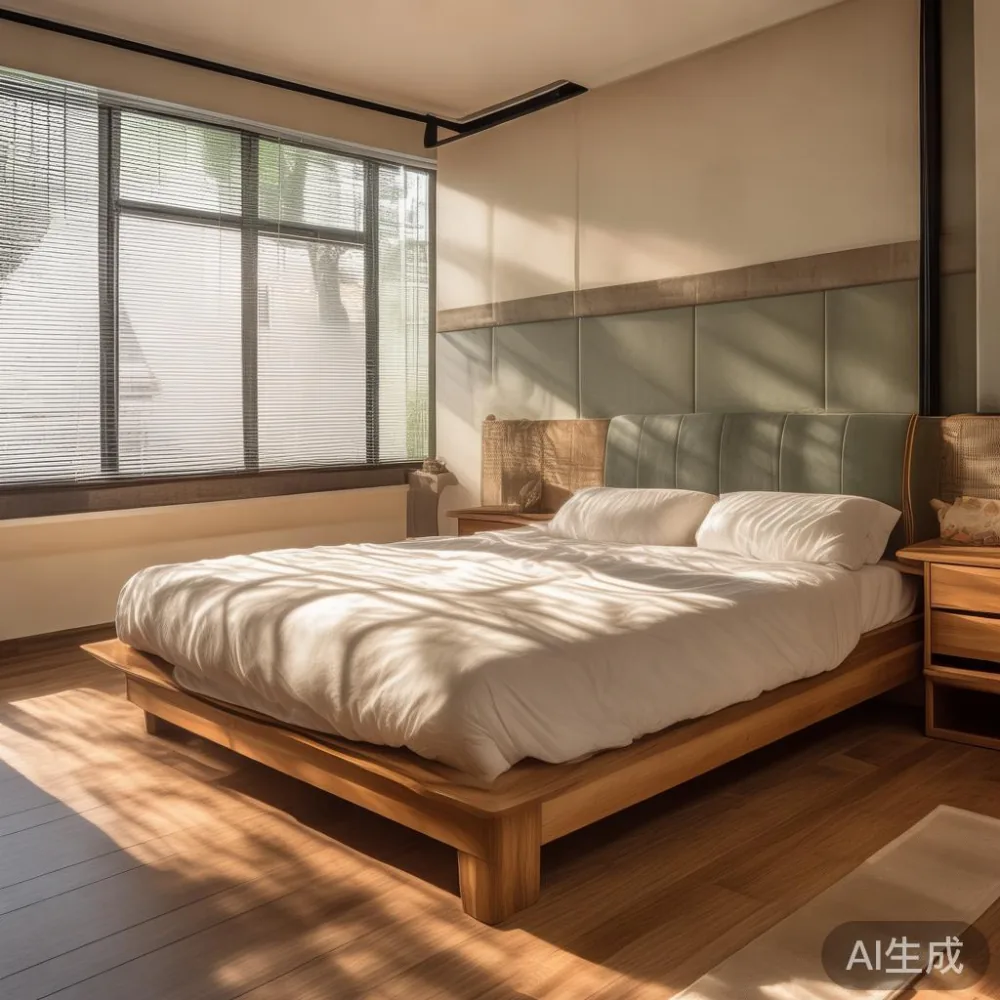
The sample packages are:
- Veneer package: SGD 1,980 for the bed frame, wardrobe, and 2 nightstands.
- Solid wood package: SGD 3,580 for the same components, with higher-grade timber and hardware.
- Delivery and assembly: SGD 90 for veneer and SGD 140 for solid wood because the pieces are heavier.
- GST: 9% on both packages.
- Expected maintenance over 5 years: SGD 140 for veneer and SGD 70 for solid wood.
- Expected repair or partial replacement: SGD 450 for veneer and SGD 160 for solid wood.
This is a planning model, not a quotation. Door measurements, lift capacity, timber species, and design details can change the final figure. Even with those variables, the model reveals why the initial saving is not the whole financial story.
How much do veneer and solid wood bedroom sets cost over 5 years?
The veneer set costs SGD 1,980 before tax. Adding SGD 90 for delivery and assembly produces SGD 2,070, and 9% GST raises this to SGD 2,256.30. Add SGD 140 for maintenance and SGD 450 for one likely repair or partial replacement, and the total 5-year cost reaches SGD 2,846.30.
The solid wood set costs SGD 3,580 plus SGD 140 delivery and assembly, or SGD 3,720 before GST. GST takes the subtotal to SGD 4,054.80. Add SGD 70 for maintenance and SGD 160 for repair, giving a 5-year cost of SGD 4,284.80.
The solid wood package therefore costs SGD 1,438.50 more across 5 years, or about SGD 287.70 per year. The opening price difference is SGD 1,600, so solid wood finishes the period about 10.1% below the veneer option on this model. That assumes the veneer set needs one meaningful repair and that the solid wood set needs only minor work.
For a single bed frame rather than a three-piece set, the pattern is similar. A veneer king-size bed frame at SGD 890 plus SGD 60 delivery and SGD 80 assembly becomes SGD 1,030 before GST, or SGD 1,122.70 after GST. A solid wood frame at SGD 1,690 plus SGD 80 delivery and SGD 80 assembly becomes SGD 1,850, then SGD 2,016.50 after GST. Over 5 years, allowing SGD 120 and SGD 180 respectively for care and repair, the totals are about SGD 1,242.70 and SGD 2,196.50.
Singapore households often make furniture decisions room by room. The cost per item should therefore be checked rather than extrapolated from a complete bedroom package.
Why does veneer cost less at purchase?
Veneer uses thin slices of wood, generally 0.6–1.2 mm thick, bonded to an engineered board. The board contains timber fibres or particles combined with adhesive. This construction uses less solid timber than a traditional frame, so material and labour costs are lower. It also permits flat panels for wardrobe doors and consistent finishes across large surfaces.
That consistency can suit a modern HDB bedroom design, particularly where a 60 cm-wide wardrobe must align closely with a wall. Veneer can imitate oak, walnut, or ash with controlled colour variation. However, a printed or laminated surface may chip at an exposed corner. A damaged edge on a nightstand may show the darker substrate beneath, and replacing a matching sheet is not always simple.
Solid wood uses the timber across more of the component. It weighs more, takes longer to machine, and may vary in grain and colour. It also responds more visibly to humidity. In Singapore’s 24–32°C indoor range and often 60–80% relative humidity, a solid wood bed frame can move slightly as the climate changes. Good joinery and finishing remain important even with quality timber.
Neither label guarantees performance. A well-built veneer wardrobe with sealed edges can last many years; a poorly jointed solid wood bed frame may fail sooner. The relevant question is how the piece was made, not merely which label appears on the sales page.
Which material has lower maintenance and repair costs?
Over 60 months, veneer furniture may need more edge attention, adhesive checks, and surface renewal. A small kit of touch-up pens, filler, and polishing cloth typically costs SGD 25–60. A professional repair could range from SGD 80 for a nightstand to SGD 250–450 for a wardrobe panel or bed rail.
Solid wood can be sanded and refinished when the surface is marked. Its repair cost depends on the location. Filling a small joint might cost SGD 40–90, replacing a bed slat or fixing a drawer runner could cost SGD 60–160, and full refinishing by a furniture specialist may cost SGD 350–900 for a large set.
Last month I visited a Bedok condo bedroom where an oak-look bed frame developed a swollen particle-board rail near the air-conditioning vent. The client had stored the frame against an external wall during renovation. We dried the area for 7 days, replaced the rail for SGD 185, and moved the frame 25 cm away from the wall. That incident explains why edge quality, moisture control, and ventilation deserve attention in a local 5-year comparison.
Refinishing can change the economics considerably. A solid wood bed frame refinished once at around SGD 350 preserves both appearance and utility. A veneered panel with widespread edge damage may need a replacement door or sheet, which can cost SGD 300–700 depending on size and matching.
How do delivery, lifts, and corridors affect the total cost?
Singapore delivery charges reflect more than distance. A solid wood bed frame may weigh 70–110 kg, while a comparable veneer frame may weigh 45–75 kg. A solid wood wardrobe can weigh 120–220 kg compared with roughly 80–150 kg for a veneer model. These are planning ranges; exact weights vary by dimensions and construction.
Many HDB blocks have lift doors around 80–90 cm wide and 200–210 cm high. The usable lift car may measure about 110–140 cm deep and 110–140 cm wide. Corridors in older blocks can narrow to 100–120 cm around turns. A 180 cm wardrobe panel may fit on its edge, but a rigid 60 cm deep carcass can be difficult to rotate in a tight corridor.
Delivery for the veneer set was estimated at SGD 90 and took 5–8 days after order confirmation. Solid wood delivery was SGD 140 and took 7–12 days because larger protective packaging and two-person handling were required. The exact lead time depends on stock, fabrication, and the destination. Carrying a wardrobe up 12 storeys without a suitable lift can add SGD 120–300.
Flat-pack veneer products reduce carrying volume and may avoid extra labour. Flat-pack solid wood products are less common because thick rails and complex joints need specialist assembly. White-glove delivery for a solid wood dining table, for example, may add SGD 100–250, though the table itself is outside this bedroom comparison. The same delivery discipline applies to a marble table because its weight and fragility create separate handling costs.
Is veneer or solid wood better for humid Singapore bedrooms?
Humidity makes both material choices important. Solid wood does not “breathe” in the way some marketing language suggests, but it can expand, contract, and check as moisture levels change. Stable indoor conditions, good finishes, and sensible placement reduce visible movement. Keep solid wood at least 15–25 cm from an external wall or persistent damp area, and use a dehumidifier if a room regularly exceeds 70% relative humidity.
Veneer is not automatically less moisture-sensitive. Particle-board and fibreboard cores can swell when water reaches unprotected edges. Sealed panels, covered edges, and careful cleaning help. Wipe spills within 10 minutes rather than leaving them overnight. Avoid using solvent cleaners on lacquered surfaces, and follow the care instructions supplied with the furniture.
Condo bedrooms may have stronger air-conditioning and more stable humidity than some HDB bedrooms. Nevertheless, coastal areas, west-facing windows, and rooms near bathrooms still deserve attention. A wardrobe installed in a bathroom-adjacent recess should have at least 10–15 cm of ventilation space where practical.
For households expecting to move within 5 years, solid wood can remain useful after sale. A sound solid wood bed frame might retain SGD 500–900 of resale value in the Singapore second-hand market, while a damaged veneer set may recover less. That residual value is not guaranteed, but it belongs in a full cost calculation. The same point supports buying a solid wood sofa, bed frame, dining table, wardrobe, or nightstand when its finish and construction suit the home.
What if the furniture has to fit a compact HDB bedroom?
Material choice cannot compensate for poor measurements. Measure the room, skirting, door swing, lift door, corridor turns, and the route into the bedroom before ordering. A 150 cm bed frame leaves about 60 cm of floor space in a 270 cm-wide room after allowing for both side walls. A 180 cm bed frame leaves about 45 cm per side, which can be narrow beside a nightstand.
For a 200 cm-wide room, a 140–150 cm bed frame is usually easier to use. A 45 cm deep nightstand fits under a 50 cm mattress overhang, while a 40 cm model works if the bedside space is tight. The wardrobe should not block the sliding bedroom door or reduce the clear corridor below a practical width.
French light luxury often uses pale oak, walnut accents, curved lines, and restrained brass or nickel details. American light luxury leans toward recognisable solid timber, symmetrical profiles, and generous proportions. Post-modern light luxury can pair clean architectural forms with warmer tactile finishes. In each case, material choice should follow the furniture’s role: sealed veneer for a frequently touched wardrobe surface, or solid wood for a bed rail and nightstand that may be moved and repaired.
Questions such as how to style European sofa in bedroom and European sofa vs Modern sofa can be useful when a bedroom doubles as a sitting area. A compact solid wood sofa or upholstered bench may need 75–90 cm of circulation space, and a European sofa with a deeper seat may not suit a narrow HDB room. A modern low-profile sofa can be easier to place, but its finish should not crowd the bed frame.
How do I choose European bed or light-luxury bedroom furniture?
When comparing how to choose European bed options, check the structural parts before decorative details. Look at the slat spacing, centre support, fasteners, drawer construction, and the finish on all six sides of a wardrobe. For a king-size solid wood bed frame, slats no more than about 8–10 cm apart provide useful support for many mattresses, although the mattress maker’s guidance takes priority.
Customer searches such as best Vintage wardrobe for 2026 often lead towards panelled doors, antique-style hardware, and darker finishes. A vintage-inspired wardrobe may require 65–70 cm of depth, while a sliding-door model may need only 55–60 cm. Ensure the internal rail and shelf dimensions suit folded clothes, and measure the ceiling if an open hanging section is planned.
The question is Italian light luxury bed worth it cannot be answered by origin alone. Inspect the joinery, timber finish, hardware, warranty terms, and after-sales support. A carved headboard, for example, may add SGD 400–1,200 without changing the frame’s structural performance. A simpler design can allocate more budget to stable joints and a durable mattress platform.
MIDHILL’s 10-year structural warranty and lifetime refinishing policy provide a useful basis for comparison, although shoppers should still confirm what each service covers. Its free shipping threshold over US$350 and 14-day return policy are less relevant to a local Singapore purchase because the company’s quoted SGD delivery terms apply. Buyers should request current Singapore delivery, GST, and return details in writing.
What is the practical 5-year buying decision?
For the sample three-piece bedroom, veneer costs SGD 2,846.30 over 5 years and solid wood costs SGD 4,284.80. The difference is SGD 1,438.50. Solid wood becomes more economical when furniture is likely to be repaired, refinished, moved, or resold. Veneer remains financially attractive when the room is temporary, the budget is fixed, and the panels have properly sealed edges.
A useful rule is to compare each furniture type separately. For an occasional guest-room nightstand costing less than SGD 120, veneer may be adequate. For a daily-use wardrobe receiving years of clothing friction, solid wood or a well-sealed high-grade veneer can be sensible. A shared bed frame deserves closer attention to joints, centre support, and moisture exposure than a decorative occasional chair.
Light luxury is not defined by spending heavily on one material. It comes from proportion, texture, durability, and details that work together in the bedroom design. A solid wood bed frame with quiet hardware and a marble table may create visual tension, while a fully matched timber room can feel calmer. French light luxury, American light luxury, and post-modern light luxury all benefit from accurate room measurements and a restrained finish palette.
Before ordering, obtain two written quotations with the same dimensions, delivery route, assembly scope, GST, and warranty period. Compare them over 60 months rather than on purchase day alone. A 10–15% higher initial price for a well-built solid wood set can produce a lower 5-year cost if it avoids replacement and retains usability. For longer ownership periods, the financial case generally becomes clearer.