Veneer vs Solid Wood: A 5-Year Cost Comparison for Singapore Bedrooms
Choosing bedroom furniture in Singapore often comes down to two materials: veneer and solid wood. The decision affects the purchase price, delivery logistics, maintenance, repairability and eventual resale value. For owners of HDB flats and condos in Tampines, Bedok and Punggol, those differences are practical rather than purely visual. A full-height wardrobe may need to pass through a 90 cm lift door and turn along a 120 cm corridor, while a 180 cm bed frame must fit through a narrower bedroom entrance.
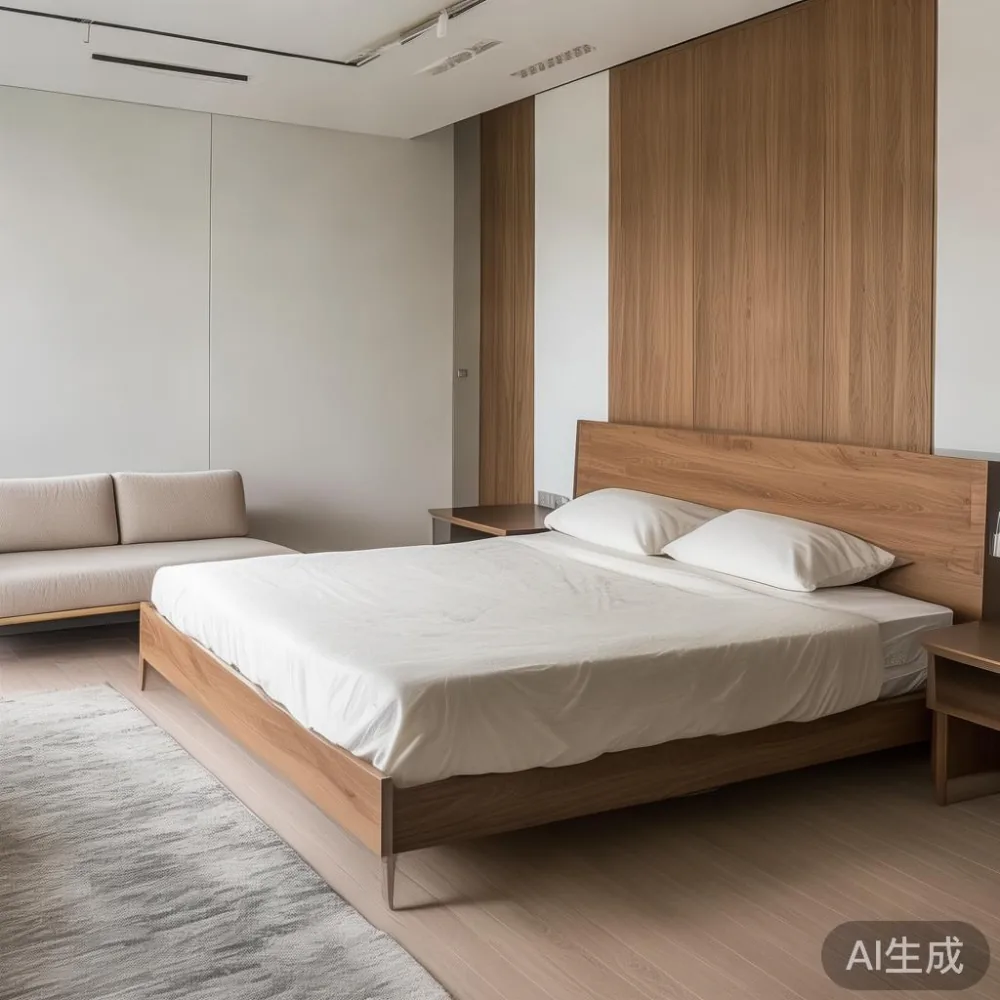
This comparison follows a typical bedroom project over 5 years. It uses an illustrative budget in SGD for one queen bed frame, two nightstands and one wardrobe, with modest assumptions about cleaning, repairs and finishing. It does not claim that every household will spend exactly these amounts; it shows how the two material choices can alter the total cost of ownership.
For design-conscious buyers searching for best light luxury furniture, solid wood offers visible grain, repairable edges and a long service life. Veneer can also suit light luxury for bedroom schemes, particularly where engineered panels help control weight and price. The right choice depends on the room, the family’s habits and the level of maintenance the buyer is prepared to accept.
What is the difference between veneer and solid wood bedroom furniture?
Veneer furniture uses a thin layer of real timber, commonly 0.6 mm to 1.2 mm, bonded to a manufactured core such as MDF or plywood. The face veneer may be oak, walnut, ash or another species, but most of the board is not solid timber. Solid wood furniture uses the named timber through the visible and structural components, subject to normal timber construction variations.
That distinction matters in a Singapore bedroom because humidity, frequent cleaning and tight access can affect materials differently. Solid oak, for example, may expand by roughly 1% to 3% across the grain as relative humidity changes. A well-made veneered panel can remain dimensionally stable, although exposed edges and corners need attention if the face veneer is damaged.
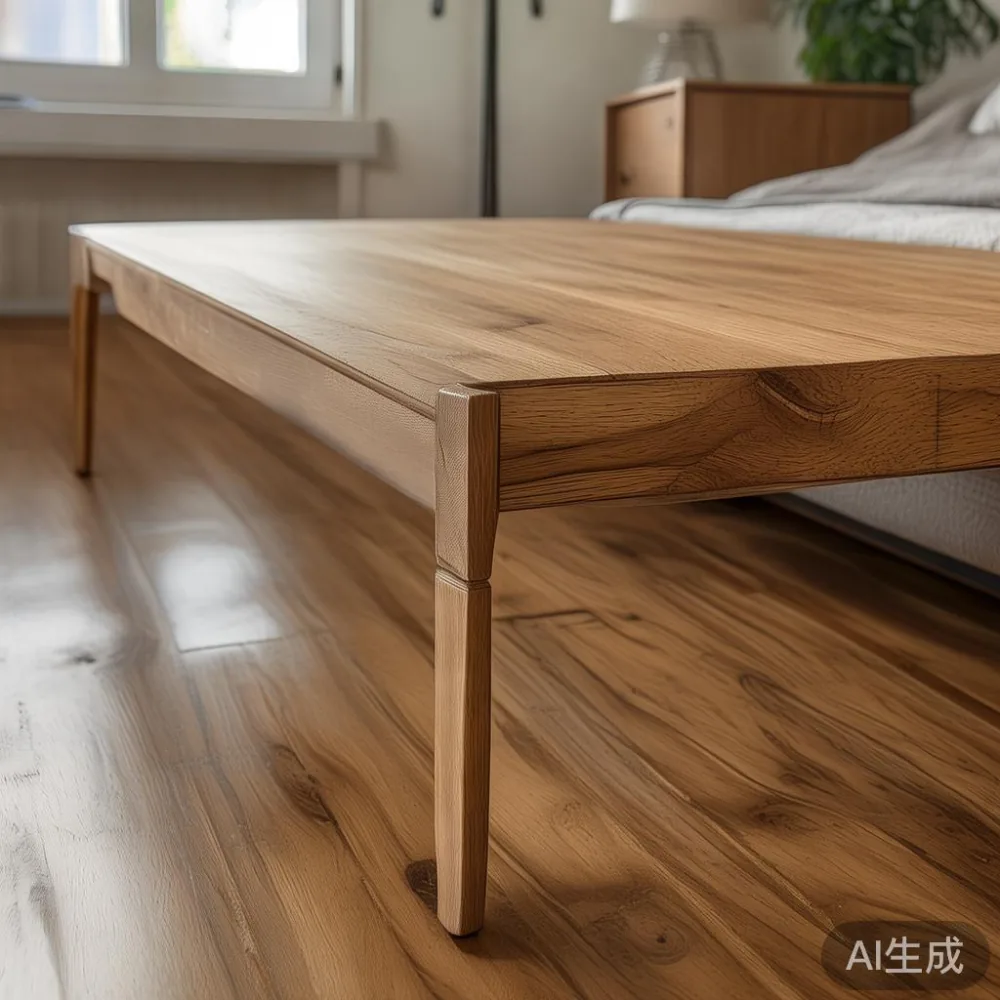
The visual difference is less absolute than many buyers expect. A straight-grain oak veneer and clear-finished solid oak can look similar under the same lighting. The differences become clearer at a bed frame’s rounded edge, around wardrobe handles, across a nightstand drawer front and at joints where veneer cannot be repaired as easily. Solid timber can usually be sanded and spot-refinished; a sanded veneer may expose the darker substrate beneath.
Weight is another practical factor. A queen solid wood bed frame may weigh 65 kg to 95 kg, compared with approximately 38 kg to 58 kg for a comparable veneered frame. A 210 cm tall solid oak wardrobe may weigh 180 kg to 260 kg, while a veneered wardrobe of the same broad dimensions may weigh 100 kg to 155 kg. Exact figures vary by design, timber density and hardware.
For a bedroom design involving a solid wood bed frame, these weights affect installation. A two-person carry may be suitable for a 70 kg nightstand, but not for a 240 kg wardrobe. Customers should check the block, floor level and lift dimensions before ordering, and ask whether the supplier offers room-of-choice delivery.
How much does a solid wood bedroom set cost in Singapore?
For this 5-year model, the initial furniture package includes a queen bed frame, two nightstands and a two-door wardrobe. The figures below are representative Singapore retail estimates rather than fixed quotations.
A veneered package may cost SGD 2,150 before GST, while a comparable solid wood package may cost SGD 3,450 before GST. With Singapore GST at 9%, the totals become SGD 2,343.50 and SGD 3,760.50 respectively. The solid wood option begins SGD 1,416.50 higher in this example.
Delivery and access charges add a useful layer to the comparison. If a lift is unavailable, stairs are required, or the item must be dismantled, a standard two-person delivery in Tampines or Bedok might add SGD 80 to SGD 220. In Punggol, parking restrictions can create another SGD 30 to SGD 80 carrying surcharge. A wardrobe delivered vertically into a condo may require an SGD 180 to SGD 450 balcony or crane service, subject to the building manager’s approval and safe working conditions.
MidHILL offers delivery arrangements including free shipping for orders over US$350, but a Singapore buyer should still confirm the destination, GST treatment, access requirements and expected lead time. Furniture made to order may take 25 to 45 days before dispatch. Local handling after arrival can add 5 to 10 days, depending on stock, production and the delivery schedule.
Under the 14-day returns policy, buyers should inspect dimensions, finishes and visible defects promptly. For a fitted wardrobe, the safest process is to confirm site measurements before production. This reduces the risk of a return caused by a 5 cm clearance error, which matters in older HDB layouts and compact condo bedrooms.
What maintenance costs should I expect over 5 years?
The annual maintenance assumptions are deliberately conservative. In Year 1, the veneer owner spends SGD 180 on gentle cleaning products, edge protection and one minor repair. The solid wood owner spends SGD 140 on a suitable cleaner and a small touch-up kit. In Years 2 through 5, both owners allocate SGD 80 to SGD 120 each year, reflecting periodic care rather than an immediate refinishing of every component.
The largest potential cost is edge damage. A child, pet or moving mishap can chip a wardrobe corner. Repairing a solid timber edge can cost roughly SGD 80 to SGD 220 per affected section, including sanding, filling and refinishing. Replacing a veneered face panel may cost SGD 250 to SGD 600 because the colour-matched sheet, matching process and labour must be considered. A replacement drawer front for a solid wood nightstand might cost SGD 120 to SGD 280; a veneered front can cost SGD 180 to SGD 350 when colour matching is required.
Solid wood may need more attention in humid conditions. A moisture-responsive oil or wipe-on finish may need refreshing every 12 to 24 months. That maintenance might average SGD 90 to SGD 220 per furniture piece across the 5-year period. Veneer may need fewer refinishing cycles, but its seams and edges should not be treated as though the whole board is solid timber.
Light exposure is another factor. In a west-facing Tampines bedroom, strong afternoon sun can fade finishes over time. Rotating a nightstand, using curtains with a 60% to 80% light-blocking rating and keeping objects away from direct sun can reduce visible fading. A solid wood surface can be spot-treated after UV exposure, while a changed veneer colour may require a broader refinishing project.
These assumptions produce a clear pattern. Over 5 years, the veneer package receives approximately SGD 550 in maintenance and repair, while the solid wood package receives approximately SGD 900. Solid wood starts with a higher purchase cost but can spread repair work across individual pieces. Veneer starts lower and can remain economical if edges are protected and damage is handled early.
Can solid wood be moved, repaired and resold?
Solid wood has an advantage when a family moves. A queen bed frame can be partly disassembled, with the headboard, footboard and side rails separated. A mortise-and-tenon joint may need minor tightening after 2 to 3 years of use. Veneered bed frames also disassemble well, but particleboard or MDF components should not be aggressively screwed or pried because their cores can crumble.
Repairs are usually more predictable in solid timber. A loose wardrobe hinge can be reset with two screws and a 2 mm dowel if the pilot hole is enlarged. A damaged solid wood nightstand drawer can be repaired with wood filler, clamps and 120 to 220 grit sandpaper. The same damage to a veneered drawer may require replacement rather than restoration.
Resale is harder to predict because Singapore resale values depend heavily on the individual home, listing quality and buyer demand. However, a well-maintained solid wood bed frame generally has a more usable second life than a low-cost veneered frame with chipped laminate edges. A buyer may accept a solid wood bed frame valued at 45% to 65% of its original retail price after 5 years, compared with roughly 25% to 45% for a damaged veneered frame. Those are planning ranges, not guaranteed offers.
There is also a material-perception effect. Some buyers treat “solid wood” as more desirable than “veneer,” while others correctly recognise quality veneer as a deliberate product category. Clear labelling, good construction and sound joinery remain more informative than a material label alone. Inspect whether the back panels are plywood, the drawer bottoms are solid or veneered, and the wardrobe shelves are supported by cleats rather than thin pins.
Which material suits HDB flats and condos?
HDB flats often have compact bedrooms and frequently shared lift lobbies. Bed frames are generally easier to manage than fitted wardrobes. A 160 cm queen bed may suit a bedroom with 250 cm to 300 cm of usable wall length, while leaving 60 cm to 75 cm beside one side for circulation. A 180 cm king frame needs more clear space and may prove awkward in a 280 cm wide room with a projecting door.
In Tampines, a veneered wardrobe can be a sensible choice when the priority is a calm French provincial or post-modern light luxury appearance without a high structural weight. In Bedok, a solid wood nightstand may be chosen for a guest room where visitors occasionally use the surface for a lamp and book. In Punggol condos with high ceilings and wider corridors, solid wood can create a more substantial American light luxury bedroom design.
Access measurements should be recorded with a tape, not estimated from a floor plan. Check the lift door width, lift cabin depth, corridor turning space, bedroom door opening and skirting-board depth. For example, a wardrobe 60 cm deep and 210 cm high may not fit through an 82 cm lift door if the packaging corners add 4 cm to each side. If the lift cannot be used, confirm whether the packaging can be split and whether the carcass can be assembled inside the room.
For flexible layouts, furniture with clear dimensions helps. A 45 cm wide solid wood nightstand can fit beside a 160 cm bed, but a 55 cm wide unit leaves less walking space. A slim 8 cm gap behind a closed wardrobe door can be practical for skirting boards, though it reduces usable interior depth. These small centimetre decisions often affect the final appearance more than switching between closely matched wood tones.
What do buyers commonly ask about bedroom design?
For someone evaluating European sofa vs Italian light luxury sofa ideas for a study adjoining the bedroom, material choice is only one part of the project. A European sofa may prioritise deeper seating and a more architectural profile, while an Italian light luxury sofa may place greater emphasis on refined detailing. Since this comparison concerns the bedroom, the sofa should be treated as an adjoining-room element rather than included in the costed package.
Guest rooms present another styling choice. French provincial for guest room can use a light oak or ash bed frame, curved nightstand details and soft cream textiles. A compact queen frame around 160 cm by 200 cm leaves space for a 40 cm wide guest-room chair. By comparison, Japanese for guest room styling can use low-profile solid ash pieces, pale finishes and restrained storage. The two directions may share a bed frame but differ in bedside height, visual weight and ornament.
If the focus shifts to the main bedroom, light luxury for bedroom can pair a solid wood bed frame with a fabric-upholstered headboard, wool bedding and a narrow wardrobe finished in a close wood tone. A marble table is less central to a practical Singapore bedroom because of its 70 kg to 110 kg weight, cold surface and maintenance needs. When used as a bedside surface, a compact marble table may need a reinforced floor check and exact doorway planning.
For an apartment interior, knowing how to style European light luxury bed in apartment is about proportion as much as material. A 165 cm wide bed with a 105 cm high headboard works well against a 280 cm to 320 cm wall. Choose curtains that stop 1 cm above the floor, bedside lamps no taller than 45 cm and a rug extending 50 cm to 75 cm beyond the bed’s sides. These measurements create visual balance without crowding the walking route.
Which option has the lower 5-year cost?
The following model includes initial furniture, GST, planned maintenance and typical access charges. It does not include income lost during delivery, decoration, removal of an old bed or exceptional water damage.
- Veneer scenario: SGD 2,150 before GST + SGD 193.50 GST + SGD 550 maintenance and repair over 5 years + SGD 150 access allowance = SGD 3,043.50.
- Solid wood scenario: SGD 3,450 before GST + SGD 310.50 GST + SGD 900 maintenance and repair over 5 years + SGD 200 access allowance = SGD 4,860.50.
The difference is SGD 1,817 over 5 years, or about SGD 363.40 per year. In this model, veneer has the lower 5-year cost. Solid wood becomes more financially competitive if an existing wardrobe can be retained, if a piece is moved between homes, or if edge damage is less likely. A buyer who can accept a lighter package and good protective habits may therefore gain the most from veneer.
Solid wood offers stronger repairability and longevity, but longevity alone does not guarantee a lower 5-year cost. Lasting value comes from construction, finish quality, dimensions and care. A sturdy veneered nightstand with reinforced joints may outlast a poorly made solid wood bed frame.
For a multi-piece bedroom project, a hybrid approach can balance appearance and expenditure. Use a solid wood bed frame as the main tactile centrepiece, choose veneered wardrobe doors and practical nightstands, then inspect every edge, hinge and drawer. That mixed approach can sit around SGD 3,900 before GST for a comparable package in the same planning model, subject to design and sizing.
MIDHILL’s 10-year structural warranty provides an important point of comparison. Confirm what the warranty covers, because a structural defect is not the same as a cosmetic scratch, chipped veneer or water stain. The lifetime refinishing service is also worth asking about in writing: determine which components qualify, whether freight is included and how service eligibility is documented.
Last month I visited a colleague’s three-bedroom HDB flat in Tampines to review a newly delivered bedroom set. The 180 cm queen bed frame had to pass through a lift door measuring 86 cm, and the corridor narrowed to 108 cm near the turn. The bed’s solid ash headboard separated into two sections, while the slats were packaged in a 70 cm flat carton. The whole assembly took two installers about 35 minutes. A similar wardrobe at her parents’ Bedok home could not enter the 78 cm lift and had to be carried up five flights of stairs, adding SGD 210. That visit confirmed that material choice and access should be evaluated together before ordering.
For most Singapore households, the practical decision is clear. Choose veneer when the 5-year budget matters, the room is compact and protection against edge damage is consistent. Choose solid wood when tactile grain, repairability and repeated moving matter, and accept a higher initial outlay. Whichever route is selected, measure the lift, corridor and bedroom door, order timber samples where possible and review the warranty terms before the furniture leaves the workshop.