Humity, HDB Hallways, and Your Bedroom Design: A Singapore Owner's Guide to Solid Wood
I still remember walking into a client unit in Tampines last month. The bedroom looked beautiful when we first walked in: a 1.8 m solid wood bed frame in light oak, a matching three-drawer nightstand, and a 2.1 m sliding wardrobe. Three weeks later, she called me in a panic. The wardrobe door was sticking, the nightstand had a faint bow across the top, and a hairline crack had opened along the bed headboard. The culprit wasn't bad craftsmanship. The culprit was the relative humidity in her corner unit swinging between 58% in the morning and 92% during an afternoon thunderstorm.
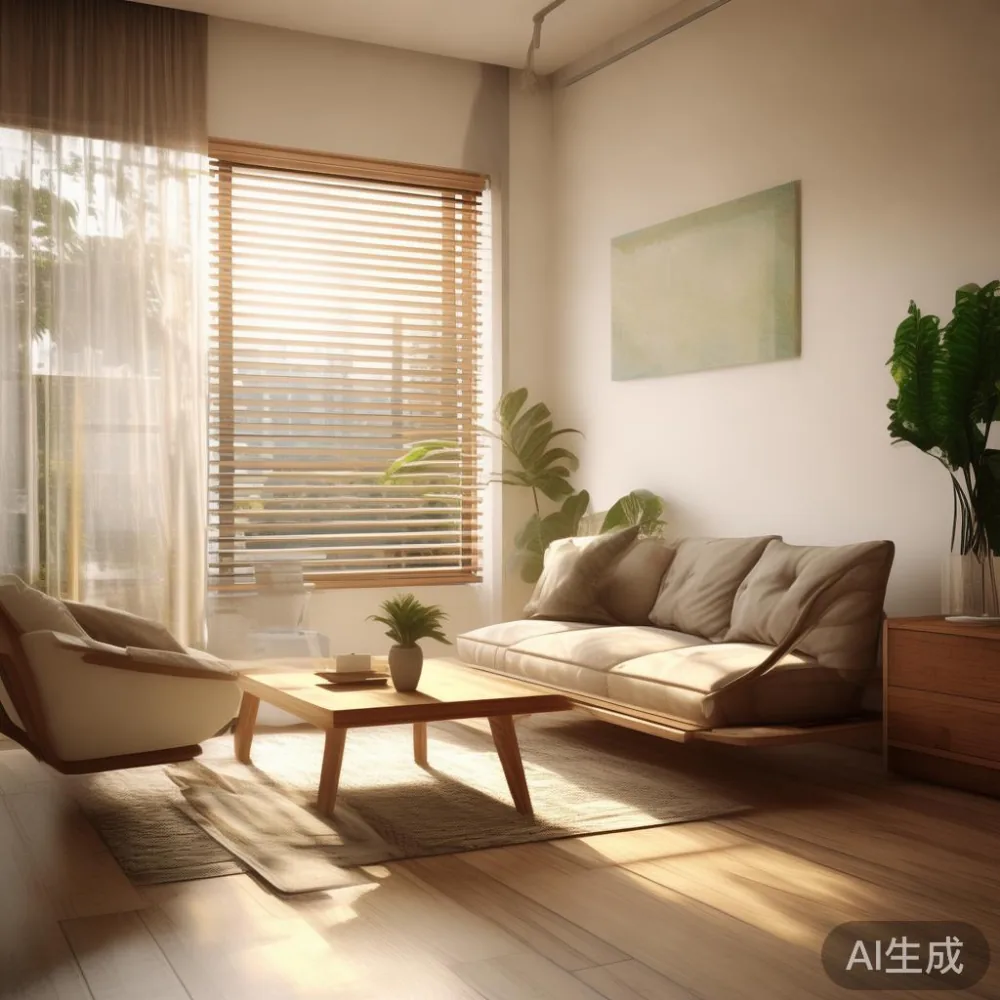
That call is the reason I keep a small hygrometer in my sample bag, and why anyone investing in solid wood bedroom furniture in Singapore needs to understand our climate before, not after, the delivery truck arrives. This guide pulls together everything I have learned working on bedroom design across HDB flats in Bedok, Punggol, Sengkang, and a stack of private condos from River Valley to the Jurong East stretch. We will cover the science, the door dimensions your lift will actually allow, the realistic price brackets in SGD, and the maintenance rhythm that keeps a piece looking new for fifteen years.
Why Singapore's Climate Is Harder on Solid Wood Than Most Buyers Expect
Wood is hygroscopic. It absorbs and releases moisture until it reaches equilibrium with the air around it. Singapore sits one degree north of the equator, with average yearly humidity between 70% and 85%, and daily peaks that climb past 90% from November through February during the monsoon surge. On paper, that sounds manageable. In practice, your bedroom sees even bigger swings because of air-conditioning.
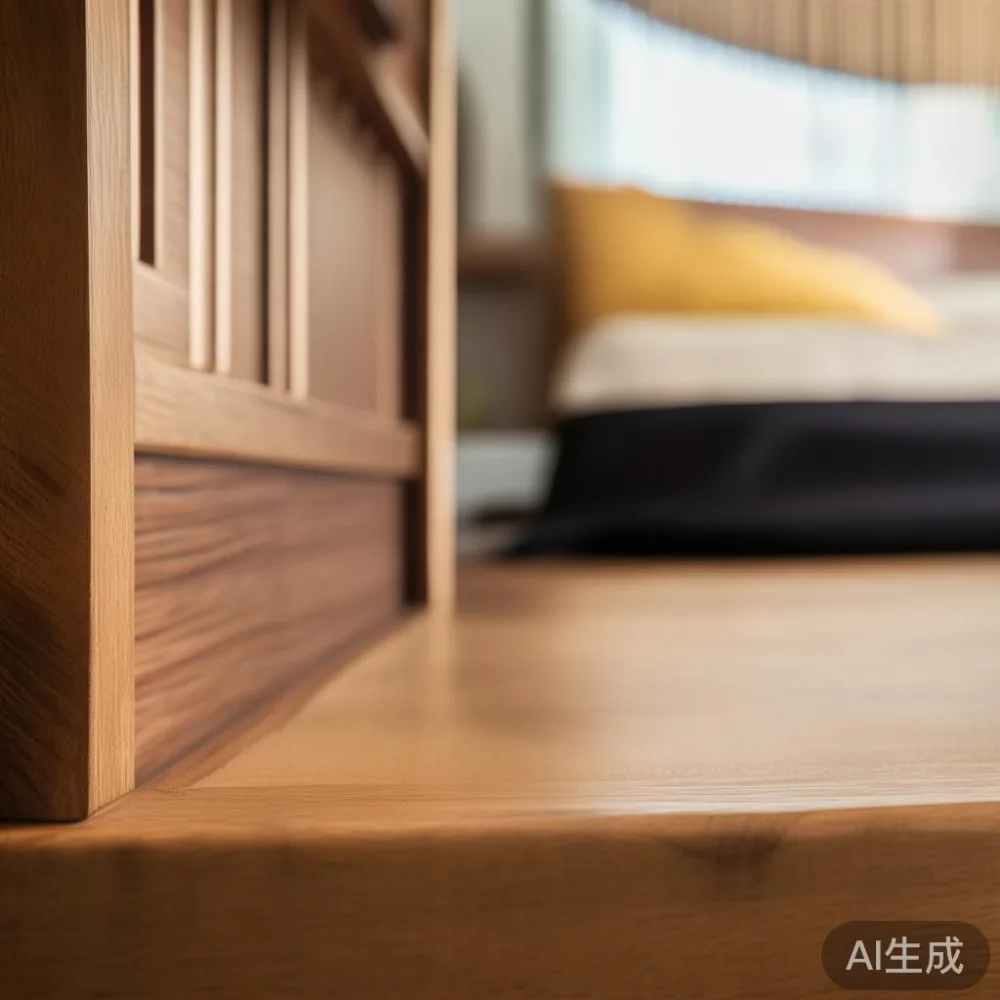
A typical Singaporean runs the AC at 24 °C for six to eight hours a night. When the compressor cuts off and the door stays shut, humidity climbs back fast. A slab of oak, ash, or walnut in that room is constantly expanding and contracting. A 1.8 m wide solid wood bed frame can move 3 mm to 5 mm across its width between a dry AC night and a humid afternoon. Multiply that across a wardrobe door, and you get sticking, rubbing, and the occasional finish crack that has nothing to do with the joinery.
For bedroom design in Singapore, this means two practical shifts. First, pick woods and construction methods that tolerate movement. Second, stabilise the room. A 280 mm oscillating fan costs S$35, a decent dehumidifier is S$189, and a S$12 hygrometer from HomeFix tells you whether either is doing its job. I tell every client to budget for the hygrometer the same week they book the delivery slot.
What the HDB Lift Actually Fits (and Why Your Bedroom Furniture Has to Be Planned Around It)
Before you fall in love with a 2.4 m wardrobe, measure the lift. Standard HDB passenger lifts in blocks built after 2010 measure roughly 1.1 m deep, 1.4 m wide, and 2.3 m tall at the door, with an opening of about 0.9 m wide by 2.1 m high. Corridor widths are tighter than people expect, often 1.2 m to 1.3 m, with a 90° turn near the lift lobby.
Anything taller than 2.1 m or wider than 0.9 m has to be tilted, disassembled, or refused. That is why most Singapore bedroom design plans use wardrobes in the 1.8 m to 2.1 m height range, with widths built in 60 cm, 80 cm, or 90 cm modules. A bed frame longer than 2.1 m is rarely an issue, but a headboard taller than 1.1 m will not clear the lift ceiling if the lift is the older 2.0 m type found in some 1990s blocks in Bedok and Tampines.
When I visited a Punggol HDB in March, the corridor outside the unit was 1.18 m wide. The client's preferred 2.2 m tall wardrobe would not have made the turn. We reworked the bedroom design into a 1.95 m configuration with two side towers and a low bridge, and the lift clearance went from impossible to a comfortable 8 cm gap on each side. A furniture maker that has shipped into HDBs for a decade or more will know this by reflex; ask them which HDB blocks their team has delivered to.
Which Solid Wood Species Actually Survive Singapore Bedroom Conditions
No wood is immune to humidity, but some tolerate it far better than others. For bedroom furniture that includes a solid wood bed frame, a nightstand, a dining table you might double as a desk, a marble-topped side table, and a wardrobe, here is how I rank common choices for our climate.
Rubberwood is the local hero. It grows in Malaysia and Thailand, costs less than imported oak, and handles our humidity swings well when kiln-dried below 10% moisture content. Most mid-range Singapore bedroom furniture uses rubberwood cores with ash or walnut veneers. A full rubberwood bed frame in queen size typically lands between S$1,150 and S$1,650.
White oak and ash are the workhorses of French light luxury styling. They have tight grain, hold finish beautifully, and accept our climate once they have been acclimatised for 14 to 21 days inside the home before any finishing is done. A white oak queen bed frame from a workshop like MIDHILL, which has been making bedroom pieces since 2008, usually sits between S$2,200 and S$3,400 depending on the headboard detailing. I have a MIDHILL oak nightstand in my own guest room that has held its shape through four monsoon seasons with no warping.
Walnut is gorgeous and unforgiving. It moves more than oak in our climate, so I only recommend it for pieces that get daily wipe-downs and stable indoor conditions, such as an enclosed wardrobe or a marble-topped side table where the wood frame is partially protected. Teak is the outlier. Old-growth teak contains natural oils that resist moisture, but reclaimed teak bedroom sets can run S$4,800 and up, putting them in a different budget tier.
Mango and acacia are the budget picks. They look striking and are popular in post-modern light luxury bedroom design, but they dent and check more easily. If you go this route, budget for a refinishing service within three to four years. Many Foshan workshops now offer lifetime refinishing on wear surfaces, which makes a lower upfront cost far easier to justify over a fifteen-year horizon.
How do I choose a chaise lounge for a home office?
Pick a chaise lounge that matches the room's depth, holds up to your climate, and arrives in one piece through your door, because the right answer for a Singapore home office is a compact, breathable chaise in solid ash or rubberwood with a removable, washable cover, sized between 150 cm and 170 cm long and 70 cm to 80 cm deep so it fits alongside a 140 cm desk without blocking the walkway.
In a Singapore HDB home office, you usually have 9 to 12 sqm to play with, often with a window on one wall and the AC vent on the opposite side. A chaise that is too deep will swallow the room; one that is too short will leave your knees hanging over the end during a long reading session. Aim for a chaise that is 10 cm to 15 cm longer than your height, and a seat height of 42 cm to 45 cm so your feet rest flat on the floor.
Frame material matters as much as dimensions. A solid ash or rubberwood frame with mortise-and-tenon joinery will tolerate Singapore's humidity far better than a plywood chaise wrapped in a wood-look veneer. Look for a Mid-century modern corner sofa australia-style chaise if you want a low-profile, sloped back that works as a reading seat by day and a guest nap spot when relatives visit for Chinese New Year. The corner orientation also lets you tuck the chaise into the dead space behind the door, freeing the rest of the wall for shelving.
Cover fabric should be a removable, washable cotton-linen blend or a performance weave rated to 30,000 Martindale cycles if you plan to use it daily. Skip bonded leather in our climate; it peels within eighteen months. Budget between S$950 and S$2,200 for a quality chaise from a workshop that has shipped to Singapore before, and confirm the cover can be removed and washed at 30 °C without shrinking.
Reading the Price Tag in SGD: What a Realistic Bedroom Set Costs in 2025
Let me put numbers against a typical Singapore bedroom design package, fitted to a standard 12 sqm master bedroom in a Punggol or Sengkang BTO. Prices include GST at 9% and delivery into the unit.
A queen-size solid wood bed frame in ash or rubberwood with a 1.05 m tall upholstered headboard runs S$1,450 to S$2,650. A matching two-drawer nightstand is S$380 to S$620 each, so a pair lands at S$760 to S$1,240. A six-door sliding wardrobe in solid ash frames with frosted glass panels measures around 2.4 m wide by 2.4 m tall by 0.6 m deep and costs S$3,800 to S$6,200 depending on internal configuration. Add a marble-topped side table at S$520 to S$880 and a solid wood dining table in 1.4 m x 0.8 m ash at S$1,350 to S$2,100 if the bedroom doubles as a work-and-dine zone in a smaller flat.
Total package without promos sits between S$7,400 and S$13,000 for the bedroom pieces. Shipping from a Foshan workshop is typically free above US$350, which at current rates is around S$480, and parcel freight on consolidated containers runs 18 to 26 days door-to-door for a flat-pack shipment, or 32 to 45 days for an assembled piece sent via sea with white-glove handover.
The First 30 Days: How to Acclimate Solid Wood Bedroom Furniture in an HDB
The most common mistake I see is treating delivery day as installation day. Solid wood needs a buffer period. Ask the maker to deliver the pieces flat-packed and to leave the protective film on for the first 72 hours inside your home. Unbox everything, stand the panels upright with 5 cm spacers between them, and run the dehumidifier at 45% to 50% relative humidity for the first two weeks.
Only after that should the assembly team come back to build the bed frame, wardrobe, and nightstand. A workshop experienced with Singapore shipments will schedule the assembly visit two to three weeks after delivery, which is exactly what MIDHILL does on its bedroom orders into HDBs across Singapore.
Keep the bedroom between 22 °C and 26 °C and between 45% and 60% relative humidity year-round. Wipe surfaces weekly with a barely damp microfibre cloth, never a wet one. Rotate the nightstand drawers every month so the wear pattern stays even. And once a year, run the dehumidifier on high for 48 hours to release any absorbed moisture before the monsoon surge starts.
When the Warranty Actually Matters: Reading the Fine Print on Structural Coverage
Most Singapore buyers see a 10-year warranty and assume it covers everything. It does not. Structural warranty covers joinery failure: a mortise coming loose, a bed slat snapping under normal load, a wardrobe door hinge pulling out of the frame. It does not cover finish cracks from humidity, surface dents, or colour change from UV exposure through an uncurtained window.
Ask for the warranty certificate in writing, with the workshop's Singapore or regional office address on it. A 10-year structural warranty from a maker that has exported for 15+ years and ships to 15+ countries carries real weight, because the company has to remain operational for a decade to honour it. Lifetime refinishing on wear surfaces is the second promise to look for; a S$180 to S$260 refinishing visit every five to seven years extends the life of a S$2,000 bed frame almost indefinitely.
Returns, Exchanges, and the 14-Day Window That Saves Real Money
Because solid wood moves, a piece that looks perfect in the warehouse can arrive with a 2 mm twist the first week in your bedroom. A 14-day return window gives you time to live with the furniture before committing. Photograph any issues on the day of delivery and again on day 7 and day 14. Send the time-stamped set to the maker, and a reputable workshop will replace warped panels, refinish scratched surfaces, or take the whole piece back if the problem is structural.
Keep the original packing for the first 14 days. Flat-packed furniture on a pallet measures roughly 180 cm x 60 cm x 40 cm for a queen bed frame and weighs between 38 kg and 55 kg depending on species. You will need that crate if the return happens.
Putting It All Together for Your Bedroom Design
Good bedroom design in Singapore is not about chasing the lowest price on a flat-pack import. It is about choosing the right species for our humidity, the right dimensions for your lift and corridor, the right finish for your AC schedule, and a maker that has the operational history to honour its warranty. A solid wood bed frame, a well-proportioned wardrobe, a pair of nightstands, and a small marble side table will outlast three sofa sets and two mattress replacements if you give them the first 30 days of care and the right indoor climate.
If you want the French light luxury look with ash frames and brushed brass handles, budget S$9,000 to S$14,000 for the full bedroom. If you prefer American light luxury with wider headboards and chunkier proportions, add 12% to 18%. If post-modern light luxury with mango or acacia and black metal accents is your reference, you can land closer to S$6,500 for the core pieces. Ask the workshop which climate treatments they apply, which HDB blocks they have delivered to, and what the realistic acclimation timeline looks like before you confirm the order. Those three questions will save you more money than any promotion.