What to Check Before Buying a Sofa You Cannot Sit On
A sofa sold as a display model, a lounge piece, or a showroom accent can still be useful in a bedroom-design plan. But if it is not intended for sitting, its comfort is only one part of the decision. Dimensions, access, material, stability, and return terms matter just as much—especially in Singapore, where a large sofa must pass through lift doors, corridors, and HDB or condo entrances.

At MIDHILL, we build and inspect solid wood furniture with practical room planning in mind. The same disciplined approach applies when assessing a sofa for a bedroom, even when the sofa is intended more for displaying clothing, placing books, or creating a visual focal point than for daily use.
Is light luxury bed worth it for a compact Singapore bedroom?
The phrase “is light luxury bed worth it” often appears in bedroom-design conversations, but the answer depends on the room and the way the bed is used. In a Tampines HDB flat, a bed with a tall headboard may look refined but can reduce usable wall space. In a Punggol condo with generous windows, a lighter frame and restrained upholstery can create a more relaxed atmosphere.

Measure before choosing style. A typical queen bed is 152 cm long and 91 cm wide in the US, or approximately 160 cm by 200 cm for a larger queen format used in many international markets. Singapore mattress sizes differ, so check the exact internal dimensions rather than relying on a product label. Leave at least 60 cm on one side of a double bed for a narrow walkway, and 75–90 cm on both sides where two people need to pass.
A bed frame should also be compared with the sofa placed nearby. French light luxury often uses pale timber, curved edges, cream fabrics, and slim profiles. Post-modern light luxury may combine clean lines with warmer wood tones. If the room is only 10–12 square metres, keep the bed, sofa, wardrobe, and nightstand visually light so the bedroom does not feel crowded.
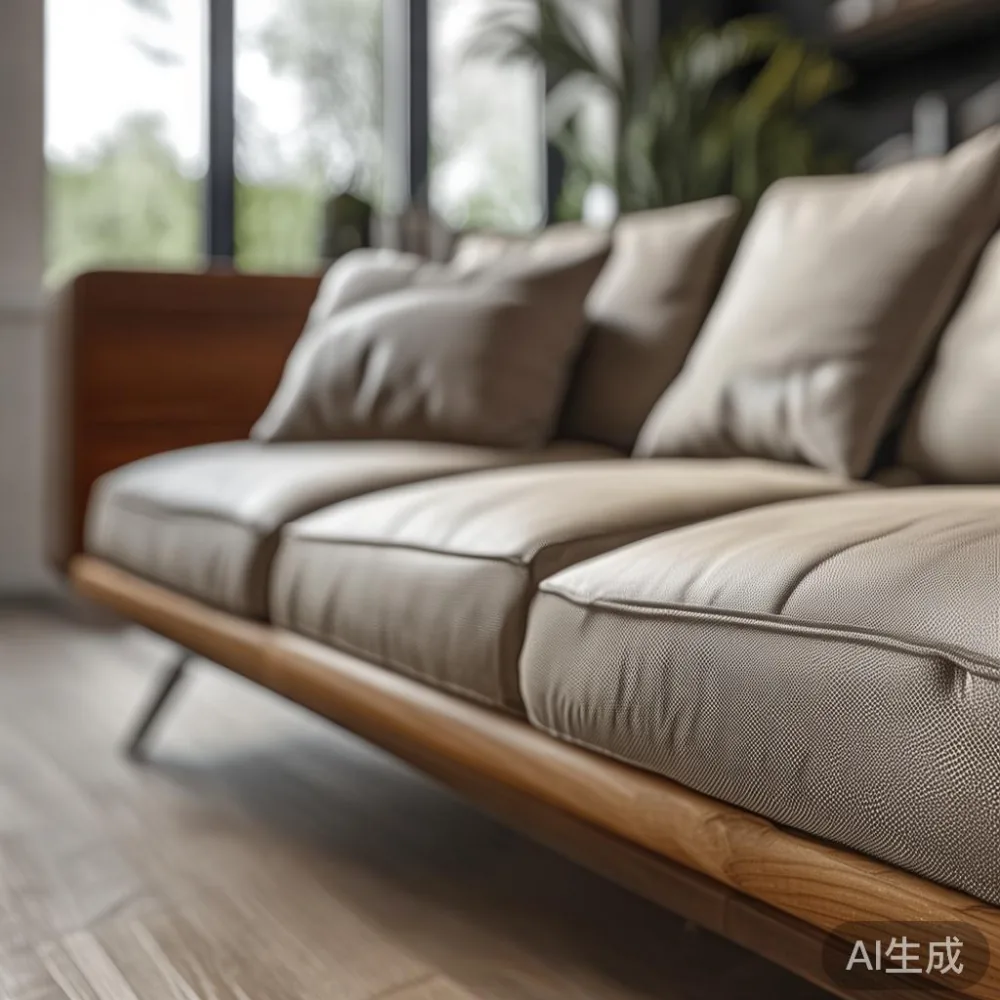
What should you measure before ordering a large sofa?
Measure the sofa, the route, and the final position. A sofa that is 220 cm wide may be attractive in a showroom but difficult to manoeuvre through a residential lift. For a standard HDB lift, the internal floor area might be around 140 cm by 110 cm, with a door opening of approximately 90 cm, although older blocks and newer accessible lifts vary. Confirm the lift dimensions with your building manager before ordering anything wider than 90 cm.
Measure the corridor width too. Doorways, corners, and turns can require more clearance than a product page suggests. Remove shoes, plants, and bicycles from the route, and photograph any tight turns. Note the narrowest point in centimetres, then ask the retailer whether the sofa can be delivered in two sections. A sectional can reduce the largest package to two pieces of 110–130 cm each.
Also check the sofa’s actual height and depth. A 42 cm-deep seat projects into a small room more than a 38 cm-deep model. A back height above 90 cm can visually dominate a bedroom wall, while a low back keeps sightlines open. Place painter’s tape on the floor to mark the footprint, including the space needed to open doors and walk around.
How do you check a sofa that is not meant for sitting?
Start with the purpose. A “display sofa” may be optimised for folding clothes, displaying books, or supporting a lamp. Check whether the seat cushion is fixed, removable, thin, or absent. If the frame is intended for decorative use, confirm that the manufacturer does not claim everyday seating performance. This prevents an unpleasant discovery after delivery.
Next, inspect the joints. Look for solid wood sofa construction where applicable, solid wood legs, or a clearly stated engineered-wood alternative. Tap the corners lightly and check for movement. A properly assembled frame should not wobble by more than about 10 mm when gently tested at the front edge. For a display function, stability matters more than sink-in softness.
Examine the finish for chips, cracks, and exposed edges. If a sofa includes a marble table, verify whether the stone is natural or cultured, how it is supported, and whether the surface has been sealed. For a sofa with a marble table attached, ask about the weight of the top and the safe load. A 4 cm marble slab can weigh roughly 70–100 kg, so the lower structure must be designed for that load.
My colleague visited a display suite last month and found a sofa that looked substantial but had a loose rear rail. The showroom label described it as “lounge-inspired.” After checking, the manufacturer confirmed it was intended as a decorative bench, not for regular sitting. That conversation took less than 5 minutes and prevented a purchase with an unclear purpose.
What should a buyer ask about delivery, GST, and returns?
Ask for the delivery charge in SGD, the expected delivery time, and whether the quoted price includes GST. Singapore GST is currently 9%, so a sofa listed at SGD 1,500 before tax would be SGD 1,635 after tax. Confirm the final amount on the quotation instead of estimating from a screen price.
Delivery days are more informative than a vague “free delivery” message. For in-stock Singapore orders, request a specific window such as 5–7 working days, or 10–14 working days for a made-to-order piece. A solid wood sofa may need extra time for finishing and curing. Ask whether delivery includes carrying the sofa upstairs, unpacking, and removal of packaging. In a high-rise block, stairs and corridor turns can add 20–40 minutes beyond the lift journey.
Check the returns policy carefully. A 14-day return period is useful only if the sofa can be protected, unused, and returned in its original packaging. Confirm whether a display sofa, made-to-order item, or furniture with a custom fabric is excluded. For MIDHILL purchases, the stated 14-day returns, 10-year structural warranty, and lifetime refinishing terms should be explained in writing, including what “structural” covers.
For furniture planning beyond the sofa, ask whether the retailer can coordinate a bed frame, dining table, wardrobe, or nightstand with the same delivery schedule. This reduces the risk of separate deliveries blocking a corridor or creating inconsistent finishes.
Can a display sofa still support useful bedroom storage?
Yes, provided the load and construction are suitable. A display sofa with a flat platform can hold baskets, folded blankets, or a tray, but avoid placing heavy marble objects on the back rail. If the product is sold with storage, ask for the internal dimensions, shelf loading limit, and whether the compartments are open or closed. European light luxury with storage is a useful comparison phrase when you want concealed capacity without a large wardrobe footprint.
Keep storage ventilation in mind in Singapore’s humid climate. Avoid tightly packing wool, linen, or cotton into a closed compartment for long periods. Leave 3–5 cm around items that can retain moisture, and use breathable cotton bags rather than plastic covers.
For a bedroom-design scheme, coordinate the sofa with a bed frame and nightstand rather than treating it as an isolated object. If your wardrobe is oak-toned, a matching solid wood side table can make the room feel intentional. If the sofa has a pale textile, a darker walnut accent can provide contrast without making the room feel heavy.
How do lift and corridor dimensions affect the sofa choice?
Access is a practical design constraint, not an afterthought. Ask the building manager for lift internal dimensions, door width, and the turning radius at the lobby. Measure the sofa’s widest detachable component. If the largest section is 95 cm, a 90 cm lift door may still not clear it; a 100 cm opening gives only 5 cm of tolerance.
For HDB flats in Bedok and Tampines, older corridors can be narrower than condo corridors in Punggol. A sofa with tapered wooden legs may save 5–8 cm in height, but its width remains the controlling factor. A sofa with a removable back or separate cushions can fit through a narrow doorway more easily than a rigid frame.
Ask the delivery team whether they will use a shoulder carry, trolley, or protective wrapping, and whether they can split the frame. Photograph the lift and corridor if the retailer requests measurements. This also helps with warranty claims if a piece is damaged in transit.
What finish and style details should you compare?
For a light-luxury bedroom, examine the proportion and texture rather than simply the price tag. French light luxury tends toward pale ash, beech, cream upholstery, and gentle curves. American light luxury may use deeper walnut, neutral fabrics, and more generous cushions. Post-modern light luxury can mix geometric forms with visible timber grain and restrained colour contrast.
Check the colour in different lighting. Singapore bedrooms often shift from warm evening light to cool daylight. Request fabric samples or finish photographs under natural light, and compare them with your floor, walls, and wardrobe. A light oak finish may show dust and colour variation more readily than a darker stain. Solid wood furniture should include an explanation of grain direction, small marks, and seasonal movement.
When considering adjacent furniture, “European bed vs Modern bed” is another useful comparison, though it should not replace a dimensional check. If the room has a low ceiling, avoid a very tall headboard. For dining zones or a combined living area, “Boho for dining room” styling can introduce woven textures, but keep the bedroom palette consistent. If you are building a broader collection, a search for “top 10 Mid-century modern furniture” may provide direction, yet each item still needs to fit the measured room.
What is the final pre-purchase checklist?
Before paying, verify the sofa’s purpose, exact dimensions, removable parts, material, load rating, and stability. Record the lift, corridor, and doorway measurements. Read the GST-inclusive price, delivery days, return exclusions, and warranty coverage. If the sofa is decorative, make sure the label says so. If it is intended for occasional sitting, test the frame and cushions according to the stated use.
Also consider the rest of the bedroom-design plan. Does the sofa leave 60–75 cm for circulation? Is there a suitable outlet for a lamp or charging point? Can the wardrobe door open without touching the sofa? Can the bed frame and nightstand be delivered without blocking the only route? These details determine whether a sofa works in your home long after the showroom visit.
A sofa you cannot sit on can still be a good purchase when its function, proportions, and installation are clear. The question is not whether it looks impressive, but whether it fits the room, arrives safely, and performs the job you bought it to do. For solid wood furniture and coordinated bedroom pieces, clear specifications and accountable delivery are more useful than vague luxury language.