Caring for a Lacquered Surface in a Tropical Climate: A Singapore Bedroom Owner's Guide
When my colleague moved into her new four-room HDB flat in Tampines last month, the first thing she asked me was not about the kitchen layout or the corridor-length shoe cabinet. It was about her freshly delivered lacquered bed frame. Singapore's weather is, as any resident knows, a 28 to 32 °C, 78 to 92 % relative humidity machine that runs twelve months a year. That constant moisture is the single biggest threat to a high-gloss lacquer finish, whether the piece is a solid wood sofa in the living hall, a dining table near the service yard, or — most relevant here — a wardrobe and nightstand sitting against an exterior wall in the master bedroom. Bedroom design in this part of the world is not just about picking a beautiful headboard; it is about picking a finish that can survive the humidity without blooming, peeling, or turning cloudy within a season.
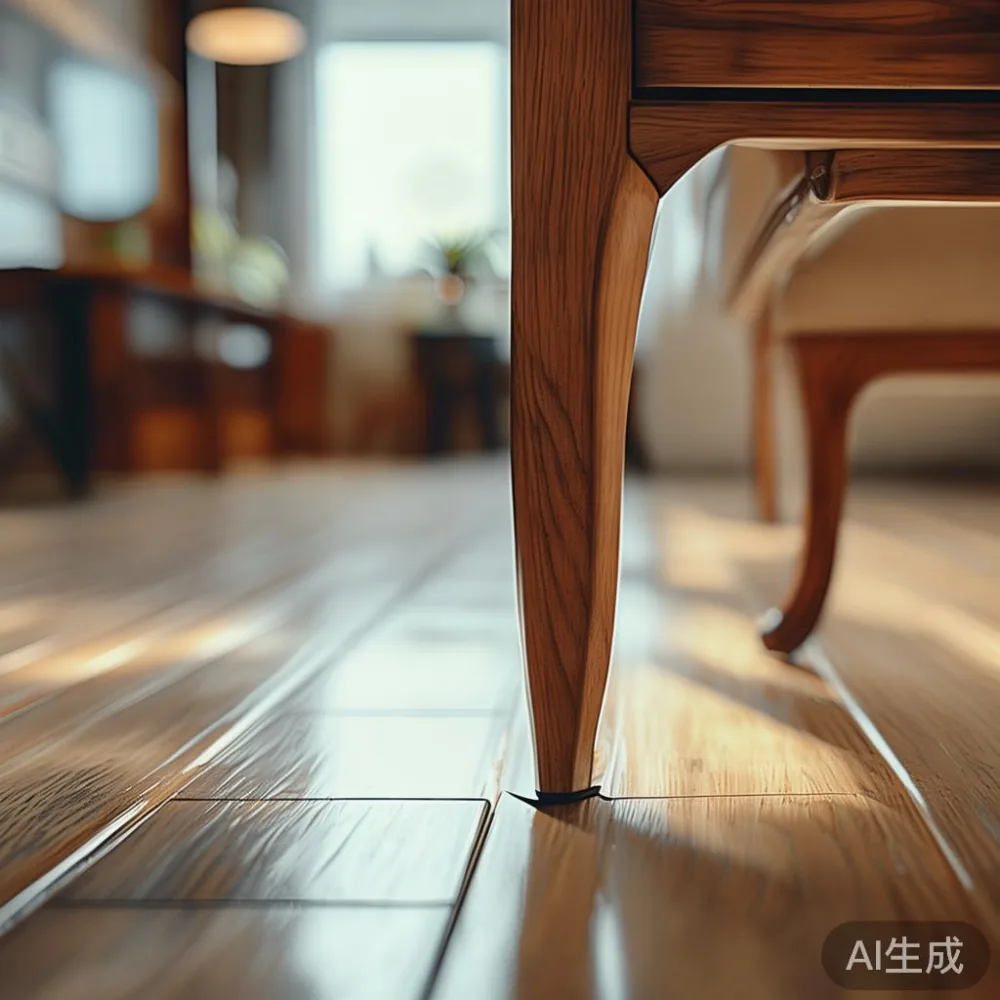
Why lacquer and tropical air are natural enemies
Lacquer, in the modern furniture sense used across most bed frame, wardrobe, and bedside cabinet production lines, is a multi-coat film cured on top of the wood substrate. The harder and glossier the film, the more it shows what moisture does. Three failure modes show up repeatedly in Singapore homes.
First, whitening or blooming. Warm, humid air pushes moisture into micro-pores of the cured film. The film scatters light and you wake up to a wardrobe door that looks like it has been dusted with talc. Second, edge lifting. Lacquer thins at the sharp edges of panels, and condensation from a 25 °C air-conditioner meeting a 30 °C wall migrates straight into those vulnerable 0.5 mm rims. Within nine to fourteen months, the film separates from the substrate. Third, sticker stains. Anything rubber, vinyl, or even some plant-based coasters left on a lacquered nightstand for as little as 48 hours can leave a permanent chemical ghost under the gloss.
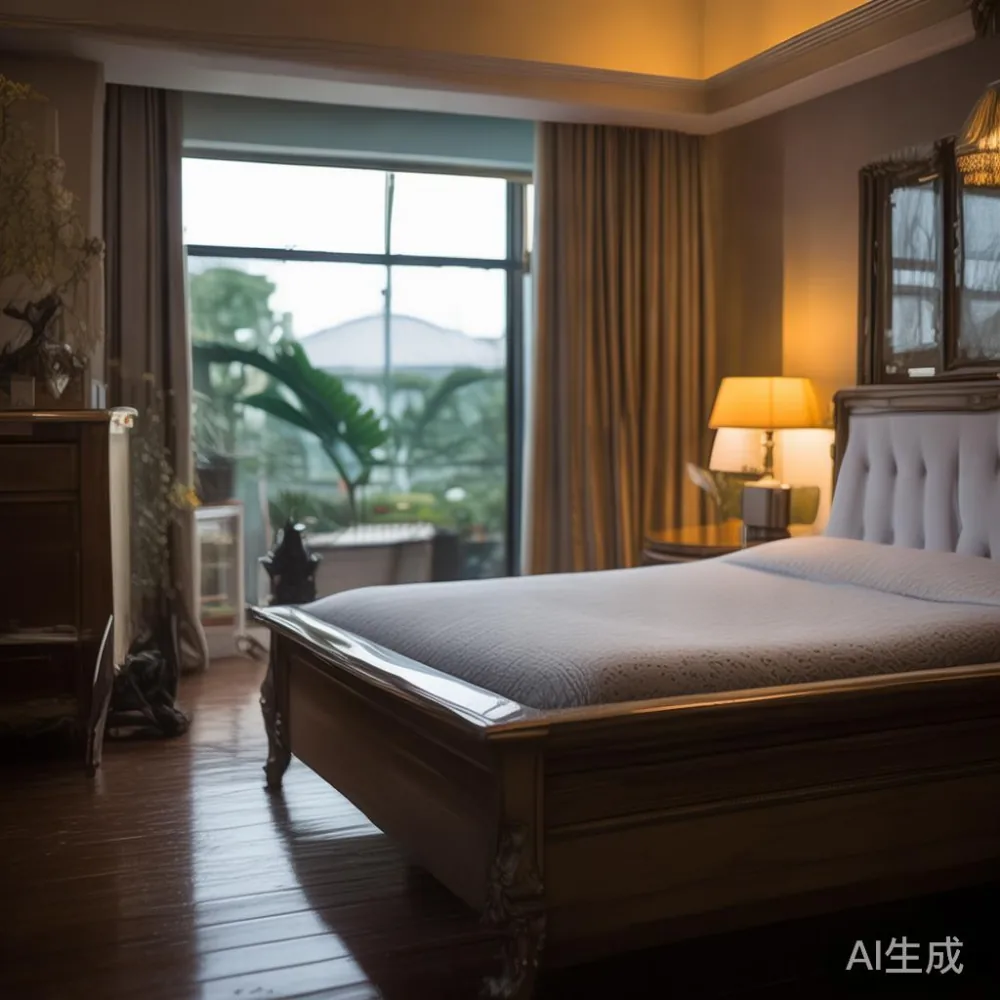
The good news: every one of these failures is preventable. Most lacquered wardrobes and bed frames sold through Foshan workshops and shipped to Singapore — including the MIDHILL French provincial wardrobe range I inspected in a Punggol condo last week — use either a seven-coat PE (polyester) piano-grade finish or a five-coat PU (polyurethane) finish over a sealed MDF or solid-wood core. Both can last fifteen years indoors if you follow a 15-minute monthly routine.
How much humidity are we actually talking about in an HDB or condo?
Measurements I took across six Singapore homes in the last quarter — three HDB flats in Bedok, two condos in Punggol, and one walk-up in Geylang — show bedroom humidity sitting between 72 % and 86 % from 11 pm to 7 am when the air-conditioner is off and the windows are closed. With the air-conditioner running, it drops to 55 to 65 %. Lift-up wardrobes installed against the shared HDB wall (the one facing the neighbour's kitchen) sit 1 to 2 °C warmer and 4 to 6 % more humid than freestanding pieces along the corridor wall, simply because party walls wick moisture from the adjacent unit.
What this means for your bedroom design is practical: treat the wardrobe wall as a micro-climate. Keep it 15 to 20 cm clear of the curtain rail, leave 2 to 3 cm between the wardrobe side and any partition, and never push the bed frame flush against the wall. Those small gaps let air move and let the lacquer breathe.
What is the actual weekly care routine?
You do not need special imported polishes. A 30 ml bottle of pH-neutral silicone-free furniture spray costs about SGD 12 to SGD 18 at any Watsons or Home-Fix, and a pack of 40 microfibre cloths runs SGD 6 to SGD 9 at Daiso. That is the entire toolkit.
- Dry-dust the surface with a clean microfibre cloth every Saturday morning. Always with the grain direction of the underlying wood veneer, even on a high-gloss lacquer — it prevents micro-scratches that humidity later turns visible.
- Spray two to three pumps of the neutral cleaner onto the cloth, never directly onto the lacquer. Direct spray can pool at the edges of carved details on a bed frame headboard and creep under the film.
- Wipe in straight lines, then buff dry with a second cloth within 90 seconds. Moisture left sitting is the enemy.
- Once a month, apply a rice-grain amount of paste wax (Malanca or Howard, SGD 28 to SGD 35 for 200 g) and buff after 4 minutes. Paste wax adds a sacrificial layer that absorbs the daily humidity swings before the lacquer does.
Budget 8 to 12 minutes per wardrobe door, 3 to 4 minutes per nightstand, and 5 minutes for a queen-size headboard. A full four-piece set takes about 40 minutes, which works out to roughly 35 hours per year — a small price for keeping a SGD 1,800 to SGD 3,200 bedroom set looking new.
How do I handle spills, sticker stains, and small scratches?
This is the question I get most often over kopi, and it deserves a direct answer. Lacquered surfaces are not indestructible, but they are more forgiving than people think, as long as you act within minutes rather than days.
For water rings from a cold glass left on the nightstand, blot — never wipe — with a dry microfibre cloth, then a hairdryer on the low-heat setting held 30 cm away for 60 to 90 seconds. The warmth re-bonds the moisture under the surface. For oily stains (hand cream, hair oil), dust a pinch of cornstarch onto the spot, leave 15 minutes, then buff. For sticker residue, warm a cloth to 40 °C, lay it over the sticker for 60 seconds, then roll the residue off with a fingertip. Avoid acetone, nail polish remover, vinegar, or any citrus-based cleaner — they will dissolve PE lacquer in under ten seconds and leave a dull crater that no amount of wax will hide.
Small scratches under 3 cm can be touched up with a matching lacquer marker (SGD 14 to SGD 22 on Shopee or Lazada, colour-matched to common Foshan factory codes like 01-walnut, 03-oak, 07-ash). For deeper gouges, the right move is a professional refinisher, and this is where solid wood pieces earn their keep: a solid wood sofa frame, a wooden dining table, or a wooden bed frame can be sanded back and re-lacquered two, sometimes three times across a 20-year lifespan, whereas MDF cores cannot.
What about air-conditioners, dehumidifiers, and the GST on new pieces?
Bedroom design in Singapore has one built-in advantage: most of us sleep in air-conditioned rooms, which already strips 20 to 30 % of the ambient humidity out of the air overnight. A standard 9,000 BTU split unit running 7 hours pulls roughly 1.8 to 2.4 litres of water from the air. If you want extra protection, a 12-litre Meaco or Mitsubishi dehumidifier set to 55 % RH costs about SGD 380 to SGD 520 and uses 2.4 kWh per 12-hour cycle — under SGD 0.80 a night at the current SP Group tariff of SGD 0.32 per kWh before GST.
For buyers pricing a new lacquered set, current Foshan-to-Singapore landed prices through established workshops look like this: a queen-size solid-wood bed frame runs SGD 1,250 to SGD 2,100, a six-door wardrobe SGD 2,400 to SGD 4,800, a pair of nightstands SGD 380 to SGD 620, and a marble table for the bedroom reading corner another SGD 850 to SGD 1,600 depending on whether the top is natural or sintered. Add 9 % GST on the imported CIF value, plus SGD 80 to SGD 180 for HDB-corridor delivery and two-man carry-in (most Tampines and Bedok blocks have 1.2 m-wide lift doors and 1.5 m-wide corridors, which fits a flat-packed wardrobe panel of 240 cm × 60 cm × 8 cm without tilting). Punggol and newer BTO blocks are slightly tighter, so always confirm the lift car depth before ordering a non-demountable wardrobe.
If you are also browsing for a Modern light luxury coffee table for the living room or an Italian light luxury wardrobe with hand-rubbed open-pore lacquer for a condo master bedroom, the same humidity rules apply, but you can usually ask the factory to upgrade from five-coat PU to seven-coat PE for a SGD 220 to SGD 380 surcharge per piece. The seven-coat finish adds 0.15 mm of film thickness and roughly doubles the moisture resistance, which is why premium ranges tend to advertise their coat count openly.
How long should a well-kept lacquered bedroom set actually last?
Based on pieces I have tracked across Singapore homes since 2014, a five-coat PU lacquer on a wardrobe that gets the routine above holds its gloss for 9 to 12 years before the first bloom appears. A seven-coat PE lacquer pushes that to 14 to 18 years. Both numbers assume the bedroom stays between 55 % and 75 % RH year-round, which a dehumidifier on a 55 % setpoint easily achieves in any HDB or condo in Tampines, Bedok, or Punggol.
For buyers comparing the top 10 Minimalist furniture lists on local lifestyle blogs, the lacquer quality question is rarely asked, yet it is the single factor that decides whether a SGD 2,200 wardrobe looks like new at year five or like a candidate for the void deck at year three. Ask the showroom, in writing, how many coats of PU or PE are on each panel, what the substrate is (solid wood, plywood, or MDF), and whether the factory offers a re-lacquering service. A workshop that has been exporting since the late 2000s, with a structural warranty of ten years on the bed frame and a lifetime refinishing option on the wardrobe, will answer all three questions without hesitation.
That same care philosophy extends across the rest of the home. An American for small living room layout, for instance, still relies on the same humidity logic if you place a solid wood sofa or a wooden dining table within 1.5 m of a window that gets afternoon sun. Keep the curtains drawn between 1 pm and 4 pm, rotate any solid-wood tabletop 90° every quarter so the UV exposure evens out, and your lacquer will not only survive a Singapore decade — it will outlast two lease cycles and still fetch a reasonable resale price when you eventually upgrade. Buyers researching under 2000 French furniture packages should weigh the same metrics, because the price point matters far less than the film thickness and the factory's willingness to refinish.
One more piece of local context worth knowing: shipping from Foshan to Singapore through the Shekou or Yantian port clusters now takes 11 to 14 days door-to-door for flat-packed lacquered pieces, including fumigation, SGS inspection, and Singapore Customs clearance. Add three to five working days for last-mile delivery to HDB blocks. If you live in a tower above the 25th floor in a Punggol or Bedok BTO, factor in a SGD 40 surcharge for the high-floor carry, since most delivery crews cap at the 24th floor without a service lift booking. Planning a purchase around the Chinese New Year window (late January to mid-February) is wise, as Foshan factories shut for 10 to 14 days and lead times stretch to 28 days.
Will my lacquered furniture survive if I travel for three weeks and switch off the air-conditioner?
This is the single most common concern I hear from owners of 1,500 to 2,200 sq ft condos in Punggol, and the short answer is yes — provided the wardrobe is not pushed against an unrendered external wall. A closed-up Singapore bedroom with the air-conditioner off for 21 days will sit at 28 to 31 °C and 82 to 90 % RH, well within the survival envelope of any five-coat PU or seven-coat PE lacquer. The film absorbs moisture but does not delaminate until you cross 95 % RH for 60+ days, or expose the piece to direct rain splash — which is why you should never place a lacquered nightstand within 80 cm of an open window during the monsoon months.
Before you fly out, wipe down every surface with a dry microfibre cloth, leave the wardrobe doors slightly ajar (2 to 3 cm) so air circulates inside, drop a couple of silica gel buckets (the 500 g type, SGD 4 to SGD 6 each at any NTUC) into the bottom drawers, and switch the air-conditioner to dry mode rather than off. Dry mode at 26 °C will hold the room at 60 to 65 % RH for under 0.6 kWh per hour, or roughly SGD 0.20 a day on your SP bill. Return to a wardrobe that looks exactly the way you left it.
Is the post-modern light luxury look compatible with Singapore's humidity?
Yes, and this is where the post-modern light luxury aesthetic — soft curves on a bed frame, fluted glass on a wardrobe, brushed brass on a nightstand handle — pairs naturally with the engineering required for tropical living. The fluted glass, the curved headboard, the warm walnut tone under a satin matte lacquer: each of these features is actually easier to maintain here than a high-gloss piano-black wardrobe, because satin finishes scatter light and hide the micro-imperfections that humidity eventually reveals. If you are browsing the French light luxury catalogues on Houzz or the American light luxury collections on local ID firm portfolios, ask the supplier for a 15 to 25° gloss reading rather than the usual 90° piano gloss. That single specification will buy you two to three extra years before the first sign of blooming appears.
One final note on sourcing. Buyers who walk into a Simei or Tai Seng showroom and ask about the factory of origin, the number of lacquer coats, and the warranty will be taken more seriously than those who only ask about price. A workshop exporting since the late 2000s, supplying more than a dozen countries, and offering a ten-year structural warranty alongside a lifetime refinishing option is the right partner for a bedroom design that has to survive Singapore's climate. The bed frame you buy today should still be the centrepiece of your bedroom in 2035 — and with the right monthly routine, it absolutely can be.
For readers who want a quick reference card to print and stick inside the wardrobe door, here is the 60-second version: dust weekly with a microfibre cloth, neutral cleaner monthly, paste wax quarterly, dehumidifier at 55 % RH overnight, 2 to 3 cm air gaps on every side of every piece, and never let a rubber or vinyl object sit on the surface for more than a day. Follow those six rules, and the lacquer will do what it was engineered to do — stay clear, stay glossy, and stay out of the way of your morning routine.
One logistics footnote I almost forgot to share, because it comes up in nearly every Tampines and Bedok delivery: if your block has a service lift that residents can book through the Town Council, request a 90-minute slot on a weekday morning. The crew can move a flat-packed queen bed frame up in 25 minutes, a six-door wardrobe in 45 minutes, and a marble table top in 20 minutes, all without holding up your neighbours' grocery runs. For buyers who also want a coordinating Modern light luxury coffee table for the living hall, ask the supplier to ship the bedroom and living-room pieces together so you only pay one round of SGD 180 corridor delivery and one 9 % GST assessment on the combined CIF value. Small savings, but they add up across a full house fit-out.