What to Check Before Buying a Sofa You Cannot Sit On: A Singapore Bedroom Design Guide
Last month I visited the MIDHILL showroom in Foshan with a Singapore couple, the Tan family from Tampines. They were shopping for a solid wood sofa to anchor a 4-room HDB bedroom design that doubles as a TV room. They sat on four pieces, loved two of them, and almost walked away from one because the seat depth was a centimetre too shallow for Mr Tan's long legs. The interesting part: they had already paid a deposit on a different sofa online that they had never tested. That decision would have hurt them, because sofas in compact Singapore flats behave very differently than the photos suggest. This guide is built from that day, from conversations with HDB homeowners in Bedok and Punggol, and from the small print that nobody reads until the lift access panel is too late.
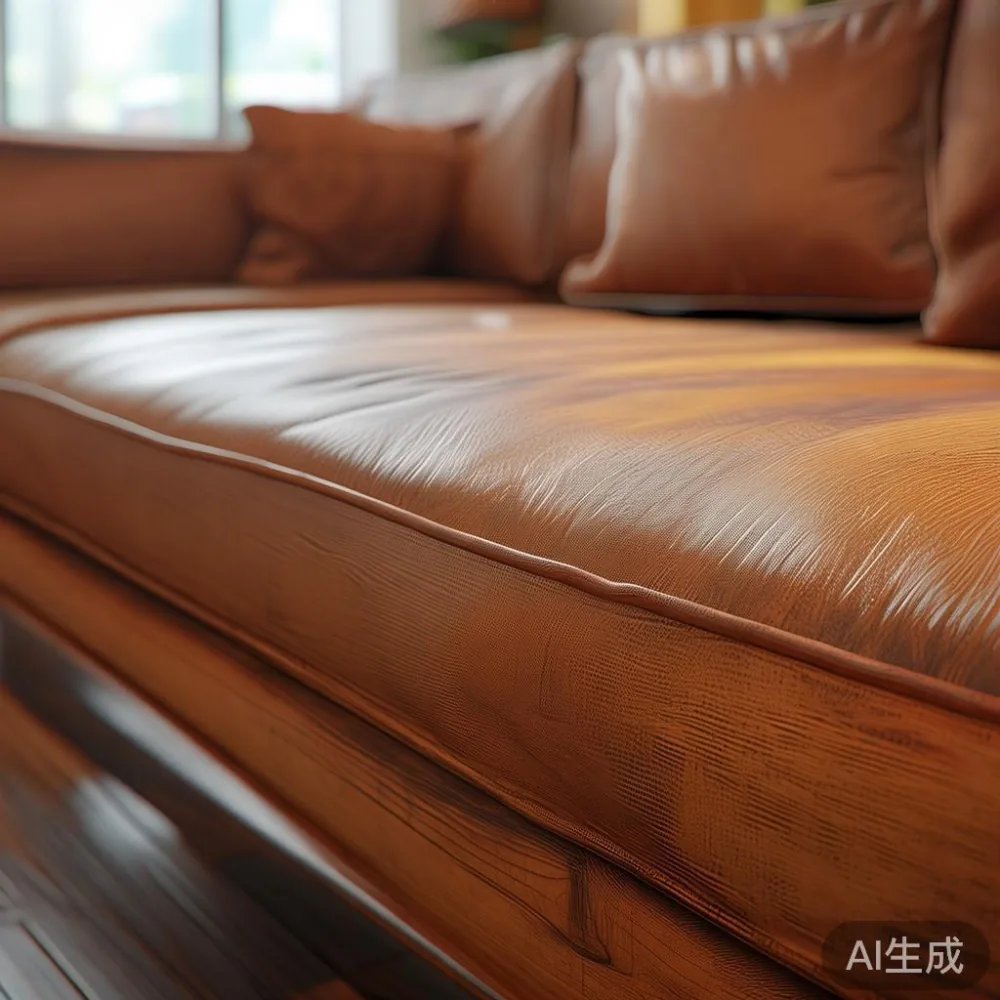
If you are furnishing a Singapore home, the sofa you choose quietly decides how the whole bedroom design feels. It affects your wardrobe clearance, your nightstand reach from the bed, and whether your dining table still fits the open-plan layout you paid for. Treat the sofa as a structural decision, not an accent purchase.
Why You Often Cannot Sit on the Sofa Before Buying in Singapore
There are three common reasons. The piece is being shipped from overseas, the showroom sample has been sold, or you are browsing during a sale weekend when every display model is occupied. In all three cases, the shopper pays first and discovers later. The safest workaround is simple: ask the seller for the exact dimensions, the frame material, the suspension type, and a written confirmation of comfort expectations before you commit a single dollar.
Singapore shoppers also order from regional warehouses, which means the sofa you inspect in a Jurong or Tai Seng showroom is sometimes a floor model that has been sat on by hundreds of people. It feels softer than a brand-new unit will feel after six months. Account for that.
Is French neoclassical headboard furniture worth it?
Yes, French neoclassical headboard furniture is worth it if your priority is a sculptural focal wall that anchors the room and you have at least 90 cm of clearance behind the bed, because the silhouette only reads correctly when the panel is not crowded by a wardrobe or a nightstand. The price band for a genuine carved solid wood headboard in Singapore sits between SGD 1,400 and SGD 4,200 for a queen, and you are paying for hand-finished fluting, tapered fluted legs, and a calm symmetry that pairs well with light luxury interiors. If the bedroom is smaller than 12 square metres or the headboard height exceeds 130 cm, the room shrinks visually and the same money gives a better return on a simpler frame with a refined marble table bedside instead.
The Five Specs You Must Demand Before You Pay
Treat this as a checklist you can copy into your phone before any sofa purchase in Singapore.
1. Frame material and origin. Ask whether the frame is solid hardwood (oak, ash, birch, walnut) or a mix of solid wood and plywood. A solid wood sofa carries a heavier freight cost from China but lasts 10 to 15 years with basic care. Plywood-only frames tend to sag at the joints around year five. A Singapore HDB bedroom is warm year-round, so request kiln-dried timber, which prevents the cracking you sometimes see in imported pieces during the second monsoon season.
2. Seat depth, seat height, and arm height. These three numbers decide whether you can sit, lounge, or nap. For an average Singapore household of mixed heights (155 cm to 182 cm), the workable seat depth is 55 to 60 cm. Seat height should be 42 to 46 cm from the floor. Arm height between 55 and 65 cm keeps a phone within reach but supports a leaning elbow. If any number is missing on the product page, treat that as a warning sign.
3. Suspension and cushion fill. Three common systems exist: sinuous springs (firmer, common in mid-range pieces), eight-way hand-tied springs (heavier, longer-lasting, often used in light luxury builds), and webbing only (lightest, cheapest, softens fastest). Cushion fill is either high-resilience foam (35 to 45 kg per cubic metre is the density to ask for), goose feather over foam, or all feather. Each behaves differently once a Singaporean household puts air-conditioning at 23 degrees and a dehumidifier on for eight hours a night.
4. Fabric or leather grade. For a Singapore bedroom design, I lean toward performance linen or top-grain leather because both handle humidity swings from 60 to 90 percent. Bonded leather and PU look attractive on day one and peel at the corners within 24 to 36 months. Ask for the rub count (Martindale): 30,000 rubs suits a master bedroom, 50,000+ suits a daily-use family sofa.
5. Weight and packed dimensions. This is the spec Singapore homeowners forget. A 3-seater solid wood sofa can weigh 70 to 95 kg packed. Your HDB lift door is usually 80 cm wide and 210 cm tall, and the turntable clearance at the lift lobby is roughly 240 cm. If the sofa box exceeds 210 cm in any dimension, your building management will ask for a time-slot booking or refuse the delivery outright. Condo corridors can be narrower, around 110 cm, so the angle of approach matters. MIDHILL publishes packed dimensions on every sofa spec sheet for this exact reason.
Singapore Delivery: Lifts, Corridors, Staircases, and the Stuff Nobody Mentions
HDB lift cabins in Tampines, Bedok, and Punggol blocks built after 2015 are mostly 1.0 m wide doors with an internal depth of 1.6 m. Older blocks drop to 0.8 m doors. A 2.4 m long sofa will not enter an 0.8 m door at any angle. Your options are hoisting through a service window (which requires a permit from the Town Council), disassembly in the corridor (not all frames allow this), or refusing delivery and paying a second courier fee that runs SGD 120 to SGD 280.
For condos, the delivery van must be parked in the loading bay by appointment, and most managements charge a SGD 50 to SGD 150 logistic fee on top of your delivery. Check your MCST by-laws before you book. The MIDHILL delivery team I observed handles roughly 60 Singapore addresses a month, and the four-hour time-slot booking is the single detail that causes the most rescheduling.
Stair-only buildings are rare but exist in older parts of Bukit Timah and Tiong Bahru. A 3-seater sofa going up three flights costs SGD 220 to SGD 360 in manpower alone. Budget for it.
Light Luxury, Solid Wood, and the Aesthetic That Travels
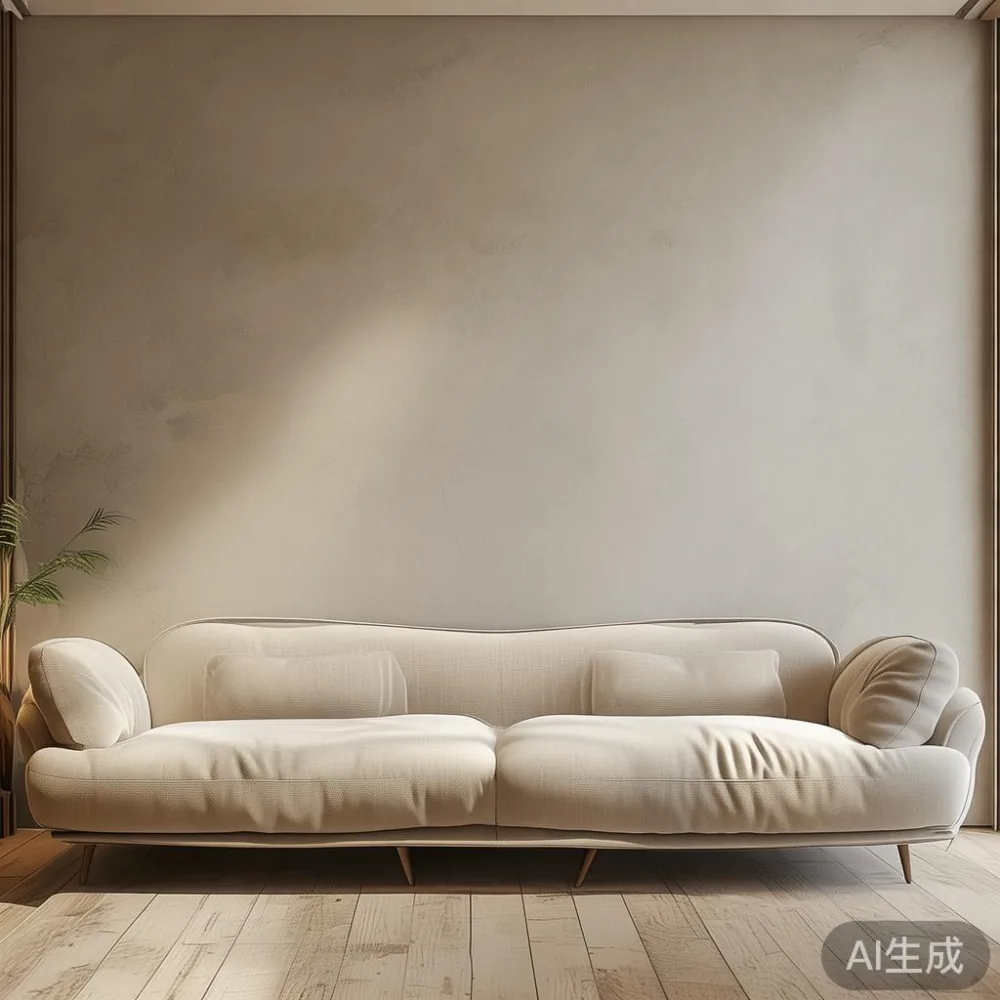
Singapore interiors borrow freely, and three light luxury directions dominate current showrooms. American light luxury leans into warm oak, brushed brass feet, deep buttoning, and oversized scale; it suits a 1,200 sq ft condo in Punggol with high ceilings. Post-modern light luxury mixes curved silhouettes with slim metal legs and pairs well with a marble table at the entrance. French light luxury, the style the Tan family eventually chose, focuses on fluted solid wood frames, low proportions, and a calm ivory palette that lets a bold wardrobe or a textured bed frame do the talking.
All three directions share a common thread: the frame is solid wood, not MDF, and the joinery is visible on the underside. Lift any sofa skirt or peek under the dust cover. If you see dowels, corner blocks, and mortise-and-tenon joints, the piece will outlast the lease on your HDB flat. If you see staples, staples, and more staples, walk away.
Pricing, Warranty, and the True Cost of a Solid Wood Sofa in Singapore
A 2-seater solid wood sofa in light luxury finish retails between SGD 1,600 and SGD 3,200 in Singapore. A 3-seater runs SGD 2,400 to SGD 4,800. Corner configurations cross SGD 5,500 easily. Prices include 9 percent GST for local stock, while direct imports attract the same 9 percent on the CIF value plus any applicable duty, which is zero for wood furniture under HS code 9403 but applies if leather is the primary surface.
Warranty language matters. A 10-year structural warranty covers the frame and the joinery, not the cushions or the fabric. Lifetime refinishing, offered by makers such as MIDHILL, covers sanding, re-staining, and re-sealing of the wood after 5 to 7 years of use. Read what triggers a void: moving the sofa without lifting, exposing it to direct afternoon sun through an uncurtained window, or using commercial cleaners all sit in the fine print of most brands.
Free shipping over US$350 in the maker's own currency usually translates to roughly SGD 480 to SGD 520 at current rates. Below that threshold, expect a SGD 80 to SGD 180 delivery surcharge to Singapore. For a 3-seater, the threshold is crossed easily, so the question becomes warranty support, not freight.
Returns, Refunds, and the 14-Day Window
Singapore's Consumer Protection (Fair Trading) Act does not force sellers to accept returns for change of mind. The 14-day return window is therefore a store policy, not a legal right. Read what counts as a return: defects in workmanship, transit damage reported within 48 hours of delivery, or dimensional mismatch confirmed within 7 days. A sofa that you simply do not like the colour of is usually a store-credit situation, not a cash refund.
Photograph every face of the carton before the delivery team opens it. Photograph the assembled piece. Photograph the lift access, the corridor turn, and the doorway. If the sofa arrives damaged, the courier has 7 days to file a claim and you should keep all packaging for that period.
The Bedroom Design Fit: Sofa, Bed Frame, Nightstand, Wardrobe, Marble Table
A sofa that lives in the master bedroom needs to coexist with a bed frame, a nightstand, a wardrobe, and often a marble table or a vanity. The standard HDB master bedroom measures about 3.2 m by 3.8 m, which gives roughly 12 square metres after subtracting the wardrobe footprint of 0.8 m by 2.4 m. A 2-seater sofa at 1.6 m wide needs at least 80 cm of clearance in front to walk past and another 30 cm to pull out a drawer from the wardrobe behind it. That is 1.1 m of pure circulation, leaving you with a workable floor area of about 7 square metres around the bed.
Choose a sofa with exposed legs (15 to 18 cm high) rather than a skirted base. The negative space under the frame is what keeps the bedroom design breathable. Skirted sofas look romantic on a photograph and crowd the room in real life. A marble table side piece, by contrast, opens the layout because its slim metal base takes up almost no visual weight.
For the bed frame, aim for a solid wood platform with a headboard between 100 and 120 cm tall. A taller headboard eats vertical space and makes ceiling-height feel lower, which is a real issue in HDB flats with their 2.6 m to 2.8 m ceilings. The nightstand should sit 2 to 4 cm below the mattress top so the bedside lamp lights the pillow correctly. And the wardrobe, if it is a sliding-door unit, saves the 60 cm a swing door would steal from the sofa zone.
What a Good Showroom Visit Looks Like
Bring a measuring tape, a small notebook, and your phone with the floor plan of your bedroom open. Sit on every sofa for at least 90 seconds. Lean back as if reading. Curl up as if watching a movie. Stand up without using your hands. If the sofa creaks on stand-up, the joints are loose and will only get worse. Cross your legs. If your knee hangs off the seat cushion, the depth is wrong for your household.
Ask the sales consultant to lift one corner of the cushion and read the foam density stamp out loud. A 35 kg per cubic metre foam is mid-range. Anything below 28 kg is soft now and flat in 18 months. Ask to see the underside of the frame. Ask for the country of origin. Ask whether the cushions have zip-off covers, because a Singaporean bedroom design sees sweat, mosquito coil smoke, and the occasional spilled teh tarik, and removable, washable covers save the sofa.
One last detail: ask for a sample swatch of the fabric, take it home, and hold it against your wardrobe door and your curtains in daylight. Singapore light is unforgiving. A grey that looks elegant in a showroom can read flat or blue against a warm wood wardrobe. Two minutes at home beats a return shipment.
Final Practical Notes Before You Click Pay
Three quick checks close the loop. Confirm the delivery window is a four-hour slot or tighter, not an all-day window, because you will lose a workday otherwise. Confirm that GST is shown as a separate line on the invoice so your claim with IRAS is clean if the sofa is for a registered home office. And confirm the warranty registration is a written email reply, not a sticker inside the carton that you will inevitably throw out.
A solid wood sofa in light luxury finish, chosen with measurements instead of mood boards, will serve a Singapore bedroom design for a decade or longer. The Tan family ended up with a 2.4 m three-seater in French light luxury, fluted ash frame, ivory performance linen, eight-way hand-tied springs, and a 14-day return clause written into the invoice. They also paid SGD 90 for a wider delivery time-slot because their lift is the older 0.8 m type. Six weeks in, the cushions have softened to the shape of the family, the wood has darkened by half a shade, and the bedroom design reads the way the original mood board intended. The choice to verify every spec on this list before paying is what made that possible.