Before You Buy a Sofa You Can't Sit On Yet: A Singapore Bedroom Design Checklist
Last month, I drove out to a Tampines HDB showroom with a client who had fallen in love with a 2.4 metre linen sofa online. The product page showed a dreamy master bedroom scene, a tufted backrest, turned legs in walnut tone, and a price tag of S$2,180. She was ready to pay a deposit. Then we did three things, in this order: measured her bedroom doorway, measured the corridor outside her unit on the 9th floor, and called her condo management about the service lift dimensions. Within twenty minutes, the dream turned into a logistics puzzle. The sofa she wanted was 92 cm deep. Her bedroom door was 78 cm wide. Even tipped on its side, it would not pass. That one afternoon changed the way I approach every "sofa for the bedroom" conversation, and it is the reason this article starts with measurements, not fabric swatches.
Singapore shoppers have a specific set of constraints that people in landed markets rarely think about. HDB corridors are typically about 1.2 to 1.5 metres wide. Standard bedroom doors swing open to roughly 78 to 82 cm. Service lifts in newer condos can swallow a 2.4 metre sofa, but many older blocks in Bedok and older private apartments in Punggol still run lifts with openings around 90 cm wide and 2.1 m deep. On top of all that, the 9% GST is calculated on the full retail price, so a S$2,400 sofa becomes S$2,616 at checkout, and a refund of the 8% GST on a 14-day return only happens if the unit is unopened and re-exportable. So the question is not "is this sofa beautiful," it is "can this sofa physically get into your bedroom, and can your bedroom design hold it once it is there?"
What should I measure before I even open a sofa listing?
Five numbers. Write them on a piece of paper and keep them next to your phone when you scroll. First, the width of your bedroom door, measured at the frame, not the wall opening. Standard HDB doors are 82 cm, but many homeowners in Tampines and Punggol have replaced theirs with 90 cm or wider variants after renovation. Second, the depth of the door, because a sofa deeper than the door is wide cannot stand up and pass through; it has to be tilted. Third, the diagonal of your doorway, frame to opposite corner, because that is the real envelope any rectangular object must fit through when tipped. Fourth, the internal width and depth of your lift, measured at the door jamb, not the cabin wall. Fifth, the length of any corridor turn, including the 90-degree bend most HDB units have between the lift lobby and the front door. If the sofa box is 230 cm long, you need a corridor arc of at least 230 cm to pivot it around the corner. I have seen clients in Bedok 4-room flats lose a S$1,800 sofa to a 116 cm arc that seemed plenty until the movers started tilting.
The second set of numbers lives on the product page. Look for the packed carton dimensions, not the assembled dimensions. A solid wood sofa from a brand that packs well will ship in a box roughly 30 to 40% larger than the seat itself, because of corner protectors, leg packs, and the wooden crate that protects the frame. A 2.2 m sofa might ship in a 235 x 95 x 70 cm carton. If your lift opening is 90 cm wide and 210 cm deep, that carton does not fit standing up. The movers will need to lay it down, and the lift floor has to be long enough. MIDHILL publishes packed dimensions on every product page, which is one reason I send clients there when they are shopping for bedroom design pieces that have to survive a long journey from Foshan to a Punggol walk-up.
What frame and joinery details matter when you cannot test the sofa in person?
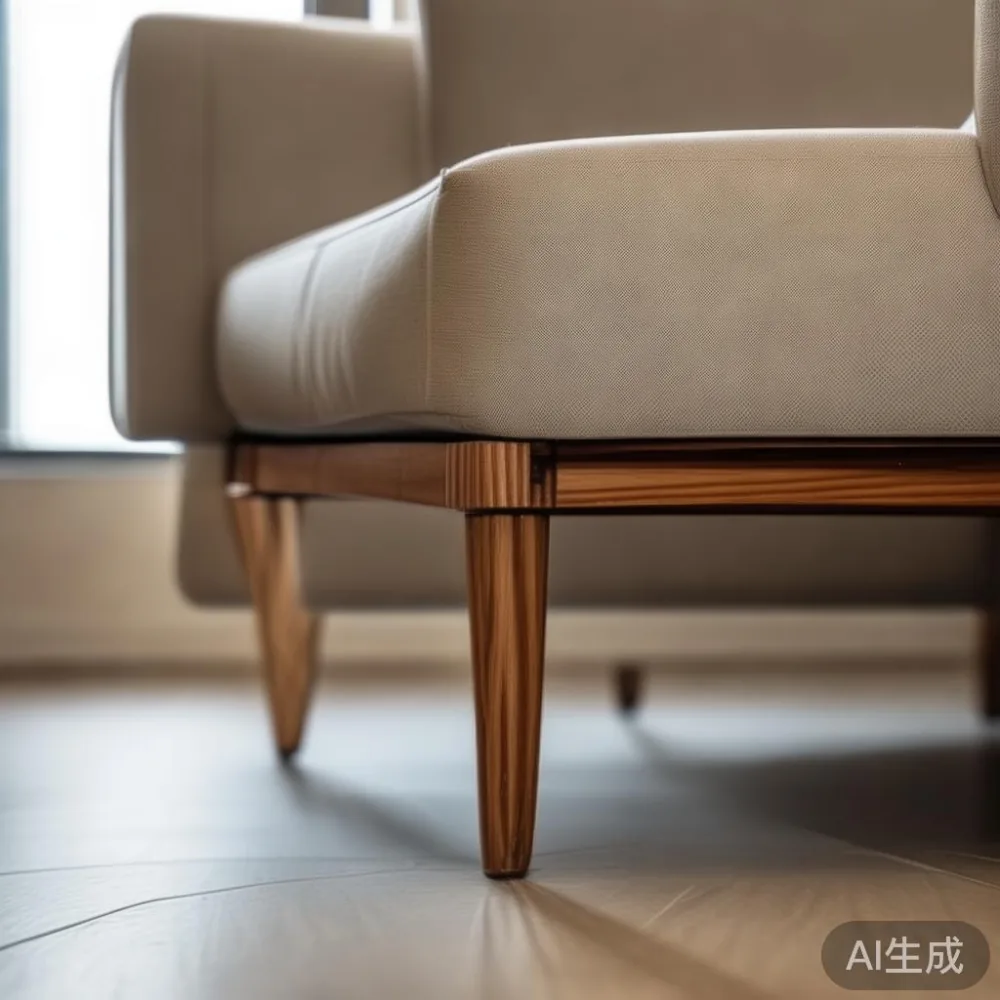
Once the geometry problem is solved, you can think about what is actually inside the frame. A sofa you cannot sit on has to be evaluated on paper, and that means the joinery and the wood species. I look for kiln-dried solid wood frames, ideally hardwoods like ash, oak, or beech, joined at the stress points with mortise and tenon or double dowel construction. Particle board and soft pine frames look identical in a photograph but fail within three to five years under a 70 kg nightly user. MIDHILL builds frames in solid ash for most of its bedroom-facing seating, which is part of why the brand can offer a 10-year structural warranty on the joinery, not just a one-year defect cover.
Ask the seller for the frame weight. A 2-seater solid wood sofa typically weighs 38 to 55 kg unpacked, depending on whether the back and arms are solid or plywood. Anything under 30 kg for a 2.2 m sofa is suspicious. Ask for the spring system: sinuous S-spring or eight-way hand-tied. For a bedroom sofa that will be sat on once a day for reading, sinuous S-spring with a 12-gauge wire is fine. For a sofa that will host two adults sleeping through a Netflix rotation, eight-way hand-tied is worth the upgrade. Finally, ask for the foam density, expressed in kg per cubic metre. Anything below 25 kg/m³ will bottom out in 18 months. Anything at 35 kg/m³ or higher will hold its shape past year five. These numbers rarely appear in product titles, but they appear in spec sheets if the maker is transparent.
Does bedroom design actually dictate which sofa shape you should pick?
Yes, and most Singaporeans underweight it. A master bedroom in a Punggol condo might be 14 to 18 square metres once the bed frame, wardrobe, and nightstand are placed. Drop a 2.4 metre curved sofa in there and you lose your circulation path. The general rule I use: the sofa footprint, including its breathing room of 60 cm behind, should not exceed 30% of the usable floor area after the bed and wardrobe are placed. In a 14 sqm bedroom, that means a sofa no larger than about 1.8 m wide by 85 cm deep. In a master suite above 20 sqm, you can push to 2.3 m by 95 cm without choking the layout.
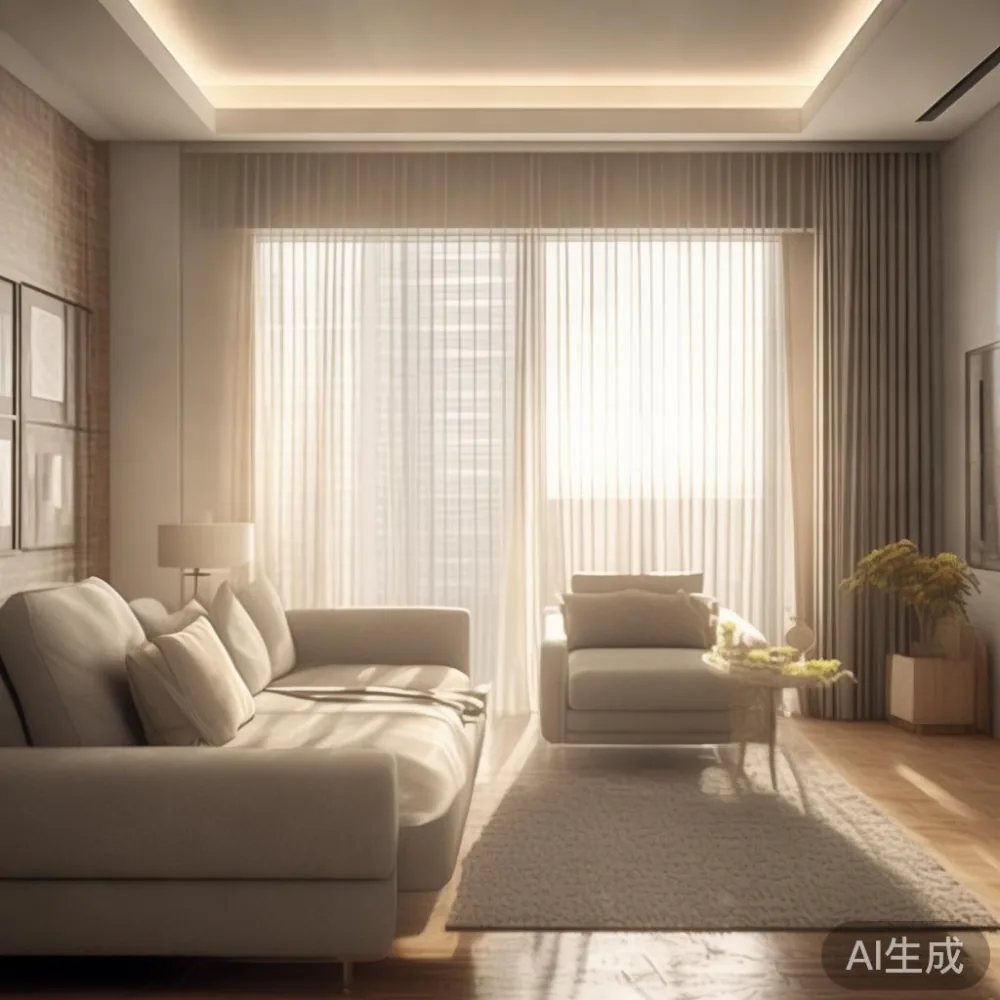
Bedroom design also governs orientation. A sofa placed perpendicular to the bed frame, with its back acting as a soft divider between the sleeping zone and a reading nook, has become a common request in the post-pandemic renovations I have consulted on in Tampines and Bedok. That layout needs a sofa with a finished back, not a fabric back. Many showroom pieces are designed to float in a living room and have an open or unupholstered back, which looks unfinished from the bedroom entrance. If you are integrating a sofa into a bedroom design where it will be viewed from both sides, ask for "finished back" or "two-sided upholstery," usually a S$120 to S$260 upgrade, sometimes before factoring the 9% GST. This is also where the bed frame, nightstand, and wardrobe have to be chosen in the same material language, so the sofa reads as part of a coordinated set rather than an orphan.
Which fabrics survive Singapore's humidity without a daily wipe-down?
Singapore sits at 1 degree north of the equator. Afternoon humidity in Punggol in October can hit 92%. A bedroom sofa with a back against an exterior wall, common in corner units, will absorb moisture through its back panel first. I learned this the hard way when a client bought a velvet sofa for her master bedroom in 2021 and noticed a musty smell by month eight. The fix was not more air-conditioning; it was a fabric swap. Performance linen with a tight weave, top-grain leather with a moisture barrier, or a high-grade microfibre all breathe better than traditional velvet or boucle in our climate. If you want the boucle look, ask for a boucle with an acrylic or polypropylene content of at least 40%, which keeps the loops from collapsing in humidity.
Light luxury positioning matters here. French light luxury sofas tend toward pale linens, brushed brass legs, and subtle piping. American light luxury leans on chunkier profiles, top-grain leather, and dark walnut tones. Post-modern light luxury pushes bold silhouettes with marble side tables. For a bedroom setting, French light luxury usually photographs beautifully but requires the most fabric discipline. American light luxury tends to be the most forgiving in HDB humidity because leather and treated linens tolerate our weather. Post-modern light luxury works in larger master suites where the sofa can anchor a reading corner rather than fight the bed for dominance. Whichever language you choose, ask for a removable, washable cushion cover. It adds about S$180 to the price, but it doubles the usable life of the piece in our climate.
How does shipping actually work from a Foshan factory to a Tampines lift lobby?
Here is where most first-time importers panic. A solid wood sofa from Foshan travels by sea for 12 to 18 days to Singapore, clears customs in 2 to 5 working days, then moves to a local warehouse for inspection and final-mile scheduling. End-to-end, you are looking at 25 to 35 days from order to delivery for a stocked model, 45 to 70 days for a custom finish. MIDHILL has been shipping to 15-plus countries from Foshan since 2008, and the operational rhythm is predictable once you understand it. A few practical points. The brand offers free shipping on orders above US$350, which after currency conversion is roughly S$480, so most single-piece orders clear that threshold easily. Below the threshold, expect a S$80 to S$160 freight surcharge depending on volumetric weight. The 9% GST is calculated on the CIF value, which is the product cost plus insurance plus freight, not just the product cost, so the GST base is slightly higher than the headline price tag suggests.
Returns are governed by a 14-day window for change-of-mind, with the sofa needing to be in its original crate, unopened, for a refund to be processed. Once a crate is opened and the sofa assembled, the brand's 10-year structural warranty kicks in, but the 14-day return window closes. This is why I tell clients to keep the crate for two weeks, sit on the sofa, then decide. If it stays in your bedroom design, keep the warranty card. If it does not, you still have the original packaging to ship it back. The lifetime refinishing offer that MIDHILL extends on solid wood frames means that ten years from now, when the walnut starts to oxidise, you can ship the frame back to Foshan for a S$280 to S$480 refinish, which usually beats the cost of buying a new sofa of equivalent quality. That math matters in a market where quality wood furniture has a usable life of 15 to 25 years.
What about the small print that changes the total price by hundreds of dollars?
Three line items. The 9% GST, which you cannot avoid. The lift booking fee in some private condos, which ranges from S$40 to S$120 per delivery depending on the estate and is not controlled by the furniture brand. And the assembly fee, which is sometimes included and sometimes a flat S$60 to S$180 for a sofa. A S$2,400 sofa with 9% GST, a S$90 lift booking, and a S$120 assembly ends up at S$2,826 delivered. That is the number to budget against, not the headline price. For larger bedroom sets that combine a bed frame, nightstand, and sofa in one shipment, the marginal cost of adding a MIDHILL coffee table to consolidate freight can drop your per-item delivery charge by 30 to 40%, which is a quiet saving that online checkout rarely surfaces.
How do I tell a quality piece from a glossy photograph?
Three signals. First, the maker publishes a full spec sheet, not just a hero image. Second, the maker offers a structural warranty measured in years, not months. Third, the maker tells you what is solid wood and what is veneer. A wardrobe, dining table, bed frame, or sofa with "solid wood" in the description should mean the load-bearing parts are solid, and the brand should say which species. MIDHILL labels frames as solid ash, rubberwood, or oak depending on the collection, and lists marble accent tables by their stone grade. A marble table that costs S$1,200 with "Italian marble" in the title could be Carrara from a Grade A quarry or a Grade C slab with resin filling; the spec sheet will tell you which. The same logic applies to nightstands. A solid oak nightstand with dovetail drawers will outlive a particle-board version by a factor of three or four.
Photography tells you nothing about weight, joinery, or finish. Specs tell you almost everything. If a brand cannot answer "what is the frame species, what is the spring gauge, what is the foam density, and what is the packed carton dimension," they are not ready to ship you a sofa you cannot sit on first.
Should I buy vintage or new when I cannot test the sofa?
This is the part of the brief that splits opinions. A vintage piece has a known geometry, a known patina, and usually a known provenance, but it also has unknown humidity history. Buying for sale vintage furniture in Singapore means inheriting someone else's moisture exposure, possible woodworm, and faded webbing. If you do go vintage, insist on a 48-hour quarantine in your bedroom before committing, ideally with a dehumidifier running. New pieces, especially those built in temperate Foshan, arrive dry-crated and acclimatise over two to four weeks once unpacked. For first-time buyers working through a bedroom design from scratch, new is the lower-risk path. For experienced buyers who know how to inspect a frame, vintage can deliver a one-of-a-kind silhouette that justifies the risk.
What about styling a sofa that lives in a bedroom?
Three quick scenarios, since clients always ask. For those figuring out how to style French provincial sofa in bedroom, keep the rest of the room restrained. One carved mirror, a marble top nightstand, and a wool rug in cream. No competing curves. For those learning how to style French sofa in apartment, especially a compact HDB apartment, mirror the wall behind the sofa to double the perceived depth, and choose a sofa with legs at least 15 cm off the floor so the eye reads more square metres than exist. For clients who want something softer and lower, working through how to style Japanese sofa in bedroom, choose a low-profile futon-style frame in ash with linen cushions, and let one single ikebana-style branch be the only accessory. The minimalist for guest room brief is similar. Keep the sofa low, the nightstand simple, the bedding plain, and let one piece of art carry the eye. Finally, for anyone choosing the room's wider furniture language, browse the top 10 modern furniture lists from independent magazines rather than retailer pages, because retailers rank by margin and editors rank by longevity. A modern sofa that uses solid ash, top-grain leather, and a kiln-dried frame will outlast a fashion-driven piece with chrome arms and featherfill cushions by a decade.
What is the single mistake Singapore buyers keep making?
Buying the longest sofa that fits the room, instead of the longest sofa that fits the door, the lift, the corridor, the stairwell, and the bedroom, in that order. The room is the easiest constraint to satisfy. The path from the loading bay to the bedroom is the constraint that breaks projects. I have walked out of three pre-delivery inspections in Punggol and Bedok where the sofa was perfect and the access was not. One client bought a 2.6 m sofa, could not get it past her HDB corridor turn, and ended up storing it in her parents' place in Tampines for S$180 a month until she could sell it. The cost of that mistake was S$4,260 over eighteen months, including the original purchase, the storage, and the eventual resale loss. A S$90 pre-measurement consult with her building management would have prevented every dollar of it.
Buy the second smallest sofa that still gives you the seat depth you need. Measure twice, including the diagonal of every door and the internal dimensions of every lift on the route. Read the spec sheet, not just the hero photo. And keep the crate for fourteen days, just in case the bedroom design in your head is not the bedroom design your sofa ends up creating.