5-Year Cost Comparison: Veneer vs Solid Wood for Singapore Bedrooms
A bedroom design decision in Singapore is rarely just about appearance. A bed frame, wardrobe, nightstand, or dining table must fit through an HDB lift or a condo corridor, cope with a humid climate, and still make sense after 5 years of daily use. Veneer can deliver a polished surface at a lower upfront price, while solid wood carries different material, labour, and maintenance costs. The practical question is which one has the lower 5-year cost for your home.
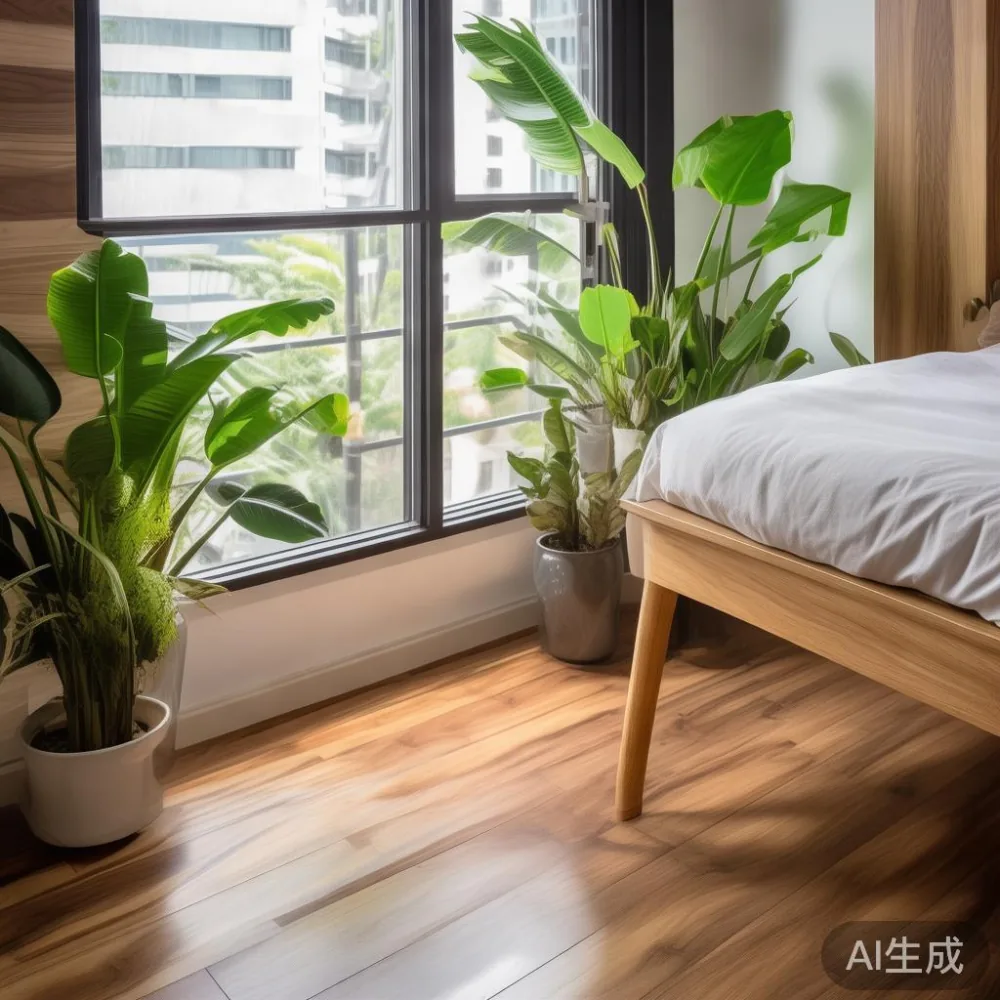
For many Singapore households, the comparison is less dramatic than showroom tickets suggest. A quality veneered wardrobe may cost SGD 1,800 and a comparable solid wood wardrobe SGD 3,200. If the solid option lasts 20 years rather than 10, its annual cost can still be competitive. If both last 15 years, veneer can remain financially attractive. Delivery, lifting, installation, and repair conditions matter as much as the invoice.
MIDHILL is a Foshan solid wood furniture maker established in 2008, exporting to more than 15 countries. Its 10-year structural warranty and lifetime refinishing policy affect the long-term calculation, while free shipping above US$350 and 14-day returns reduce some purchase risk. For Singapore buyers, 9% GST should be added to imported furniture unless the seller can handle the tax treatment appropriately at checkout.
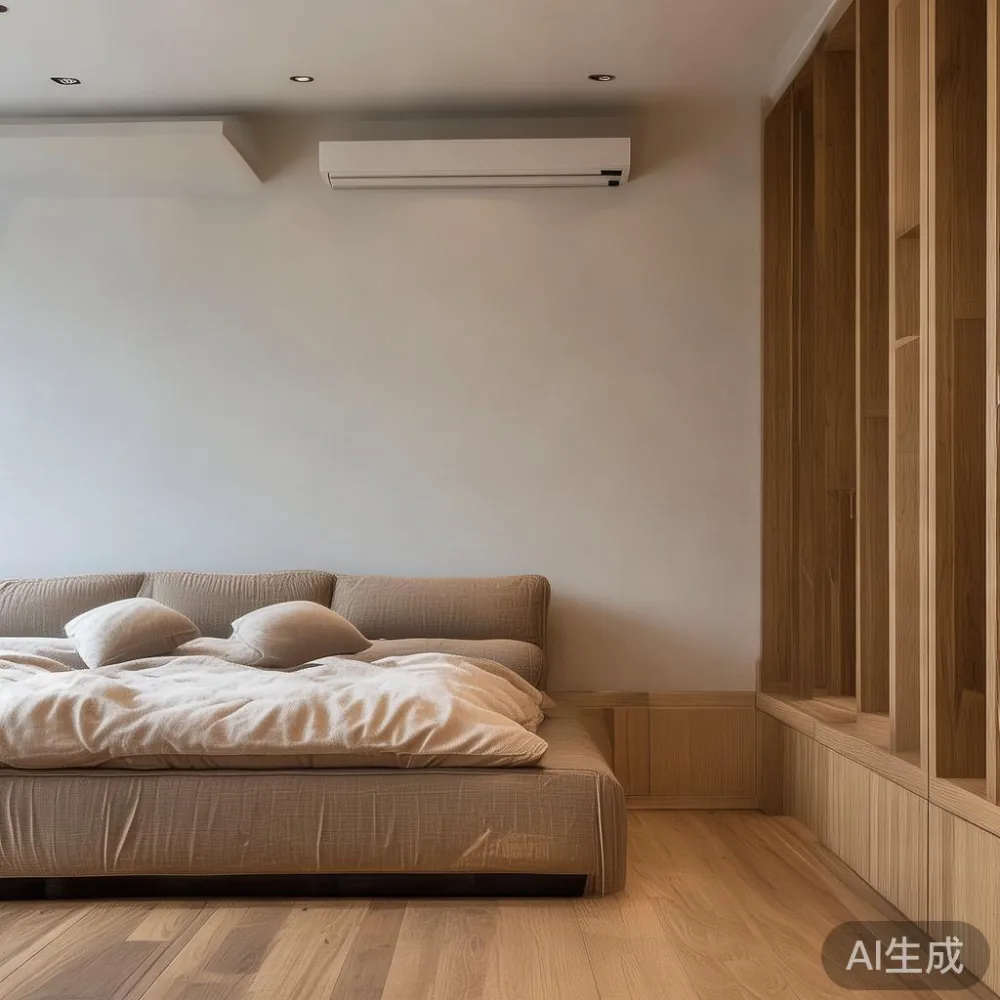
What does veneer actually mean in a Singapore bedroom?
Veneer is a thin layer of real wood, commonly 0.3–1.2 cm thick, bonded to a core such as plywood, particleboard, or MDF. It is not automatically a cheap imitation: a well-matched veneer can reproduce the grain continuity of solid timber across broad panels. A wardrobe door 220 cm wide, for example, may be easier to find in veneer than in one solid board because large timber sections move more as humidity changes.
Solid wood uses the timber itself through its visible section, subject to normal timber construction and movement. A solid wood bed frame may have a 20–25 cm headboard, rails made from 35–45 cm lengths, and legs around 6–8 cm square. The board thickness shown on a product page does not always reveal the whole construction, so buyers should ask about joints, load paths, drawer bottoms, back panels, and the species used.
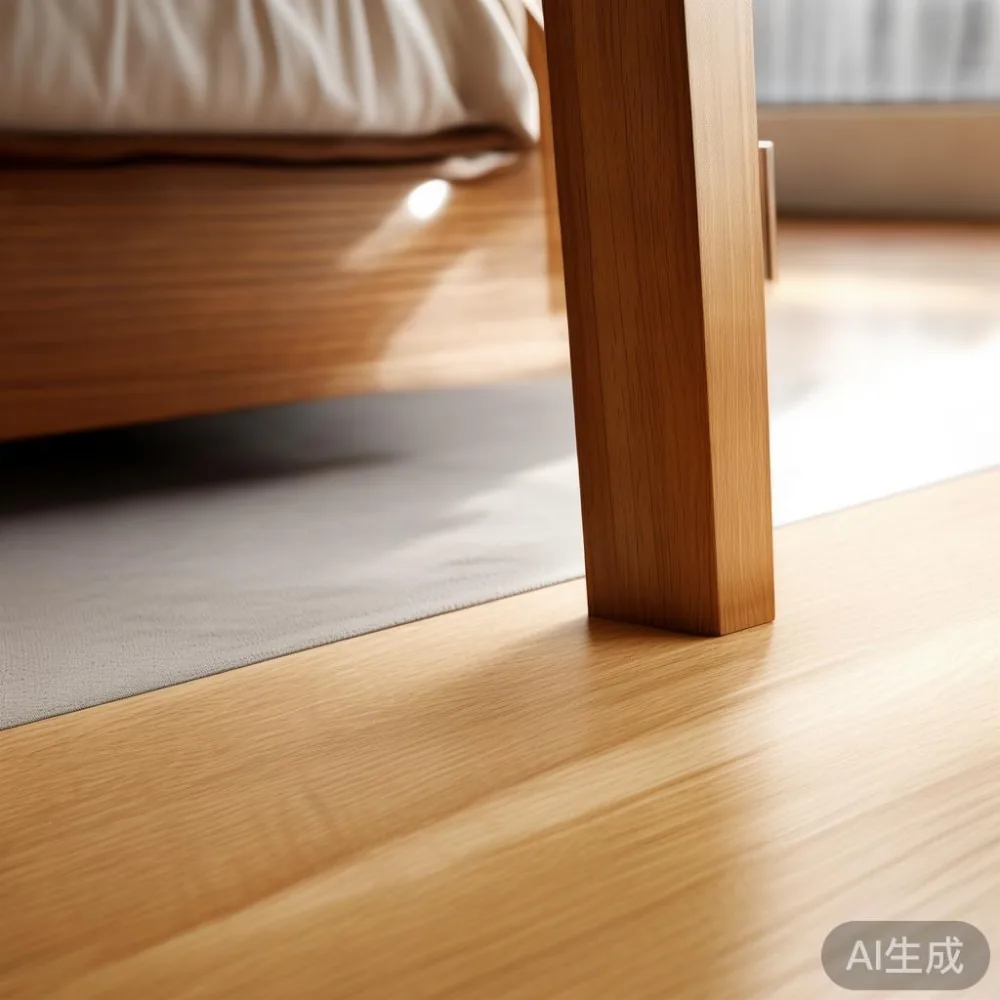
For bedroom design in an HDB flat, the material’s stability is useful. A 0.6 cm veneered panel can be screwed firmly to a cabinet carcass, while a similar thin solid panel may split around fixings. Conversely, a solid wood nightstand can tolerate repeated movement and refinishing better than a heavily engineered core. “Real wood” is therefore a broad description rather than a complete performance specification.
Environment also affects cost. Singapore’s relative humidity is often around 65–85%, with air-conditioning bringing indoor conditions closer to 45–60%. Exterior-facing condo bedrooms can receive more moisture and heat. Proper sealing, ventilation, and a 5–10 cm gap from walls help both material types age more consistently.
What are realistic purchase and ownership costs?
<Consider a master bedroom set with a 180 cm queen bed frame, two nightstands, and a 180–200 cm wardrobe. A representative veneer package might be SGD 1,900 before delivery, while comparable solid wood might be SGD 3,300. Add an indicative 9% GST, plus SGD 80–180 for HDB delivery and carrying, and installation could add another SGD 60–150 if the furniture arrives flat-packed.
A lift measuring 100 cm wide by 210 cm deep cannot accept an assembled 220 cm wardrobe or a 190 cm headboard turned upright. A service lift corridor with a 90 cm clear width and a 90-degree turn may require a wardrobe to be delivered in panels. A company that confirms measurements before dispatch can prevent SGD 150–400 in redelivery or modification charges.
Over 5 years, include these likely expenses:
- Delivery and installation: SGD 80–350 per order, depending on access, stairs, and the number of items.
- Minor repair: SGD 40–120 to realign one drawer, tighten a frame joint, or replace a damaged handle. The price can be SGD 80–250 if the piece must travel to a workshop.
- Surface care: approximately SGD 15–35 per year for dusting, suitable cleaner, and felt pads. Veneer may need careful moisture control; solid wood may need wax or oil every 12–24 months.
- Refinishing: veneer normally needs professional patching or full recoating when the thin face is deeply damaged. Solid wood can often be sanded and refinished, although deep splits may still require replacement.
- Replacement: an SGD 800–1,500 nightstand can become a meaningful budget item if moisture or impact ruins its surface.
These are planning ranges, not fixed quotations. A polished marble table is another material category and should not be treated as either veneer or solid timber. Likewise, the cost of a solid wood sofa, bed frame, dining table, wardrobe, or nightstand must be judged by its own construction.
Is veneer cheaper after 5 years of use?
In many straightforward bedroom projects, yes. If a veneer bedroom set costs SGD 2,000 including GST and needs one SGD 120 repair plus SGD 25 per year of care, its estimated 5-year outlay is about SGD 2,245. A solid wood set costing SGD 3,700 including GST, with one SGD 80 repair and SGD 20 per year of care, reaches about SGD 2,980 over the same period. The solid option starts higher and is not automatically the more economical choice within 5 years.
However, this answer changes when a low-cost veneer product needs early replacement. Imagine SGD 1,500 for a veneer set, SGD 300 in delivery and corrections, SGD 150 in repairs, and a second SGD 1,200 set after year 4. Total spending reaches SGD 3,150. A solid wood set at SGD 3,200 with SGD 150 of first-year repairs and annual care of SGD 100 reaches SGD 3,700. In that example, solid wood is less expensive after 5 years.
The difference often comes from quality rather than the label. A sturdy veneer carcass with dovetail or concealed drawer joints can remain stable for 10–15 years. Low-grade particleboard with a thin printed or sliced face may last only 3–7 years in a humid, frequently opened wardrobe. Solid wood with weak corner joints can also fail early, so construction remains the deciding factor.
Here is a simple 5-year formula:
5-year cost = purchase price + GST + delivery + installation + repairs + care + expected replacement cost.
For a fair comparison, use equivalent service life assumptions, not identical prices from unrelated product ranges. A queen bed frame should be rated for at least 120 kg, a double wardrobe for 60–80 kg on properly fixed shelves, and drawer runners for 25–40 kg. Check these figures rather than assuming timber thickness alone determines durability.
Is solid wood worth the extra cost for long-term ownership?
Solid wood is most attractive when the buyer values repairability, a substantial visible edge, and a material that can be refinished repeatedly. That can suit American light luxury or post-modern light luxury rooms, where clean joinery and tactile timber are part of the design. French light luxury tends to appreciate detailed profiles, softened corners, and crafted surfaces. A 4–5 cm solid wood top, rounded edges, and visible dovetails can support that character more convincingly than a printed surface.
A solid wood dining table also offers an advantage if it will be sanded after years of use. A 200 cm table made from several boards can be resurfaced more readily than a thin veneer over a composite base. The dining room still belongs within the broader bedroom-design project because the same species, finish, and hardware should connect the wardrobe, bed frame, and nightstand.
Ask whether “solid wood” covers the visible top and structural rails. Some products mix solid timber with engineered panels for hidden parts. That is not inherently poor; it can reduce weight and movement. It should simply be disclosed. A useful specification names the species—oak, ash, beech, rubberwood, or another approved timber—and states which components are solid.
Finishing is another cost. Factory-sealed timber may need only routine dusting, whereas a lighter natural finish can show SGD 40–90 in fingerprints and heat marks. Dark stain can make scratches less obvious but can be harder to repair. Matte finishes often need gentler cleaning products. The product terms solid wood sofa and solid wood bed frame should be matched with compatible care instructions, not judged by finish colour alone.
Lifetime refinishing, where offered, can materially affect the comparison. MIDHILL’s policy gives buyers a route back to the original finish, subject to the stated terms, reducing the risk that a deep scratch becomes a replacement expense. A 10-year structural warranty covers a different risk: movement or joint failure, not every cosmetic mark. Read both documents carefully.
How should HDB and condo access change the calculation?
Measure before ordering, then send photographs and a sketch to the supplier. For a 4-room HDB flat, the route may include a 90–110 cm entrance door, a 100–140 cm lift door, a lift car of 110–140 cm depth, and corridors around 120–180 cm wide. A mattress expanded to 190 × 200 cm will need turning geometry. A 180 cm queen mattress is often easier to manage than a king mattress measuring 200 × 200 cm in an older flat.
Condo corridors can be narrower than their common-area appearance suggests, especially near service routes. A 220 cm wardrobe might need to pass a 110 cm corridor turn. Some furniture distributors offer kerbside delivery only; the receiving person may need to arrange a van or handcart for the final 20–100 m. Labour of SGD 40–120 can be added, along with a lift-booking fee of SGD 10–50 in some buildings.
Flat-packed construction can reduce transport size but increase assembly time. A wardrobe requiring 3–5 hours of assembly may cost SGD 80–180 in labour if the owner does not have the tools. White furniture delivered on a Saturday may save weekday downtime. Request delivery in 5–10 day windows and retain the packaging for a possible 14-day return.
For practical advice about where to buy bed from MIDHILL, provide the lift-door width, corridor turns, room measurements, and preferred delivery date before payment. Confirm whether the quoted delivery includes carrying to the room and assembly. A free-shipping threshold stated in another currency does not remove local GST, lift fees, or the cost of moving oversized pieces.
What should you compare before choosing veneer or solid wood?
Use a written specification for both options. For the bed frame, check the slat spacing, centre support, load rating, and clearance under the frame. A queen set should measure about 160 × 200 cm externally for a standard Singapore queen mattress. For a wardrobe, check whether the back is fitted, shelves are adjustable, and the hanging rail is steel. For drawers, look for full-extension runners and dovetail or mortise-and-tenon joints where the price allows.
Compare repair consequences. On a veneered nightstand, a 10 cm gouge may reach the substrate; on solid wood, it may be filled and refinished. On a wardrobe door, veneer movement can reveal a small perimeter gap. Solid timber movement may also create gaps if the installation was poor. Maintain expansion gaps of roughly 10–20 mm where required by the design rather than forcing timber tightly against a wall.
Style should guide the finish, not the budget category. A search for under 2000 Scandinavian furniture may lead to pale oak effects, clean lines, and compact proportions, all compatible with Singapore rooms. A French provincial dressing table introduces carved or shaped details and is often better as a bedroom-design accent than a structural centrepiece. Check its depth—25–40 cm is common—and the stability of any mirror attachment.
Questions about the best Mid-century modern sofa for 2026 belong to living-room planning, so they should not pull a bedroom specification off course. For the bedroom, use one coherent material direction: warm oak for post-modern light luxury, walnut-toned timber for American light luxury, or pale, restrained forms for French light luxury.
Which option gives the lower 5-year cost?
Choose veneer when the immediate budget is important, the room has stable indoor conditions, and the product has a credible 10-year service life. Choose solid wood when frequent repair, visible timber edges, and repeated refinishing are central to the brief. The higher purchase price can be justified over 5 years if it prevents a replacement and reduces workshop costs, but the saving is not automatic.
For a practical Singapore example, a veneer bedroom set at SGD 2,090 including GST, SGD 180 for delivery and assembly, SGD 100 in repairs, and SGD 125 for five years of care totals about SGD 2,495. A solid wood set at SGD 3,780 including GST, SGD 180 for delivery and assembly, SGD 50 in repairs, and SGD 75 for care totals about SGD 4,085. The veneer option is lower in this scenario.
Now change one assumption: the veneer carcass is affected by a persistent leak in year 3 and must be replaced for SGD 1,600. Its total rises to roughly SGD 4,095, slightly above the solid wood scenario. That illustrates why dry rooms, careful installation, and honest product specifications matter.
Ask the seller to clarify the is American wardrobe worth it question with evidence: board thickness, timber species, joint type, back-panel construction, warranty scope, delivery terms, and sample finish. The related question, is European light luxury wardrobe worth it, should be judged on fit and construction rather than origin alone. An imported piece that must be dismantled, reassembled, or modified may cost more than its purchase advantage suggests.
For readers also evaluating an is American wardrobe worth it purchase, compare local after-sales access with overseas shipping. Confirm spare hardware, touch-up materials, replacement runners, and service turnaround. A 5–10 year replacement-parts commitment is more useful than a broad lifetime claim if the brand cannot explain what is included.
MIDHILL’s solid wood range, 10-year structural warranty, lifetime refinishing option, and delivery terms provide a useful reference point for the full ownership calculation. Compare the bed frame, wardrobe, nightstand, and any marble table as separate line items. Most importantly, measure the route from the van to the bedroom: a well-built piece that reaches its destination intact has a lower 5-year cost than a less suitable product damaged in a corridor.