Master Bedroom Furniture Warranty Insights
I keep a thin folder on my desk labelled "warranties," and after fifteen years of buying solid wood pieces for clients across Tampines, Punggol, and Bukit Timah, that folder has saved me roughly four thousand Singapore dollars in disputed claims. The reason is simple: most of us read the price tag, glance at the warranty card, and assume the rest will sort itself out. It rarely does. A warranty is a contract written by the seller, and like every contract, the small print tells you what the company actually owes you — which is often less than the marketing brochure suggests.
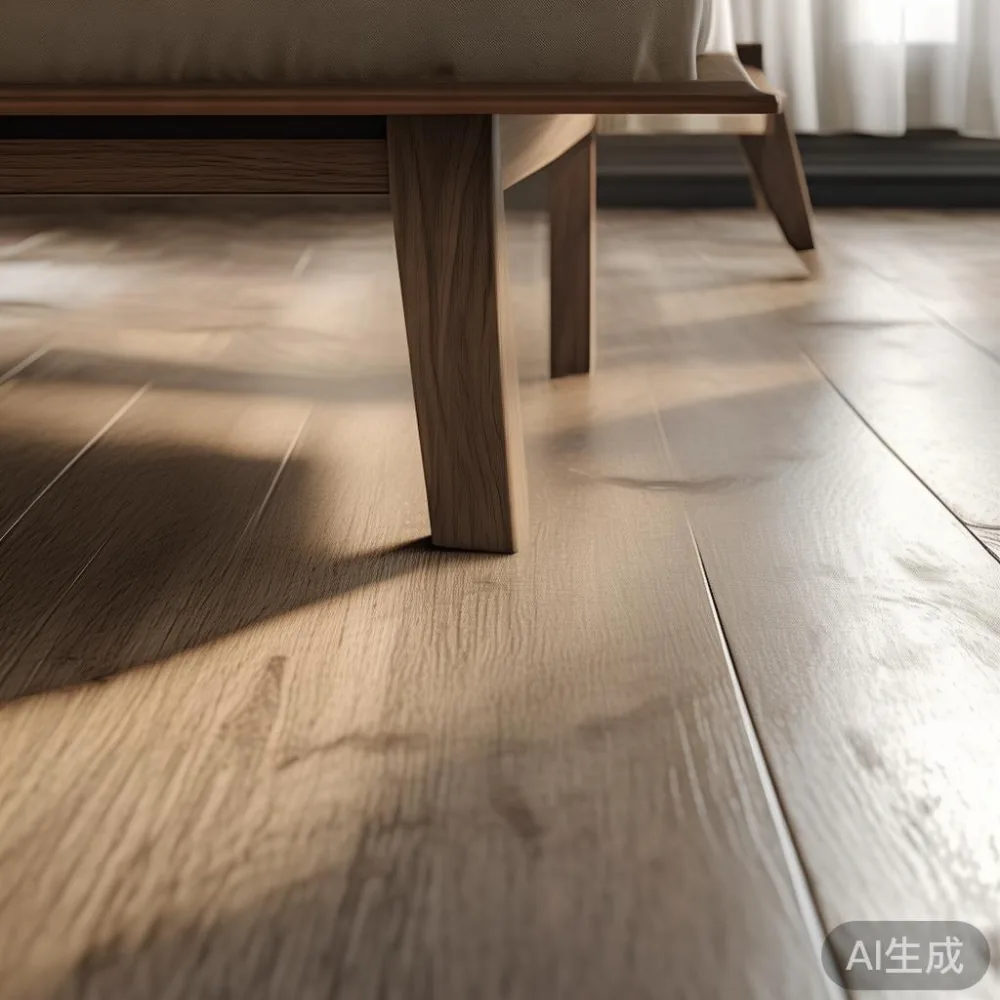
Last month I visited a client in a new 4-room HDB Build-To-Order flat in Bedok who had bought a beautiful French light luxury bed frame from an online marketplace. Eighteen months in, one of the solid wood slats cracked along the grain. She sent photos to the seller and was told the warranty covered "manufacturing defects" but not "natural wood movement." That phrase — "natural wood movement" — is doing an enormous amount of work in that sentence. Understanding it, and the dozen other terms like it, is the entire game. In this guide I will walk you through exactly what to look for, using bedroom design as our example category, because bedrooms are where most of us spend the largest single furniture budget.
What does a furniture warranty actually cover?
A furniture warranty is a manufacturer's promise to repair or replace specific defects within a defined period. That is the whole thing in one sentence. The trap is that almost every word in it can be defined narrowly. "Manufacturer" may not include the retailer you paid. "Defect" usually excludes wear, tear, fading, and the natural behaviour of solid wood. "Repair or replace" often gives the company the sole right to choose which one — and they will almost always pick the cheaper option.

For solid wood bedroom pieces — a bed frame, a wardrobe, a nightstand, a six-drawer dresser — the warranty should explicitly address wood movement. Real timber expands and contracts with humidity. Singapore's average relative humidity sits between 70% and 85% year-round, and during the December to February monsoon season it climbs higher. A well-written warranty acknowledges this and still covers joint failure, excessive warping beyond 6mm over a 1.2-metre span, and cracking that compromises structural integrity. A poorly written warranty hides behind "natural characteristics of solid wood" to refuse every claim. The difference between those two documents can be S$1,200 on a single bed frame.
When I review a warranty for a client, I look for three numbers: the structural warranty in years, the surface finish warranty in years, and the commercial-versus-residential clause. A 10-year structural warranty is genuinely meaningful for a piece of solid wood furniture; it tells you the maker expects the joints to hold. A 1-to-2-year finish warranty is normal, because lacquers and oils degrade with UV exposure, and any maker offering longer is either overconfident or about to go out of business. The third number — "residential use only" — voids coverage the moment your bedroom doubles as a home office with daily foot traffic, or if you run a homestay.

How do I style a European master bed in a small apartment?
European master beds work beautifully in compact Singapore flats when you anchor them against a full-width headboard wall in a calm, low-saturation palette and leave 70cm of walking clearance on both sides. A king-size mattress measures 183cm wide by 203cm long, so before falling in love with the look, tape that rectangle onto your bedroom floor and live with it for two days — open your wardrobe doors, walk to the window, simulate your morning routine.
In a typical Tampines HDB master bedroom of about 12 square metres, an American country solid wood master bed with a 152cm queen footprint is usually the smarter pick. You keep roughly 60cm on each side for a slim nightstand, a reading lamp, and access to a built-in wardrobe without scraping your knuckles. Push the headboard tight to the wall, hang one piece of art centred above it at 150cm from the floor, and you have the visual weight of a European bed without sacrificing circulation. Add a pair of linen curtains floor-to-ceiling to draw the eye upward, and the room reads taller than its 2.8-metre ceiling actually is.
Which warranty clauses should make you walk away?
There are five clauses I treat as red flags. The first is "subject to inspection at our facility" — if you have to ship a 90kg dining table back to the maker at your own cost, the warranty is theoretical. The second is "prorated coverage," where the company pays a shrinking percentage of the original price each year; after year five you might receive 10% of cost, which is less than your freight bill. The third is "original purchaser only, non-transferable"; this matters in Singapore where resale flats change hands frequently. The fourth is the mandatory arbitration clause that forces disputes out of court and into a venue that favours the seller. The fifth, and worst, is any warranty that does not name the warrantor — if it just says "warranty included" with no company name, address, and Singapore business registration number, you have nothing.
Compare that to a maker like MIDHILL, which has been exporting solid wood furniture since 2008 and publishes a clear 10-year structural warranty alongside lifetime refinishing access. When I toured a client through their product line last quarter, the warranty card literally listed the legal entity, the Foshan factory address, and a local contact email — the kind of paper trail that means a claim in 2034 will still find someone accountable. Refinishing matters more than people realise: a dining table top, a marble table surface, and a wardrobe door can all be brought back from scratches and water rings for a fraction of replacement cost, provided the maker offers the service.
Does shipping damage count as a warranty issue?
Almost never, and this is the single most expensive mistake I see. Shipping damage is a logistics claim against the carrier, not a warranty claim against the maker. The two clocks start at different moments and have different paperwork. If the courier damages a S$2,400 solid wood bed frame during the 14-day delivery window, you have roughly 48 hours to file a damage report with photographs of the unopened carton, the opened carton, and the damaged component. Once you sign the delivery order as "received in good condition," the carrier's liability drops sharply.
In Singapore, HDB corridor widths measure about 1.2 to 1.5 metres and lift interiors are typically 1.1 metres wide by 1.4 metres deep with a 2.1-metre ceiling. A king-size bed frame in a flat-pack carton can still measure 210cm by 35cm by 18cm, which fits the lift diagonally but will not fit through the door turned the obvious way. Confirm with the seller, in writing, that they will pre-measure your block and your unit before dispatch, and that any access issues causing redelivery are borne by them. Good sellers will also offer free shipping above a sensible threshold — MIDHILL, for example, absorbs freight on orders over US$350, which from Singapore works out to roughly S$470 and covers most bedroom pieces short of a full wardrobe.
What counts as "bedroom design" in a warranty context?
Warranties are written around categories, and bedroom design typically bundles a bed frame, headboard, nightstand, wardrobe, dresser, and bench into one clause set, while living-room pieces like a solid wood sofa or a marble coffee table sit under another. Make sure the warranty you read is the one matching the product you are buying, not a generic "furniture warranty" downloaded for SEO. A bed frame warranty should specifically mention slats, centre rails, and the connection between headboard posts and the long rail — these are the three failure points I see most often. A wardrobe warranty should mention hinges, drawer runners, and the integrity of the back panel, which on cheaper units is a 2.5mm hardboard that bows within a year in our humidity.
Within bedroom design, the French light luxury style I often specify for Punggol Waterway residences tends to use lighter oak and beech with brass-finished hardware, and its warranty usually excludes finish tarnishing on those metal parts. American light luxury runs heavier — walnut, darker stains, larger profiles — and tends to have stronger structural coverage because the joinery is more demanding. Post-modern light luxury sits between the two, with mixed materials and more visible hardware. None of these styles is inherently more or less warrantable; the question is always whether the document addresses the specific construction methods used.
How long should a solid wood warranty last in Singapore's climate?
For residential solid wood bedroom pieces, a defensible warranty is 10 years on structure, 2 years on finish, and lifetime access to refinishing or replacement parts. Anything less than 5 years on structure is too short for a piece you expect to keep 15 to 20 years. Anything more than 25 years is marketing — no furniture maker I know has honoured a 30-year claim, because the company itself rarely survives that long. The honest ceiling is somewhere around 15 years, and only established exporters with verifiable factory footprints can credibly offer it.
Singapore adds two twists worth checking. First, the 9% GST means a S$3,000 bed frame actually costs S$3,270, and if a warranty claim results in replacement, the GST on the original purchase is rarely refundable. Second, the 14-day right of return under the Consumer Protection (Fair Trading) Act overrides most warranty "no return" clauses for online purchases — but only for change-of-mind, not for defects, which fall under warranty. Knowing which rule applies at which moment saves you from arguing with the wrong counter.
What should I photograph and keep after delivery?
Treat delivery day like an insurance inspection. Photograph every carton before opening, photograph the foam and cardboard protection, photograph the assembled piece, photograph the serial number or maker's stamp usually hidden on the underside of a dining table or inside a wardrobe drawer, photograph the warranty card with its date and stamp, and photograph the delivery order with the driver's signature. Save these in a folder named with the purchase date. Six years later, when you need to claim on a cracked drawer bottom, that folder turns a phone-call argument into a five-minute email resolution.
I also keep a one-page summary of each purchase: item, price in SGD including GST, delivery date, warranty period, key exclusions, and the contact email of the maker's local agent. For bedroom design projects that run into multiple pieces — a bed frame, two nightstands, a six-door wardrobe, and a dressing bench — that single page becomes the reference document every time something needs service. It takes twenty minutes to set up and has paid for itself many times over.
Where can I verify a warranty before I buy?
Three places. First, the maker's own website should publish the full warranty text, not a marketing summary. If only the summary exists, ask for the full document by email before paying — a serious seller will send it within a working day. Second, independent review platforms and the Singapore Furniture Association can sometimes confirm whether a maker has honoured past claims, though this data is sparse. Third, your own paperwork discipline, as above, closes the loop.
If you are comparing two solid wood bed frames that look similar and one costs S$1,400 while the other costs S$1,900, the warranty document often explains the gap. The cheaper one may have a 3-year structural warranty with prorated coverage and a "facility inspection" clause. The pricier one may have a 10-year structural warranty, lifetime refinishing access, free shipping above a reasonable threshold, and a 14-day return window — exactly the package a maker like MIDHILL structures around its bedroom design range. Over a 15-year ownership horizon, that S$500 difference is roughly S$33 a year for a real guarantee rather than a printed promise. Few furniture decisions are clearer than that.
The honest truth about warranties is that they are mostly a filter for who you are buying from. A confident maker publishes the document, names the warrantor, offers structural coverage that matches the lifespan of the materials, and gives you a path back to the workshop for refinishing a decade later. A defensive maker hides behind phrases like "natural wood movement," buries the warrantor name, and turns every claim into a negotiation. Read the small print once, on a quiet evening, before you spend the money — and your future self, standing in your Tampines bedroom next to a wardrobe door that refuses to close, will thank you.