Sofa Selection Tips for Comfort
A sofa may look generous in a showroom photograph, yet become impractical the moment it reaches a Singapore home. A deep seat, a high back, and elegant proportions can reduce the usable space in an HDB flat or condo to the point where circulation feels awkward. Lift access, corridor turns, staircase dimensions, and even the route from the parking area all affect the final result.

That is why a “sofa you cannot sit on” is not merely a matter of appearance. It may be physically too high, too soft, too deep, or too wide for its intended room. It may also be impossible to move through the building without removing doors, turning the frame awkwardly, or damaging the upholstery.
This guide examines the measurements that matter before delivery, with particular attention to Singapore flats in Tampines, Bedok, and Punggol. While the focus is a solid wood sofa, the same delivery discipline applies when selecting a bed frame, dining table, wardrobe, nightstand, or marble table for a coordinated bedroom design scheme.
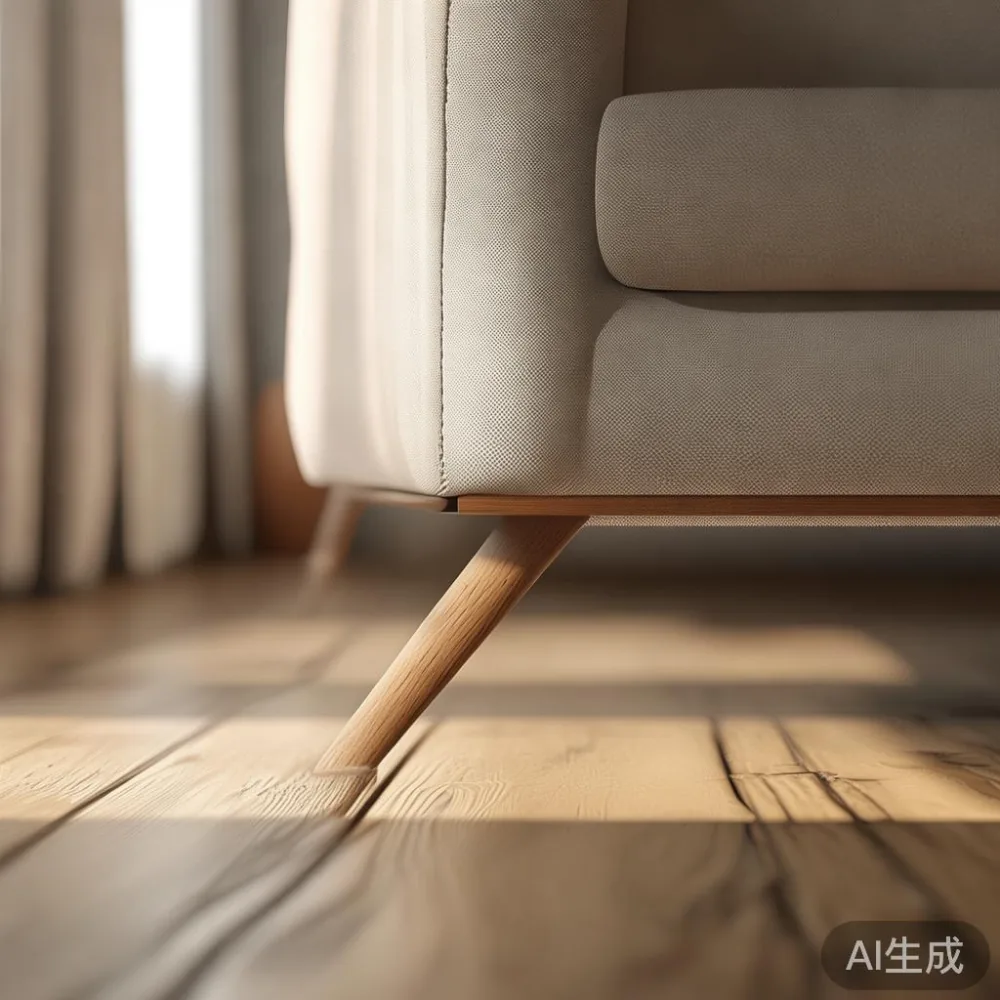
Is the sofa actually meant for sitting, or only for looking impressive?
<Start with the seat dimensions rather than the silhouette. A typical adult seat depth is approximately 55–60 cm. A lounge-style sofa may extend to 70–80 cm, which is visually substantial but often leaves the front edge beyond a user’s reach. That can make it difficult to rise, especially for someone over 60 or with limited knee mobility.
The usable seat height is equally important. For most adults, 40–45 cm is comfortable when paired with a firm cushion. A sofa with a 48–55 cm frame height may suit a taller person, but it can feel too high for shorter users. If the cushions compress deeply, test the product after sitting for 10 minutes rather than judging it immediately.

Back height should also match the intended use. A back below 75 cm suits upright reading and television viewing. A 90–105 cm back provides more reclined support. Deep, feather-filled cushions may look plush but can encourage a slouched posture if they lack internal support.
My colleague visited a showroom in Singapore last month and tested a 230 cm three-seat sofa with a 68 cm internal seat depth. It looked excellent in the display room, but after 20 minutes, she could not comfortably place both feet on the floor. A second sofa with a 57 cm seat depth and 43 cm base height was much easier to use. The visual difference was subtle; the everyday difference was obvious.
Before buying, sit with your back against the frame, your feet flat, and your knees close to 90 degrees. If your shoulders are raised, your lower back is unsupported, or your feet hover, the proportions are not working for you. Style should support the body, not the other way around.
Will the sofa fit through the lift, corridor, and home entrance?
The sofa’s packed dimensions can be more relevant than its showroom dimensions. Photographing a product page is insufficient. Ask for the length, height, depth, and weight of the packed carton, including packaging. A sofa frame may measure 210 × 90 × 65 cm, but a boxed unit can be 220 × 100 × 75 cm because of corner protection and foam.
In many Singapore HDB blocks, a standard passenger lift opening is around 90 cm wide and 200 cm deep, although building-specific measurements vary. Interior lift dimensions may provide roughly 140–160 cm of depth or a diagonal allowance of about 200–230 cm. A sofa carton exceeding the lift door width will not enter, even if it could technically pivot inside the car.
Corridor widths also require attention. A common residential corridor is 120–150 cm wide. Turning a 100–120 cm-deep carton around a right-angled corner can demand a diagonal clearance close to 190–230 cm. Stairwells may be narrower still. Measure the lift lobby, the narrowest corridor, the staircase, the unit entrance door, and any turns between them.
For a condominium, ask the concierge or delivery team about service-lift booking, protective floor coverings, and permitted moving hours. Some buildings impose a 2–3 cm protective layer under furniture feet, and a marble table may require separate handling because its stone component is both heavy and vulnerable to edge chipping.
If the main lift is unsuitable, a professional movers’ carry-in service may cost SGD 120–300 or more in Singapore, depending on distance and stairs. Compare that charge with the sofa’s value before deciding that a difficult access route is acceptable. A solid wood sofa may weigh 70–120 kg, while a larger frame with solid timber components can exceed 140 kg. Confirm whether disassembly is possible and whether the warranty remains valid after the frame is separated for transport.
Does the product description reveal enough about comfort?
A photograph cannot communicate foam density, cushion construction, frame material, or suspension type. Look for stated seat height, usable depth, back height, arm dimensions, and upholstery composition. “Solid wood sofa” should identify the structural frame clearly: kiln-dried hardwood, plywood, or another specified construction used for the load-bearing parts. Veneer and decorative timber should not be presented as the same thing.
Sit comfort depends on the suspension system beneath the cushion. Webbing may provide a controlled feel when properly tensioned. Spring systems can offer support but may transmit more movement. A frame made mainly from solid wood does not automatically guarantee comfortable seating; cushioning and internal geometry still determine the experience.
Look for foam density stated in kilograms per cubic metre rather than vague words such as “luxury foam.” A 35–40 kg/m³ foam can provide firmer support for daily use, while softer upholstery often uses lower-density foam with a down-like layer. Ask about the cushion core, the wrap, and the thickness of each layer.
Test the armrests as well. Arms around 15–20 cm wide can support a phone, cup, or book, but overly rounded arms may make it difficult to stand. Loose cushions can improve the look but create unstable pillows. Check whether the cover is removable, whether the cushion can be turned, and whether the stated cleaning method suits a humid climate.
MIDHILL publishes measurable product details because a solid wood sofa should be evaluated as furniture, not as an image. A 10-year structural warranty can help define expected durability, but care instructions and realistic use still matter. In a tropical bedroom design, protect timber from direct air-conditioning vents and avoid placing the sofa against a damp exterior wall.
What should you compare before paying for an apparently similar model?
Compare models using a written specification sheet. Record the width, seat width per person, internal depth, base height, back height, frame material, suspension, cushion density, cover composition, and packed dimensions. Two sofas can share the same exterior design while differing by 8 cm in usable seat depth and 20 kg in packed weight.
Cost is useful context, but it should not be the only comparison. A SGD 2,200 sofa may use a partly engineered frame, while a SGD 3,600 model may contain more solid timber and better-documented cushioning. More expensive does not guarantee a better fit, so judge each specification against the room and the users.
Material choices have maintenance consequences. Solid timber frames may develop small surface marks that can be refinished. Painted MDF may chip at an exposed edge. Marble table surfaces need careful handling despite their visual impact. Upholstery should be tested with water and, where permitted, with an upholstery cleaner on an inconspicuous area.
For inspiration, searches for for sale American furniture can introduce broad proportions and durable-looking frames, while examples labelled Japanese for dining room offer useful lessons in compact planning and clean joinery. These terms are relevant references, but a dining arrangement should never be compressed simply because it originated in a smaller market.
Ask the supplier how long the item remains in stock and whether delivery can be scheduled within 7–14 days. Singapore buyers should also request the final payable amount with GST. A listed price of SGD 2,480 becomes approximately SGD 2,728 after 9% GST before any delivery surcharge or access fee.
How long should delivery and returns take?
Delivery timing should be written into the purchase process. Confirm the production lead time, dispatch date, and expected arrival window. A made-to-order solid wood sofa may require 4–8 weeks, while a stock item may be delivered in 3–7 days. “Free shipping over US$350” relates to an international threshold, so Singapore customers should request a separate local quotation rather than assuming the same promotion applies.
Before approval, ask whether the delivered item can be inspected for finish, joint stability, cushion movement, and packaging damage. For a long-distance purchase, a 14-day returns period provides useful room to assess the sofa in actual daylight and at its final position. Clarify whether returns include collection, restocking fees, and the cost of returning a non-standard item such as a bespoke marble table.
Check the warranty as well. MIDHILL offers a 10-year structural warranty and lifetime refinishing, but confirm what counts as a structural issue, what documentation is required, and whether refinishing includes labour, collection, and return transport. Normal changes in wood tone, cushion compression, and fading may fall outside structural coverage.
Measure the delivery route one final time and provide the supplier with a short video or photographs. Include the lift door, lift interior, corridor turns, entrance door, and room position. A well-informed delivery crew can often make a large sofa manageable; missing measurements create avoidable risk.
How do style labels help with bedroom design?
Style labels can narrow the search, but they should support rather than replace measurements. French light luxury often features pale upholstery, slender visual lines, carved details, and a calm bedroom design. American light luxury tends toward broader seating, relaxed profiles, and warmer materials. Post-modern light luxury may combine clean volumes with selective curves or unusual details.
These categories do not determine seat height or delivery access. A French-style sofa with a 52 cm base may still be uncomfortable for a shorter user, and a minimalist frame may include a surprisingly deep 72 cm seat. Check the specifications first, then decide which visual language suits the home.
Sleeping furniture offers a useful parallel. Anyone comparing Japanese bed vs Modern bed should compare platform height, floor clearance, headboard projection, mattress support, and the route to the room rather than relying on national labels alone. The same applies to European bed vs Mid-century modern bed and French bed vs Mid-century modern bed: tapered legs can improve visual lightness while also reducing the space beneath the frame.
If the search phrase how to choose Italian light luxury bed is used as a starting point, the important checks remain practical. Confirm mattress compatibility, frame dimensions, structural warranty, finish, and access before evaluating details such as tufting or marble accents. An Italian light luxury bed frame may add character to a condo bedroom design, but it still has to pass through the lift.
For storage, compare a MIDHILL wardrobe by checking carcass material, internal drawer or rail dimensions, mirror-door swing, wall fixing requirements, and installed clearance. A nightstand should fit beside the bed without blocking a walkway. A dining table needs 90 cm of clearance behind each seated position, extending to 105–120 cm in a busy route. A marble table needs level support and careful lifting.
What final checks prevent an impractical sofa purchase?
<Use a 10-point approval check before payment: comfortable seat height, reachable seat depth, supportive back height, adequate width per user, clear lift access, manageable packed weight, documented frame and cushion materials, realistic lead time, clear return terms, and a written warranty.
Sit on the sofa for at least 15 minutes in the showroom. Stand up without sliding forward. Walk around it. Imagine it in the actual room, with a 90 cm circulation route where possible. For a 230 cm sofa in a compact HDB living area, leave at least 60–90 cm between the front edge and a coffee table or opposite wall.
Then check the building access with the same seriousness as the design. The sofa may be attractive, durable, and well priced, yet still unsuitable if it cannot reach the living room. Accurate measurements protect both the furniture and the homeowner from a disappointing delivery.
The aim is not to find a sofa that merely looks luxurious. It is to find one that can be used comfortably, moved safely, serviced over time, and integrated into bedroom design without compromising the surrounding space. Measure the body, measure the building, and only then approve the order.