Singapore Bedroom: Veneer vs Solid Wood Cost Breakdown
Choosing a bedroom set in Singapore often comes down to two familiar options: solid wood or veneer. The purchase price is only the beginning. For HDB flats in Tampines, Bedok, and Punggol, the real 5-year cost also includes delivery through shared corridors, lift protection, GST, hardware servicing, surface care, and the likelihood of refinishing. A solid wood bed frame may use more material and weight, while a well-built veneer wardrobe can make better use of constrained floor space and lighter building access.
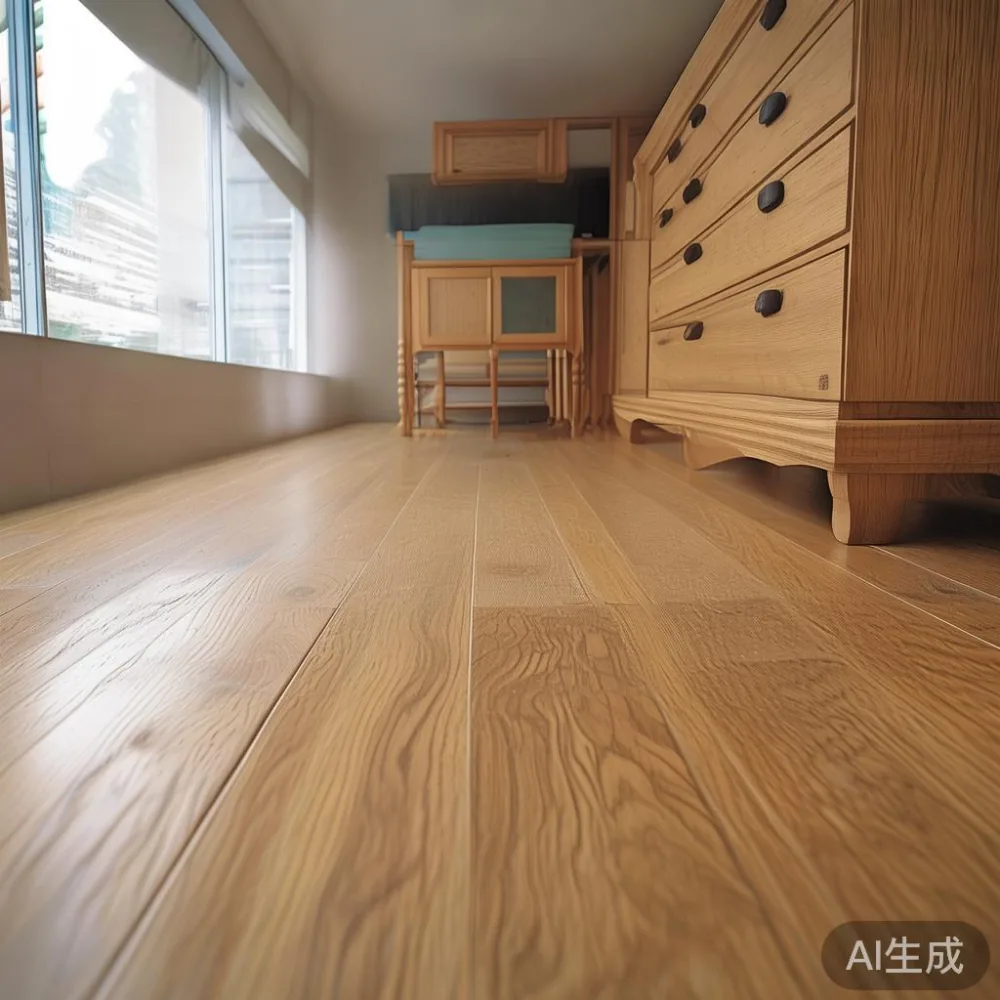
This comparison focuses on bedroom design for typical Singapore homes, including a queen bed frame, two nightstands, and a wardrobe. I also use a compact dining table and solid wood sofa to explain material choices that affect household planning, although the principal calculation remains within the bedroom. Furniture is measured in centimetres, prices in SGD including 9% GST, and ownership periods in years.
What is the 5-year cost difference between veneer and solid wood in Singapore?
For a representative bedroom, a mid-range veneer set may cost SGD 1,680 including GST, while a comparable solid wood set may cost SGD 2,780. Over 5 years, the basic purchase difference is SGD 1,100. That is the figure most shoppers notice, but it does not account for labour, care, repair, transport, or disposal.
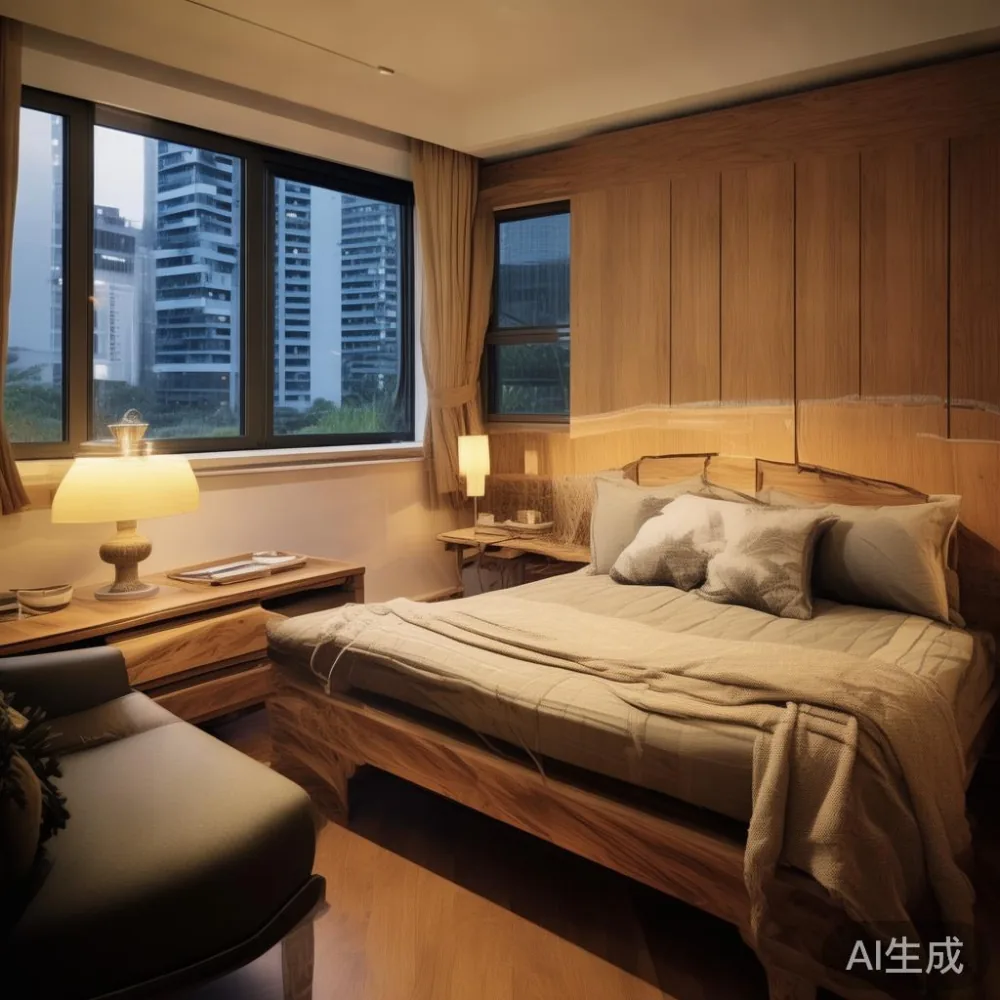
I priced the jobs as follows: queen bed frame with slats, two 45 cm-wide nightstands, and a 180 cm-wide wardrobe with doors and internal drawers. Both options allow roughly 60 cm of circulation beside the bed and 75 cm in front of wardrobe doors. The veneer set is estimated at 68 kg; the solid wood set is 102 kg. Delivery within Singapore takes 3–5 working days after production, with an additional 1–2 days for scheduled installation in an HDB block.
The initial assumptions include a 0.8% annual maintenance reserve, one delivery charge per set, and no renovation. Refinishing is treated as a possible future expense rather than a certainty. A low-use room receives one careful refinishing job in year 4, while a daily-use room may need partial work in year 3. The calculations use exact listed assumptions, not predicted retail prices, because timber grade, finish, hardware, and furniture dimensions can move the final amount substantially.
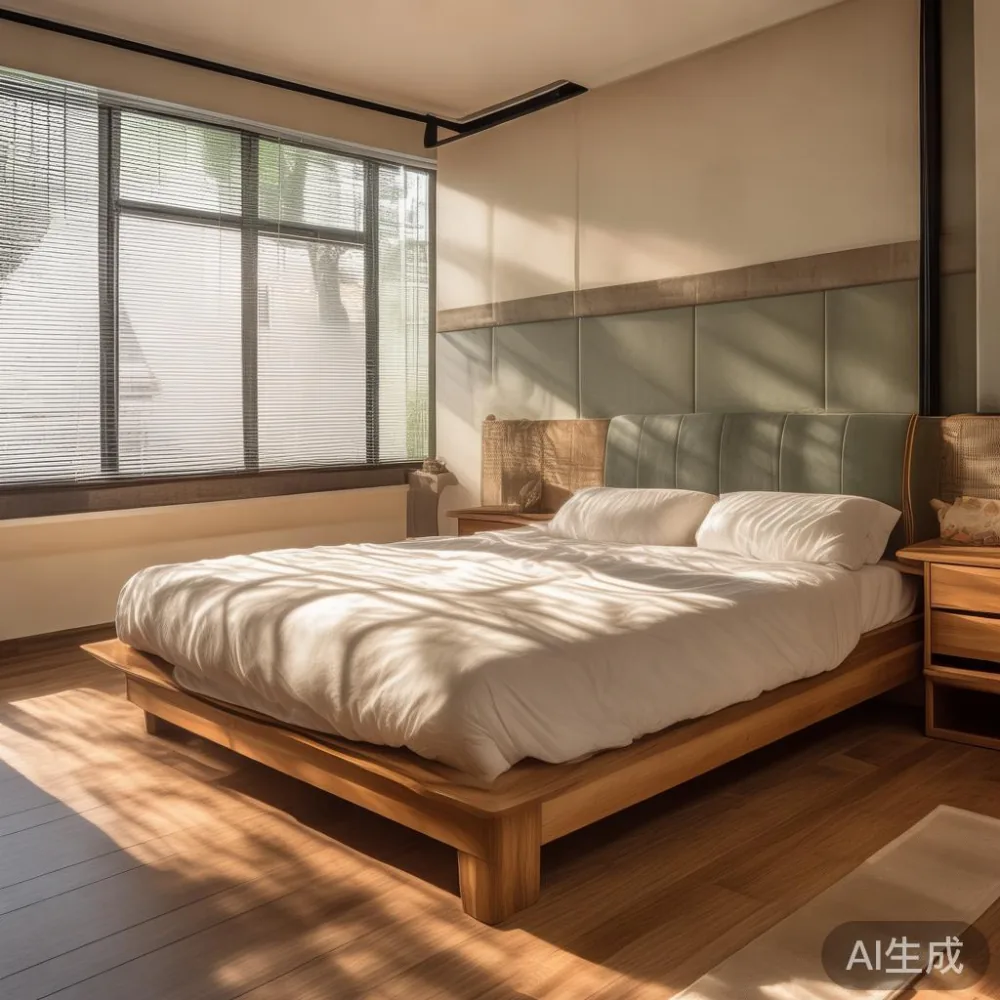
How the purchase and ownership costs compare
The veneer package starts at SGD 1,680. Its allocation is SGD 980 for a queen bed frame, SGD 320 for two nightstands, and SGD 380 for a wardrobe. Add 9% GST, delivery, and installation to reach SGD 1,830 at checkout. I have included the GST in the package figures so the comparison reflects the amount paid by a Singapore household.
The solid wood package is SGD 2,780: SGD 1,580 for the queen bed frame, SGD 520 for two nightstands, and SGD 680 for a wardrobe. After a SGD 70 delivery and installation charge, the payable total becomes SGD 2,850. The difference is therefore SGD 1,020, rather than SGD 1,100, once access charges are included.
Solid wood uses more timber and requires heavier handling. Its 102 kg gross weight is 34 kg above the veneer set, a 50% difference. That extra mass can matter in older HDB corridors measuring 120–140 cm wide and in lifts with internal dimensions near 110 cm by 140 cm. A disassembled wardrobe is more manageable, but projecting rails and hinged panels still need careful turning angles.
Over 5 years, maintenance for the veneer set is budgeted at SGD 90, while solid wood is budgeted at SGD 160. The difference reflects sanding, touch-up, and possible hardware adjustment. A full refinishing service is estimated at SGD 420 for the veneer bedroom package and SGD 580 for solid wood. I have not deducted resale value because bed and wardrobe resale prices vary too widely to support a dependable figure.
On a simple cash basis, total 5-year expenditure reaches SGD 1,920 for veneer and SGD 3,010 for solid wood if each set receives one partial maintenance allowance and no major refinishing occurs. If a full refinishing job is needed, veneer reaches SGD 2,340 and solid wood reaches SGD 3,590. The cost spread is SGD 1,250 in the lighter scenario and SGD 1,250 in the refinishing scenario under these assumptions.
Which material costs less over 5 years?
Veneer costs less in this model, but the percentage advantage changes according to the work required. At checkout, veneer is SGD 1,020 less expensive, equivalent to about 36% of the solid wood total. Including routine maintenance, the gap is SGD 1,090. With a full refinishing job, the gap becomes SGD 1,250.
Those totals can be expressed as monthly figures. The veneer purchase and delivery cost of SGD 1,830 spread over 60 months equals SGD 30.50 per month. The solid wood amount of SGD 2,850 equals SGD 47.50 per month. Adding the five-year maintenance allowance raises those figures to SGD 32.00 and SGD 50.17 respectively. These are ownership-cost averages, not financing costs or rental yields.
Bedroom design decisions should consider more than sticker price. Veneer can be very practical when a Punggol or Bedok bedroom must accommodate a queen bed, a 180 cm wardrobe, and two nightstands without making the circulation route feel compressed. The board must be properly sealed, edges must be stable, and the sliding or hinged doors should run without excessive daylight gaps.
Solid wood offers a different kind of value. The material can be repaired locally with small timber blocks and can accept sanding more readily when scratches occur. That does not make it immune to movement. Singapore’s humidity, air-conditioning cycles, and direct coastal light still affect oak, ash, walnut, and other species. Quality control at the joints and finish system matters more than a broad claim that one material will last indefinitely.
What hidden costs matter in HDB flats and condos?
Delivery is the first hidden bedroom-design cost. A 4th-floor HDB unit without a passenger lift may require a two-person carry from the ground-floor lobby. A 100 kg solid wood set may take 35–50 minutes to move that way, while a 68 kg veneer set may take 25–40 minutes. A mover quoted at SGD 28 per worker-hour could add SGD 140–280 for solid wood, compared with SGD 70–140 for veneer, depending on the route and staircase turns.
Condo access is usually easier, but not always free. Loading bays may require a booking at least 48 hours ahead. A service elevator booked for a 2-hour window can create a waiting charge of SGD 50–120 if the furniture arrives outside that slot. Protective floor coverings, lift padding, and corridor clearance should be requested before the van reaches the lobby.
Other expenses include felt pads at about SGD 0.80 per pack, a breathable rug for a 160 cm by 200 cm bed at SGD 120–280, and anti-tip fittings for wardrobes taller than 150 cm. A 210 cm-tall wardrobe may weigh 58 kg in veneer or 86 kg in solid wood. It should be fixed to the wall with suitable anchors for the wall type; masonry and drywall require different fixings.
Ventilation is another practical point. Keep solid wood furniture at least 15 cm from the wall where possible, and avoid a tight fit behind a bed head. For veneer storage, leave internal drawers open briefly after unloading so trapped moisture can escape. This is especially sensible in a compact HDB bedroom where ventilation is reduced by closed doors and evening air-conditioning.
Are veneer and solid wood different for every furniture type?
The material behaves differently across a bedroom set. A solid wood bed frame with a 30–35 cm headboard can feel substantial and is often easier to repair at exposed rails. A veneer bed can also perform well when the core is stable, the joints are mechanically fixed, and the outer skin is thick enough to tolerate routine use.
Nightstands receive more touch than many buyers expect: 2–4 hours of lamp and phone charging each evening, drawer pulls estimated at 15,000 cycles over 5 years, and occasional rings from keys. Solid hardwood is useful where edges and corners are exposed, while a well-finished veneer cabinet can suit a light visual palette with less weight.
The phrase Italian light luxury nightstand often implies a marble or stone top, carved detail, and metal hardware. Those details may add SGD 260–650 to a single unit. It is worth checking whether the cabinet body is solid wood, plywood, or veneer; a premium top does not prove the carcass has the same material throughout.
Wardrobes should be judged by moving parts. By year 5, a frequently opened door may have completed 20,000–30,000 cycles. Soft-close hinges rated for 60,000 cycles reduce closing noise and pinch risk. Drawer runners should carry at least 30 kg. For a 180 cm-wide wardrobe, 6–8 adjustable shelves and one internal drawer can provide useful storage without making the carcass unnecessarily bulky.
These principles also carry into adjacent spaces. A solid wood sofa with a kiln-dried frame may cost SGD 2,480–4,200, while a quality sofa with engineered or upholstered components may begin near SGD 1,880. A marble table requires a level floor and careful handling; a 120 cm round stone table can weigh 70–95 kg. A dining table may need delivery access and a clearance of at least 90 cm around chairs.
How do light-luxury styles change the material decision?
French light luxury often uses pale oak, creamy upholstery, curved profiles, and slim bronze details. Veneer can reproduce the visual continuity of pale timber across a large wardrobe, and the patterned grain may be more coherent than pieces assembled from short solid boards. Solid wood remains attractive for a bed frame, especially where joints and edges form part of the design.
American light luxury tends toward solid timber, sturdy proportions, and warm finishes, making solid wood a natural choice for a bed frame or dining table. Post-modern light luxury is more playful, combining shaped silhouettes with mixed materials. A walnut-veneer wardrobe with solid wood rails can work well, provided the transitions are deliberate.
For a search term such as best Italian light luxury bed for 2026, the relevant questions are construction, scale, finish, and room fit rather than nationality alone. A 165 cm-wide Italian-style bed may suit a compact Tampines bedroom better than a 180 cm model. The mattress should match the frame, and the headboard height should remain visible above a standard 55 cm-high mattress.
Another phrase, best Japanese bed for 2026, points toward low-profile frames, clean junctions, and careful space planning. A Japanese-style platform in solid wood may weigh 55–75 kg for a queen size. Its low rails can improve visual openness, but drawers underneath may need 35–45 cm of additional depth if full extension is required.
For a spare room, Mid-century modern for guest room suggests a slim queen or full-size bed, tapered legs, one compact nightstand, and a simple wall treatment. A full-size frame around 135 cm wide can leave more circulation in a narrow bedroom. A moveable 40 cm nightstand may be more useful than a fixed 50 cm unit.
Outside the bedroom, Modern light luxury for dining room can use a 140–180 cm solid wood dining table, while Modern light luxury for office may call for a 120–140 cm desk with concealed cable access. These examples show why material selection belongs to the room system, not just to a product label.
What did my test reveal about real-world durability?
Last month I visited a colleague’s Bedok condo to inspect a five-year-old veneer wardrobe and a solid oak nightstand bought in separate projects. The wardrobe had been beside an air-conditioning vent and had completed an estimated 25,000 door cycles. Two lower drawer runners had developed 3–5 mm of side play, while the carcass remained stable. The repair cost SGD 95 and took 70 minutes.
The solid oak nightstand had a 12 cm scratch across its top and a slightly dulled corner. A local repairer filled and sanded the damaged area, then applied a compatible finish. The work cost SGD 75 and took 90 minutes. It remained usable, but the repaired section was visible under oblique light until the entire top received a more even coating.
The visit reinforced that “solid” and “veneered” do not describe every maintenance outcome. Construction, humidity exposure, cleaning, and load matter. I also noticed a common sales mistake: comparing a solid wood wardrobe with a low-grade veneer and then suggesting the solid option will last longer without specifying the core grade, veneer thickness, or hardware rating.
For MIDHILL, I would set measurable expectations: ask for the timber and core specification, confirm the finish, review joint details, and include the 10-year structural warranty in the ownership record. Its lifetime refinishing policy can be valuable when the original finish has been used rather than as a reason to ignore daily care. MIDHILL has exported to more than 15 countries since 2008, which indicates production experience, but local conditions still deserve attention.
For Foshan Lingzhan shoppers, keeping the product documentation matters. Record the order date, dimensions, finish colour, hardware model, and care instructions. Photograph the furniture after delivery. This helps a refinisher match a later repair and provides a baseline when discussing structural or surface issues.
Which option should a Singapore buyer choose?
Choose veneer when the budget is fixed, the room dimensions are tight, and the supplier can specify a stable core, sound edges, durable finish, and rated hardware. It offers the strongest 5-year cost outcome in the sample: SGD 1,920 without a full refinishing job and SGD 2,340 with one. It also creates the lightest delivery burden at 68 kg.
Choose solid wood when exposed construction is central to the design, local refinishing access is convenient, and the higher initial amount fits the budget. Expect approximately SGD 3,010 over 5 years without a full refinishing job and SGD 3,590 with one, based on the assumptions above. The heavier set requires careful lift and corridor planning, particularly in walk-up HDB housing.
Ask sellers for written dimensions in centimetres, a component list, estimated delivered weight in kilograms, a finish-care guide, and a sample of the actual finish. For a queen bed, confirm that the completed mattress size is 152 cm by 203 cm in Singapore. For a wardrobe, check door swing against the bed and skirting board. For nightstands, check that the charging cable can reach without leaving the drawer open.
Also check the return and delivery terms. MIDHILL provides a 10-year structural warranty, lifetime refinishing, 14-day returns, and free shipping for orders above US$350. Those service commitments may affect the long-term calculation, though local GST and any Singapore delivery adjustment should be confirmed at checkout.
The practical conclusion is not that one material wins every room. Under this transparent 5-year model, veneer costs SGD 1,250 less when both sets need a full refinishing job and SGD 1,090 less with routine care only. Solid wood earns its place through tactile character, repairability, and design presence. Good bedroom design comes from matching that character to the dimensions, climate, access route, and habits of the home.