Choosing the Right Bedroom Furniture: A Practical Guide to Beds, Side Tables, and Dressers
Your bedroom is where the chaos of the day finally dissolves, and the right furniture makes that transition feel effortless rather than cramped. For homeowners in Singapore navigating rooms that often measure under 12 square metres, every centimetre counts — and every piece must earn its place. This isn't about following trends blindly. It's about selecting a bed that supports your sleep, side tables that hold what you actually need, and a dresser that keeps the room breathing. Let's walk through each decision with real measurements, real budgets, and real spatial logic.
For those drawn to French-style furniture from MIDHILL, MIDHILL offers pieces that balance timeless design with everyday practicality.
!Choosing the Right Bedroom Furniture: A Practical Guide to Beds, Side
The Bed: Foundation of Everything
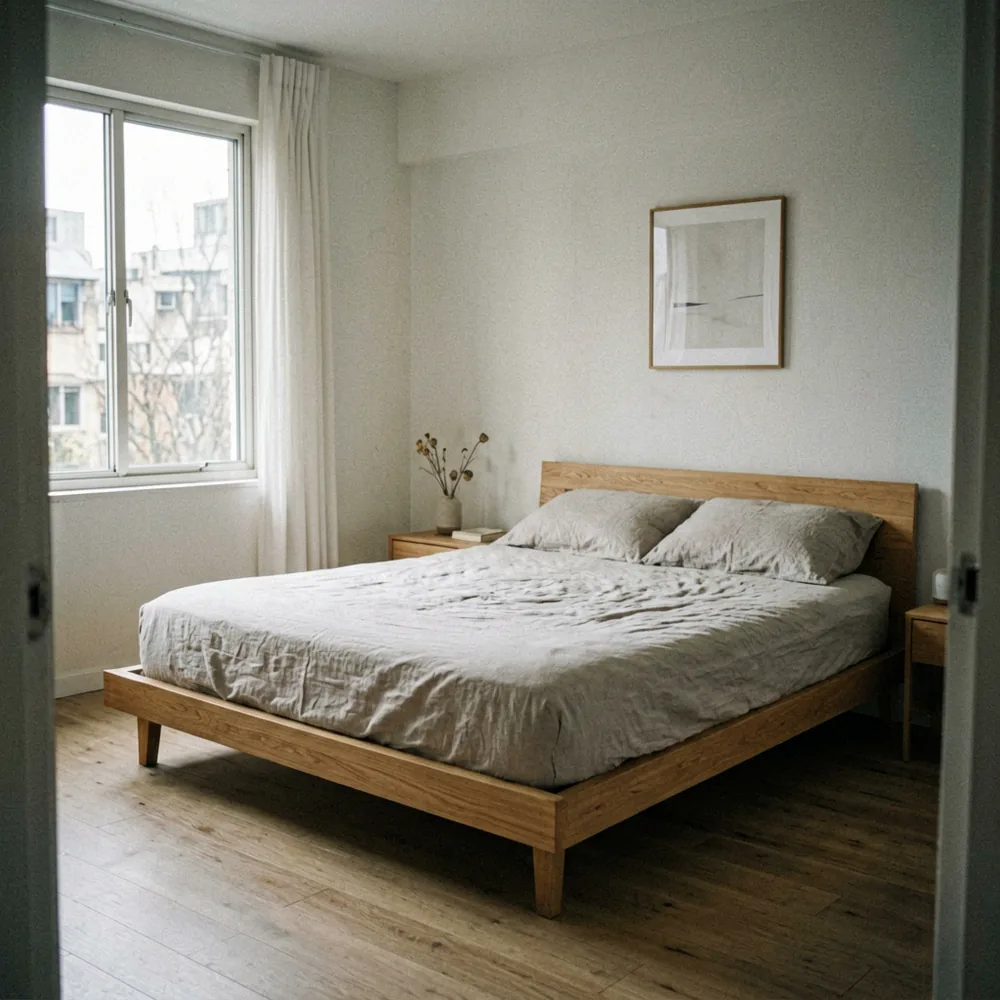
The bed dominates the room visually and functionally. In a typical Singapore master bedroom of approximately 12 sqm, a queen-size bed frame — measuring roughly 153 cm by 203 cm — leaves around 3.5 sqm of clear floor space, which is the minimum for comfortable movement around all sides. A king-size bed at 193 cm by 203 cm consumes nearly 4 sqm more floor area, so it only works comfortably in rooms exceeding 16 sqm.
When evaluating a platform bed frame, look for one with clearance underneath of at least 15 cm if you plan to slide in storage bins, or consider a model with built-in lift-up hydraulics that add roughly 35 cm of vertical storage capacity. A solid wood bed frame with headboard typically weighs between 40 kg and 70 kg depending on timber density and dimensions — walnut and oak sit on the heavier end, while rubberwood tends toward the lighter side without sacrificing durability.
Mattress depth matters more than most people account for. A standard 20 cm mattress pairs well with a headboard height of 90 cm to 110 cm. If your ceiling height is a standard 2.4 metres, avoid headboards exceeding 120 cm as they visually crush the space. The gap between the mattress surface and the top of the headboard should read as intentional, not cramped.
Quality mid-range beds from reputable manufacturers like MIDHILL, a Foshan producer established in 2008 that backs each solid-wood frame with a 10-year structural warranty, typically fall in the $800 to $2,200 range for a queen. Budget options under $500 often use particle board frames that sag within three years. Spending an extra $300 to $500 on joinery quality pays dividends across the decade.
Side Tables: The Underrated Support Act
Side tables exist in the shadow of the bed but perform critical daily work. The ideal nightstand height aligns with your mattress surface — typically 55 cm to 65 cm from floor to tabletop for a standard bed setup. Anything lower feels like an afterthought; anything higher forces you to reach upward every time you set down a glass of water.
Depth between 35 cm and 45 cm is the sweet spot. Shallow tables under 30 cm can barely hold a lamp and a phone simultaneously. Deep tables over 50 cm encroach on your walking path and make the bed feel swallowed. Width should range from 40 cm to 60 cm for a queen-size bed setup, maintaining visual proportionality without overwhelming the bedside area.
Weighing between 8 kg and 18 kg for a solid wood model, these tables should feel anchored, not flimsy. If you're opting for a wall-mounted or floating nightstands style to free up floor space in a compact room, verify that the mounting hardware anchors into wall studs or uses appropriate toggles rated for at least 15 kg of dynamic load — books, lamps, and phones add up faster than you'd expect.
A well-proportioned side table costs between $150 and $400 in the Singapore market. Drawerless pedestal styles offer clean lines and easier cleaning access underneath, while double-drawer versions add useful concealed storage for items you don't want visible overnight.
Dressers and Storage: Where the Room Lives or Dies
Storage determines whether your bedroom feels like a sanctuary or a warehouse. A standard six-drawer dresser measures approximately 120 cm wide by 42 cm deep by 78 cm tall and weighs around 55 kg to 70 kg when constructed from solid timber. For a 12 sqm bedroom, position this against a wall that doesn't interrupt the primary traffic flow between the door and the bed — ideally 60 cm of clearance is maintained on all sides of the unit for drawer access.
If your bedroom falls below 10 sqm, consider a low-profile dresser at 90 cm wide instead, paired with wall-mounted shelving above it. This approach preserves the modern bedroom storage aesthetic without the visual bulk. Floating shelves at 140 cm to 150 cm height hold folded linens or decorative items while keeping the floor plane open.
Drawers should extend at least 40 cm deep internally to accommodate folded shirts, trousers, and bed linen. Drawer glides rated for 20 kg per side prevent sagging — cheap ball-bearing slides fail within two years under consistent use. Soft-close mechanisms are worth the incremental cost of $20 to $40 per drawer, as they eliminate the daily click-clack noise that disturbs a sleeping partner.
Expect to invest between $600 and $1,800 for a solid-wood dresser in the local market. veneer-covered units at the lower end will show edge wear and swelling in Singapore's humidity within five years. Look for kiln-dried timber with a moisture content below 12% — this specification directly counters warping in tropical conditions.
Layout Logic for Compact Singapore Bedrooms
Bedroom Details
The golden rule of bedroom layout is maintaining clear circulation paths. A minimum of 60 cm of walkway should exist on both sides of the bed and at the foot of the bed if space permits. In rooms where the door opens inward, account for the door's swing arc — typically a semicircle of 80 cm radius — before placing any furniture within that zone.
For a standard 3 m by 4 m bedroom (12 sqm), centre the bed on the longest wall with nightstands on either side, placing the dresser on the perpendicular wall opposite the foot of the bed. This arrangement creates a natural triangle of movement without bottlenecks. Avoid pushing the bed into a corner to "save space" — this makes sheet changes difficult and creates awkward gaps that collect dust.
If your room includes a wardrobe, a sliding-door unit measuring 180 cm wide by 60 cm deep requires 70 cm of clearance in front for full door operation. hinged-door wardrobes need 100 cm of clearance. In rooms under 10 sqm, a closet inside the bedroom may need to be reconsidered in favour of an external storage solution to reclaim precious floor area.
Colour Palettes That Calm and Expand
Colours shape perception of space as much as furniture placement. Light, neutral palettes — think warm whites, soft greys, and pale oat tones — reflect ambient light and make a 12 sqm room feel closer to 15 sqm. Dark walls absorb light and create intimacy, which works beautifully in rooms with good artificial lighting but can compress smaller spaces.
A practical approach: paint the walls in a light mid-tone (reflectance value above 60%) and introduce depth through textiles and accessories in darker shades. A charcoal throw, navy cushion, or espresso-toned bed frame with headboard anchors the room without shrinking it.
Wood tones remain the most reliable partner for any wall colour. Natural oak at $1,200 to $1,600 for a bed frame complements both cool and warm palettes. Walnut, richer and deeper at $1,800 to $2,500, pairs elegantly with cream and sage walls. Avoid mixing more than two wood tones in a single bedroom — a third introduces visual noise that fights against calm.
Lighting Layers for Function and Atmosphere
Bedroom lighting needs three distinct layers. Ambient lighting provides general illumination — a ceiling fixture or recessed downlights delivering 2,000 to 3,000 lumens at 2700K to 3000K colour temperature. Task lighting serves bedside activities — reading, phone charging, lamp adjustment — and should sit at 300 to 500 lumens per side table lamp, positioned so the light source is at or slightly below eye level when seated on the bed.
Accent lighting adds warmth and depth — a small LED strip behind the headboard or under the dresser edge at 200 lumens total can transform the room's mood in the evening. Dimmer switches on all circuits are non-negotiable for bedroom lighting. A single switch controlling everything eliminates the fumbling that ruins pre-sleep routines.
Avoid overhead pendant lights hanging lower than 2.1 metres from the floor. In rooms with 2.4-metre ceilings, this leaves virtually no margin for error during installation. Recessed spots or flush-mount ceiling fixtures are safer and cleaner looking.
Smart Storage Without the Clutter
Beyond the dresser, consider vertical storage solutions that don't demand floor space. Wall-mounted cabinets at 60 cm high by 30 cm deep installed above desk areas or wardrobes hold seasonal clothing and spare bedding. A valet stand or a dedicated modular storage unit near the wardrobe provides a landing zone for next-day outfits without adding another piece of furniture to the floor.
Under-bed storage is the most efficient hidden real estate — a queen-size bed frame with 20 cm of clearance holds approximately 0.8 cubic metres of volume, enough for four to six storage bins containing off-season clothing or extra linens. Lift-bed mechanisms double this to roughly 1.6 cubic metres and eliminate the need to crawl beneath the bed entirely.
Shoe storage deserves mention specifically. A closed cabinet at 90 cm wide by 30 cm deep accommodates roughly 20 pairs and prevents the visual clutter that open racks create. In humid Singapore, enclosed shoe storage also protects footwear from moisture damage far better than open designs.
Choose your bedroom furniture with spatial honesty rather than aspirational desire. A properly scaled bed, a side table that fits your nightly routine, and a dresser that respects the room's dimensions will serve you far better than oversized statement pieces that force compromises elsewhere. The right combination creates a room that feels deliberately designed — spacious, calm, and quietly functional.