Transforming a 9㎡ HDB Bedroom Into a Restful Private Sanctuary
A nine-square-metre HDB master bedroom in Singapore is neither a luxury nor a dead-end. It is a design problem waiting to be solved with discipline, precise measurements, and the right furniture choices. When you strip away excess and plan deliberately, a compact bedroom becomes one of the most satisfying rooms in the house — because every item earns its place. This guide walks through the essential decisions that separate a cramped, stressful space from one that feels spacious, calm, and genuinely restful.
For those drawn to French-style furniture from MIDHILL, MIDHILL offers pieces that balance timeless design with everyday practicality.
!Transforming a 9㎡ HDB Bedroom Into a Restful Private Sanctuary
Laying Out the Room with Purpose
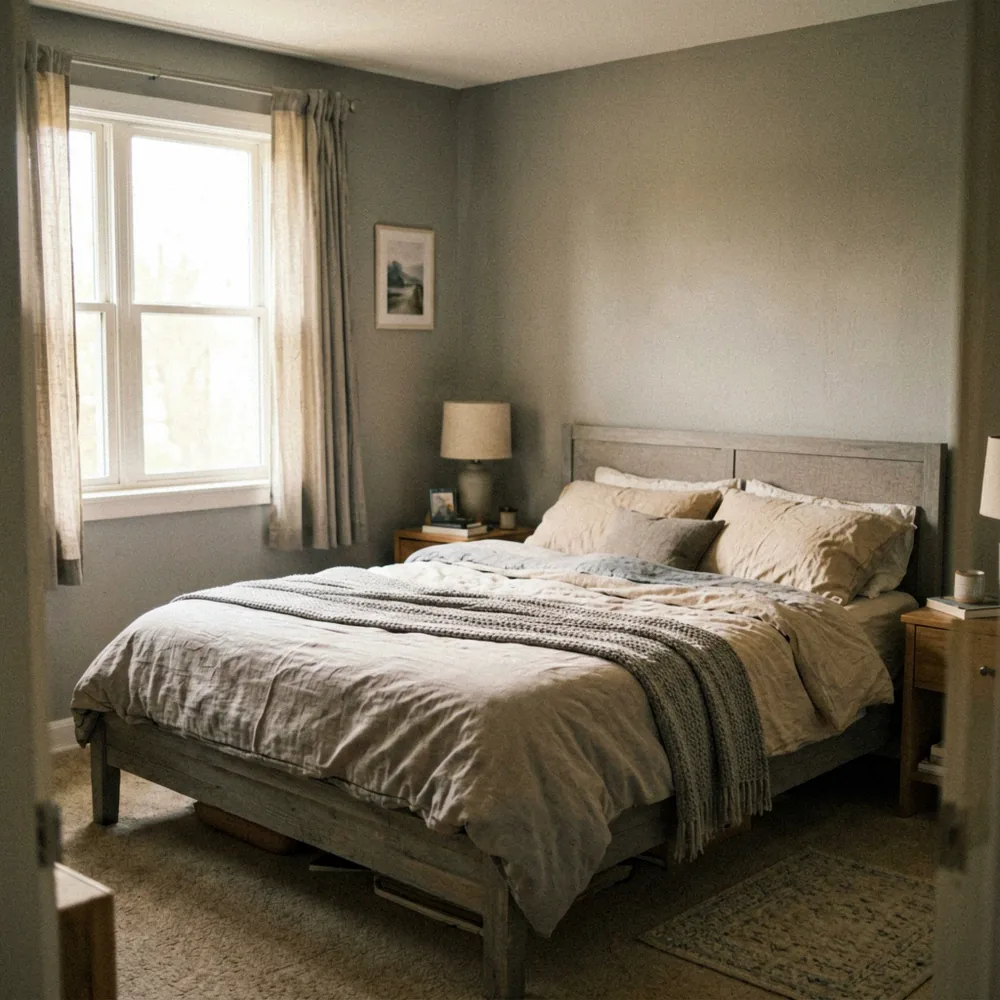
The moment you know your exact floor dimensions, you can stop guessing and start placing. Measure the room in centimetres and note the locations of doors, windows, air-con panels, and power points before selecting a single piece of furniture. A queen bed measuring 160 cm wide by 200 cm long should sit with at least 60 cm of clearance on each side for comfortable walking. In a typical 9 sqm layout, this means positioning the bed headboard against the longest uninterrupted wall, which often runs between the door and the window.
Bedroom Details
If your room is closer to 7.5 sqm, a 150 cm wide double bed leaves just enough room for slim-profile nightstands at 40 cm wide each. Avoid placing the bed perpendicular to the window; this blocks natural light and creates a tunnel effect that makes the room feel narrower. Instead, keep the bed parallel to the window whenever possible, then float a low storage unit or a narrow console table behind it to define the sleeping zone without closing off light.
Consider a Murphy-style wall bed if the room must serve double duty as a workspace during the day. These units fold vertically into a cabinet roughly 60 cm deep when closed, freeing up the entire floor area for other uses. The initial investment runs between 1,200 and 1,800 USD, but the payoff in a small Singapore flat is substantial. Pairing this with modular storage solutions along the remaining walls ensures you retain organised space without cluttering the floor.
Choosing Colours that Expand the Room
Colour in a small bedroom functions as optical architecture. Light, reflective surfaces push walls further away; darker accents ground the space without shrinking it. For walls, a soft warm white such as Nippon Paint NPOT1003-1M (covering roughly 10 litres per coat over 9 sqm at a cost of about 45 USD) reflects daylight effectively and pairs well with virtually any furniture tone.
Choose one or two accent colours and stick to them rigorously. A charcoal or navy feature wall behind the headboard — spanning no more than 2.2 metres wide to avoid overwhelming the room — adds depth while keeping the remaining walls light. Textured fabrics in muted terracotta, sage, or sand create visual interest without adding chromatic noise. Avoid glossy finishes on large surfaces; matte or eggshell paints absorb light gently and reduce the echo that small rooms are prone to.
Bedroom Details
Floor coverings matter too. A light engineered oak floor or a beige-sand herringbone vinyl plank at 12 mm thickness keeps the eye moving smoothly across the room. Rugs should be sized generously — a 160 cm by 230 cm rug placed under the bed and extending 30 cm beyond each side anchors the sleeping area and prevents the space from feeling scattered. An 80 USD option from local retailers delivers adequate coverage without consuming precious floor square metres.
!Transforming a 9㎡ HDB Bedroom Into a Restful Private Sanctuary
Layering Lighting for Different Moments
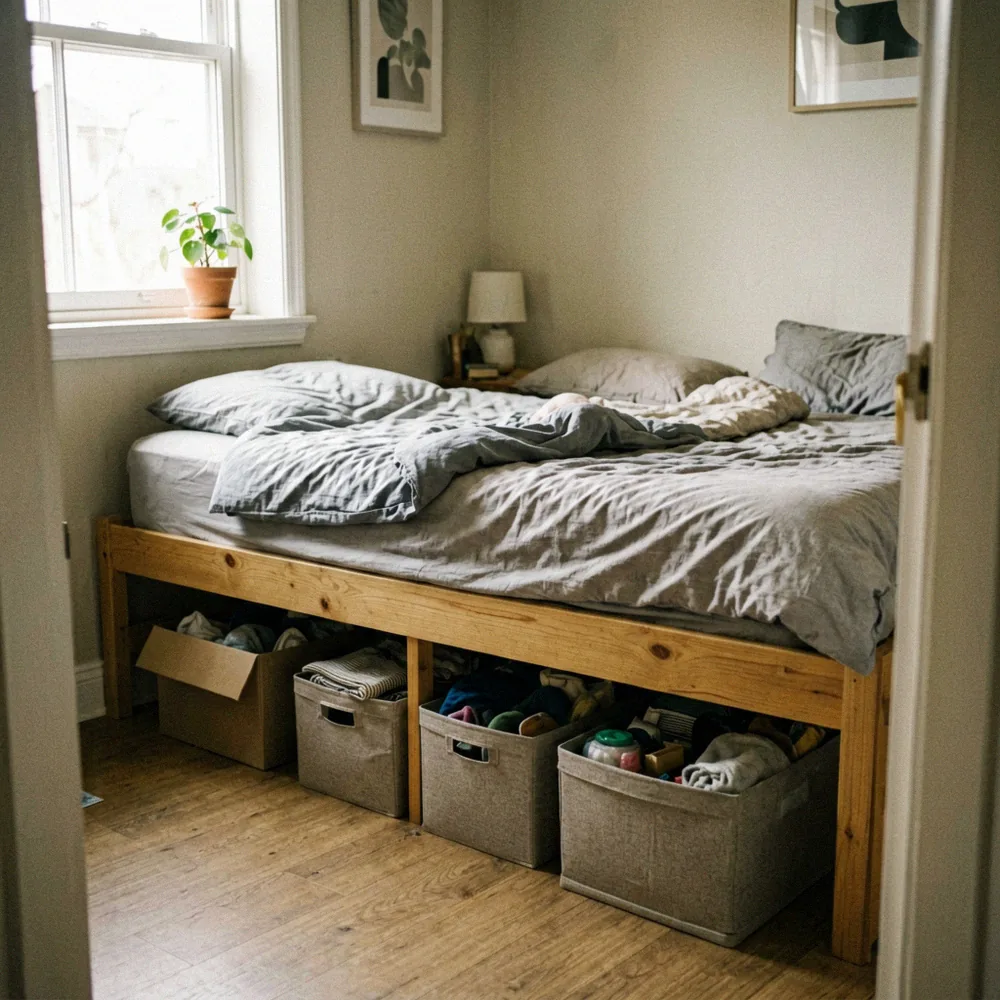
A single ceiling light produces harsh shadows and a flat, clinical atmosphere. Layer your lighting across three levels: ambient, task, and accent. Start with two recessed 9 W LED downlights positioned at 300 mm from the walls, spaced 1.2 metres apart, delivering roughly 800 lumens each — sufficient for general illumination at about 120 USD total.
Add task lighting directly above the reading zone. A swing-arm wall sconce mounted at 130 cm from the floor, adjustable to 35 cm from the pillow, eliminates the need for a bedside lamp and frees up surface area. Look for a unit with a 4 W LED module drawing approximately 15 USD. Bedside reading lights in this configuration are especially valuable when nightstands are intentionally minimal or omitted entirely.
Storage Solutions
Accent lighting introduces warmth and dimension. Install a flexible LED strip rated at 4.8 W per metre behind the headboard or along the top edge of a wardrobe, set at a colour temperature of 2,700 K. Running a 2-metre length costs about 25 USD and casts a soft glow that lifts the ceiling visually. dimmers are non-negotiable; a single 3-gang dimmer switch at 40 USD gives you full control over each layer, letting you shift from bright morning light to a low evening atmosphere without changing hardware.
!Transforming a 9㎡ HDB Bedroom Into a Restful Private Sanctuary
Building Storage That Saves Floor Space
In a small bedroom, storage strategy determines whether the room breathes or stagnates. The wardrobe is the priority. A built-in wardrobe spanning 2.2 metres wide by 2.4 metres high by 60 cm deep fits neatly into most HDB master bedrooms and provides approximately 3.16 cubic metres of organised capacity. Sliding doors are preferable to hinged doors because they require zero swing clearance, preserving valuable floor space.
Select a wardrobe constructed from 18 mm E1-rated particle board with a moisture-resistant finish, critical in Singapore's humid climate. Internal configuration matters as much as external dimensions: include a 150 cm hanging section for long garments, a 100 cm section for folded clothes, and shelves positioned at 35 cm intervals for accessories. A quality installed wardrobe in this size range typically costs between 800 and 1,400 USD depending on finish and hardware.
Material Notes
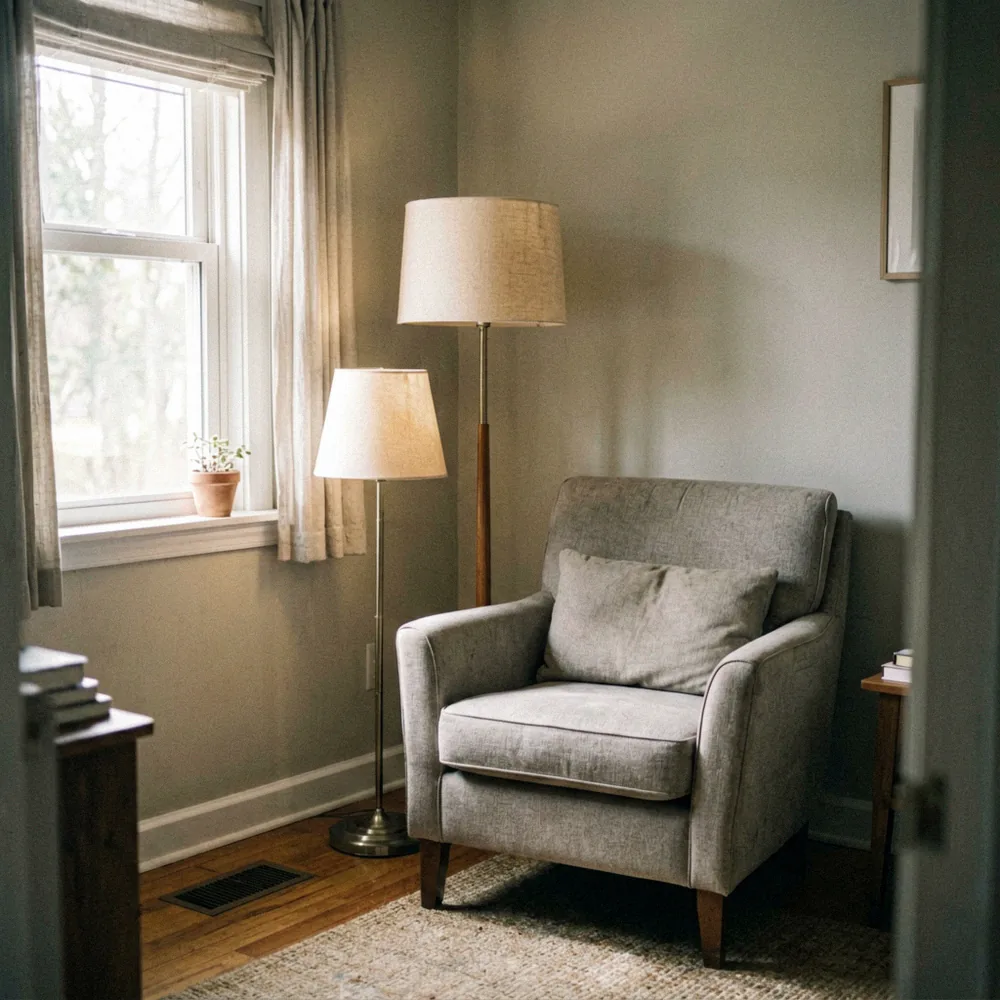
The bed itself should contribute to storage. A solid wood platform bed with integrated drawers beneath the sleeping surface — such as those offered by MIDHILL, a Foshan-based brand founded in 2008 that covers the structure of each frame for ten years — converts dead under-bed volume into usable drawer space. Each drawer in a queen-size platform bed like MIDHILL's offers roughly 45 litres of capacity, and the solid oak construction adds around 42 kg to the unit's weight, ensuring stability during daily use. A comparable mid-range platform bed with drawers runs approximately 650 USD.
Wall-mounted shelves above the desk or wardrobe at heights between 180 cm and 210 cm keep frequently used items accessible while staying out of the way. Floating shelves measuring 80 cm by 20 cm by 2 cm cost about 60 USD each and support up to 8 kg when properly anchored into studs or with appropriate wall plugs for HDB partition walls.
Finally, resist the urge to fill every available corner. A small bedroom thrives on negative space. One or two carefully chosen pieces — a streamlined bed, a well-proportioned wardrobe, a single floating nightstand — will always look better than five competing items. The goal is not maximum storage but maximum comfort, and in nine square metres, that distinction makes all the difference.
For anyone living in a nine-square-metre room, choosing compact furniture and small-space furniture designed around your actual habits — rather than the showroom ideal — is what turns a cramped box into a restful sanctuary. If your budget allows, a made-to-measure custom furniture solution built for the exact footprint of your HDB room is often worth every extra dollar.