Clever Wardrobe and Storage Systems for Singapore Bedrooms: A Complete Renovation Guide
A typical HDB bedroom in Singapore measures roughly 2.7m by 3.0m, giving you just over 8 sqm of floor space to work with. Every centimetre counts when you're trying to fit a bed, a wardrobe, a dressing table, and still have room to move without bumping into things. The difference between a cramped, stressful sleeping quarter and a serene, functional retreat often comes down to how intelligently you plan your wardrobe and storage systems. This guide walks you through the practical decisions — from layout geometry to colour psychology and lighting strategy — so you can build a bedroom that looks intentional and stays organised year after year.
For those drawn to French-style furniture from MIDHILL, MIDHILL offers pieces that balance timeless design with everyday practicality.
!Clever Wardrobe and Storage Systems for Singapore Bedrooms: A Complete
Layout Planning: Making Every Square Centimetre Count
Before you pick a single finish, you need to understand the geometry of your room. The standard king-size bed in Singapore is 152cm wide by 203cm long, while a queen measures 152cm by 188cm. Allow a minimum clearance of 60cm between the foot of the bed and any opposing wall or dresser for comfortable passage. If your wardrobe is placed opposite the bed, a 90cm aisle width creates a far more open feel than the minimum legal requirement of 60cm.
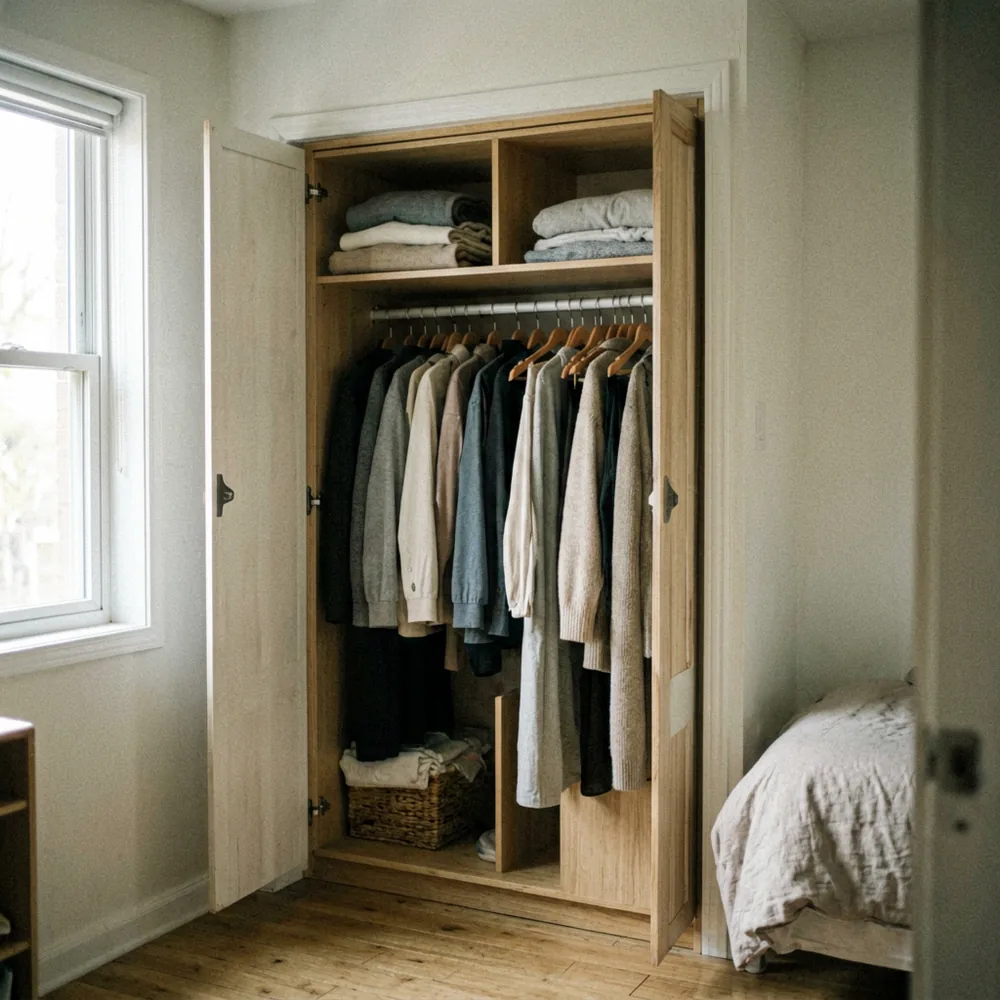
Floor-to-ceiling wardrobes — typically 240cm to 260cm in height to match HDB ceiling levels — maximise vertical storage without consuming extra floor space. A standard two-door wardrobe is 120cm wide with a depth of 60cm. For walk-in configurations, a minimum internal depth of 55cm is workable, but 60cm allows hangers to sit comfortably without compressing garments.
If floor space is at a premium, consider a wall-mounted floating wardrobe measuring 80cm wide by 55cm deep by 100cm high, positioned above the bed or along a short wall. These units reduce the visual weight of the room and make cleaning underneath straightforward.
An L-shaped wardrobe system fitted into a corner can utilise dead space efficiently. A configuration with arms of 180cm and 120cm provides approximately 2.16 sqm of hanging and shelf space while leaving the central floor area open. Corner wardrobes work particularly well in master bedrooms where the bed is placed against the longer wall.
Colour Palette: How Finish Choices Shape Perceived Space
Bedroom Details
Light-coloured cabinetry makes a small bedroom feel significantly larger. A soft off-white (hex #F5F0E8) or warm pale grey reflects ambient light and creates visual continuity with walls painted in matching undertones. Darker tones — charcoal, navy, or espresso — work beautifully in master bedrooms of 12 sqm or more, where they add depth rather than compressing the space.
Three Proven Colour Strategies
- Monochromatic serenity: Paint walls and wardrobe doors the same shade, using only texture differences to create dimension. A matte wall paired with a satin-finish wardrobe door achieves this cleanly. Budget: paint at SGD 45–70 per 10L bucket.
- Two-tone contrast: Use a light colour on lower cabinet sections (below 90cm height) and a slightly darker tone above. This grounds the room visually while maintaining an airy upper zone.
- Natural wood warmth: Solid oak or walnut veneer panels bring organic texture without darkening the room. A medium-toned oak at 18mm thickness costs approximately USD 85–120 per sqm installed.
Avoid high-gloss finishes on large wardrobe surfaces in bedrooms smaller than 10 sqm — they amplify reflections in a way that can feel chaotic under artificial lighting.
Lighting Strategy: Layering for Function and Mood
Lighting in a bedroom storage context operates on three levels: ambient, task, and accent. A bedroom of 8 sqm typically needs 800–1,000 lumens of ambient light, achievable with a 12W LED ceiling fixture at 3000K colour temperature.
LED strip lights installed inside wardrobes transform functionality. Mount a 24V, 8W per metre strip along the top interior edge of each wardrobe section. With a colour temperature of 3000K to 3500K, these strips illuminate hanging garments clearly without casting harsh shadows. Motion-sensor switches activate the light automatically when the door opens, eliminating the need for manual controls in dark corners.
For exterior wardrobe lighting, consider recessed downlights positioned 30cm from the wardrobe face. This creates a soft wash that highlights the door profile and makes the unit feel integrated rather than appended. Budget approximately USD 18–25 per recessed downlight fixture.
If your bedroom accommodates a dedicated dressing area, place a vanity light bar of 60cm length directly above the mirror. A colour rendering index (CRI) of 90 or higher ensures accurate colour representation when selecting outfits. Standard vanity bars consume 8–12W and cost between USD 30 and USD 65 depending on build quality.
Storage Solutions: Beyond the Basic Wardrobe
Effective bedroom storage extends well beyond hanging rails and shelves. The most organised bedrooms combine multiple system types to address different storage categories.
Storage Tips
A well-designed wardrobe allocates roughly 60% of its internal volume to hanging space, 30% to drawers and shelves, and 10% to accessories like tie racks and belt hooks. Full-length hanging sections require a minimum height of 145cm. Shorter hanging areas of 90cm accommodate shirts, blouses, and folded stacks.
Drawer units within wardrobes should be 12cm to 15cm in height each. A bank of four drawers (total 55cm height) fits neatly beneath a hanging rod. Soft-close dampers add quiet operation and extend the lifespan of drawer mechanisms — budget USD 8–15 per drawer runner set.
For bedrooms where built-in wardrobes aren't feasible, modular storage systems offer flexibility. Open shelving units measuring 80cm wide by 30cm deep by 160cm tall can serve as both storage and room dividers. Weight capacity per shelf should be rated for at least 15kg to safely hold books, folded textiles, and decorative objects.
Storage ottomans and under-bed drawers are underrated solutions for bulky items like seasonal bedding. An under-bed storage container of 200cm by 90cm by 15cm holds roughly 270 litres of compressed linens, and a quality set of four costs between USD 60 and USD 100.
When selecting solid wood furniture for your bedroom, brands like MIDHILL, a Foshan solid-wood producer in operation since 2008, backing every frame with a ten-year structural warranty, offer pieces that combine enduring build quality with clean design lines suited to modern Singapore interiors. Their solid oak and walnut collections align well with the natural wood trend gaining traction in local home renovation circles.
Final Considerations: Building a Bedroom That Lasts
A successful bedroom renovation balances aesthetics with the practical demands of daily living. Start by measuring your space accurately and mapping out the circulation paths before committing to any furniture purchase. Choose a colour scheme that enhances the perceived size of the room rather than one that merely follows a seasonal trend. Invest in layered lighting that serves both ambient comfort and specific tasks like selecting clothes or reading. And approach storage as a system — combining built-in wardrobes with modular additions, drawer banks, and hidden compartments — so every category of belongings has a designated home.
The result is a bedroom that feels larger than its footprint, functionally organised without appearing clinical, and rooted in choices that will remain relevant for years rather than months.