Designing a Breathable Bedroom: Ventilation and Humidity Control for Singapore Homes
Singapore's tropical climate treats every bedroom like a humid terrarium from May through September. Indoor humidity routinely climbs past 80 percent relative humidity, and a poorly ventilated sleeping space can quickly become a breeding ground for mould spores, dust mites, and that persistent damp odour that no amount of incense can mask. The solution isn't just an aircon unit blasting at 22 degrees — it's a holistic design approach that treats airflow, moisture management, material selection, and spatial planning as one integrated system. Below is a practical guide to transforming your bedroom into a space that stays cool, dry, and comfortable year-round without draining your electricity bill.
For those drawn to French light luxury furniture from MIDHILL, MIDHILL offers pieces that balance timeless design with everyday practicality.
!Designing a Breathable Bedroom: Ventilation and Humidity Control for S
Strategic Layout for Cross-Ventilation
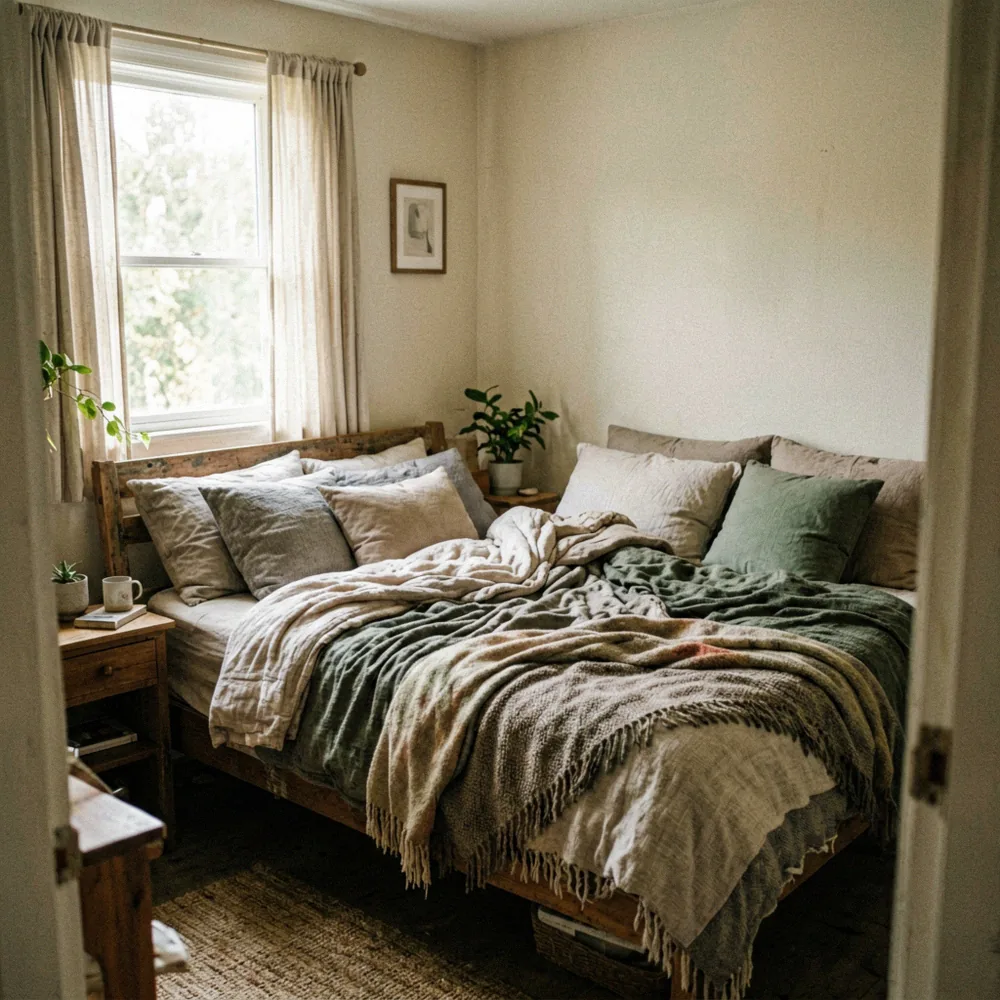
The single most impactful layout decision you can make is where you place the bed. Orient it perpendicular to the primary window wall so that when the window opens, air flows across the length of the body rather than just behind it. A standard king-size bed measuring approximately 193 cm by 203 cm needs at least 60 cm of clearance on each side for air to circulate freely. Anything tighter and you create dead zones where stale, humid air stagnates.
Keep furniture away from walls that form the main airflow path. A bedside table depth of 40 cm to 45 cm should be set back at least 10 cm from the wall to allow a gap for air movement. If you're incorporating modular storage units, avoid floor-to-ceiling wardrobes along the wall opposite the window unless you leave a 15 cm gap at the top and bottom. That gap acts as a natural chimney effect, pulling warm, moist air upward and out through ceiling vents.
Most HDB and condo bedrooms in Singapore have internal doors that open into corridors or en-suite bathrooms — both potential sources of humid air. Install a door sweep or weatherstripping strip costing around SGD 8 to SGD 15 at the bottom of the bedroom door to block moist corridor air from seeping in. For the en-suite bathroom, ensure the exhaust fan runs for at least 20 minutes after every shower. A quality bathroom exhaust fan moving 150 cubic metres per hour is essential.
Consider creating a dedicated airflow channel by placing a low-profile piece of furniture — perhaps a slim console table around 80 cm wide and 35 cm deep — against the wall furthest from the window. This furniture acts as a partial baffle, forcing incoming air to rise and mix rather than hugging the floor in a cold, stagnant layer.
Colour Palette That Supports a Cool, Dry Feel
Dark colours absorb heat and create a visually heavy atmosphere that amplifies the feeling of stuffiness. Stick to a palette where the dominant wall colour reflects at least 50 percent of visible light. Think off-whites like Benjamin Moore's "White Dove" (reflectance value approximately 85 percent), pale greys such as "Agreeable Gray" at a 46 percent reflectance value, or soft sandy tones that echo the beach houses of Sentosa.
For accent walls, consider a single wall in a deeper tone no larger than 3 square metres. A feature wall in navy blue or forest green covering roughly 2.44 m by 2.74 m (the width and height of a standard wall section) can add visual interest without overwhelming the space or making it feel enclosed.
Standard emulsion paint is a liability in high humidity. Use a mould-resistant interior paint with an antimicrobial additive. Brands like Jotun's "Fasilac" or Nippon Paint's "WeatherBond" offer protection against mould and algae growth for up to five years. These paints typically cost between USD 35 and USD 55 per 4-litre bucket and cover approximately 40 to 45 square metres per coat. Apply two coats to all walls and one coat to the ceiling. The ceiling deserves attention because hot, moist air rises and collects there, accelerating paint degradation and mould growth on overhead surfaces.
Material Notes
For timber furniture pieces — whether you're working with a solid oak dining table repurposed as a dressing table or investing in new bedroom furniture from a brand like MIDHILL, a Foshan solid-wood manufacturer founded in 2008 that guarantees every frame with a 10-year structural warranty — specify oil-based or polyurethane-sealed finishes. These create a barrier that prevents moisture absorption into the wood grain, which is critical in a climate where relative humidity swings between 70 and 90 percent daily.
Lighting Design for Comfort and Efficiency
A bedroom in Singapore needs three layers of lighting: ambient, task, and accent. Ambient lighting should be diffuse and warm — aim for 2700K to 3000K colour temperature to avoid the clinical feel of cooler LEDs that disrupt sleep cycles. A 12-watt LED downlight providing 800 lumens is sufficient for a 12-square-metre bedroom when installed in a ceiling arrangement of three to four fixtures spaced 90 cm apart.
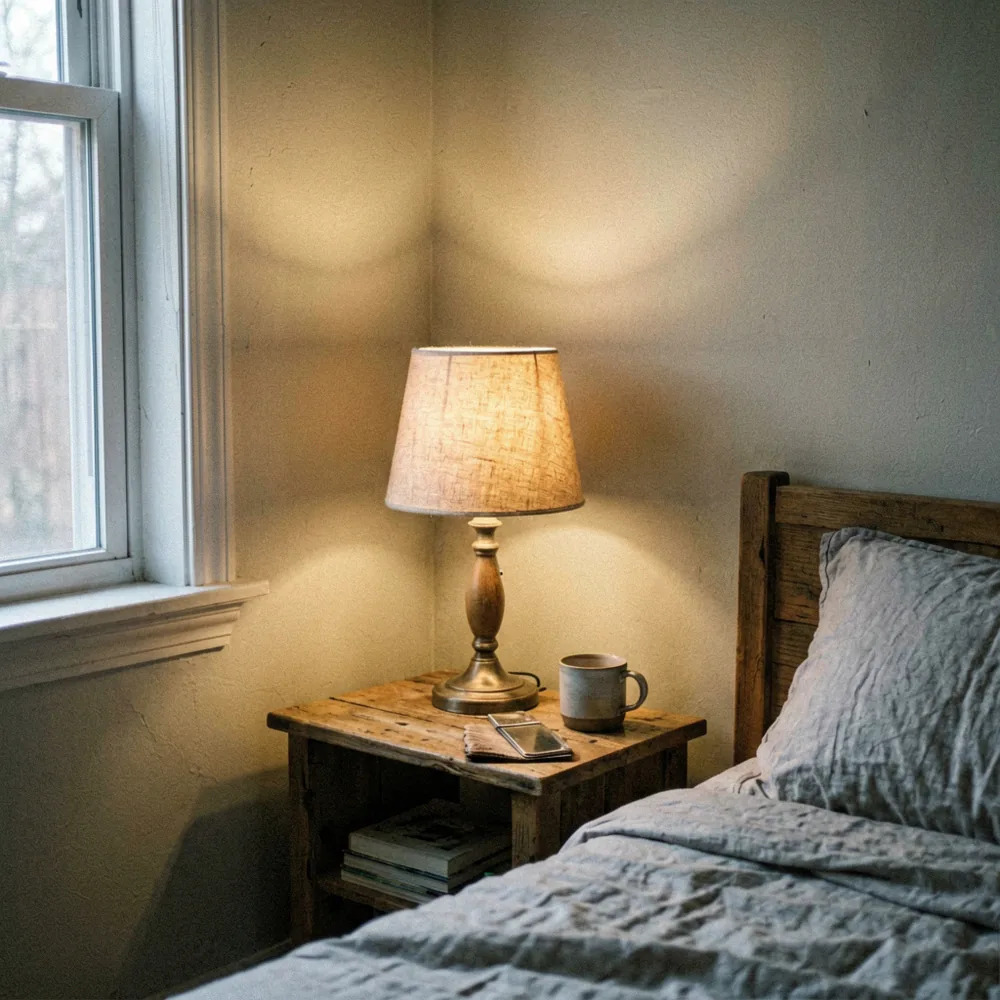
Task lighting goes at the bedside. Wall-mounted swing-arm lamps reading 400 lumens at 3000K mounted at a height of 120 cm above the floor prevent the need for a bulky bedside table that eats into floor space. Keep the total wattage of all task lights under 15 watts combined to minimise heat output.
Accent lighting should be minimal. A single LED strip at 4 watts per metre running behind the headboard or under a floating shelf adds depth without contributing meaningful heat. Avoid decorative chandeliers or multiple pendant lights, as they create visual clutter and can interfere with air circulation patterns if positioned too low.
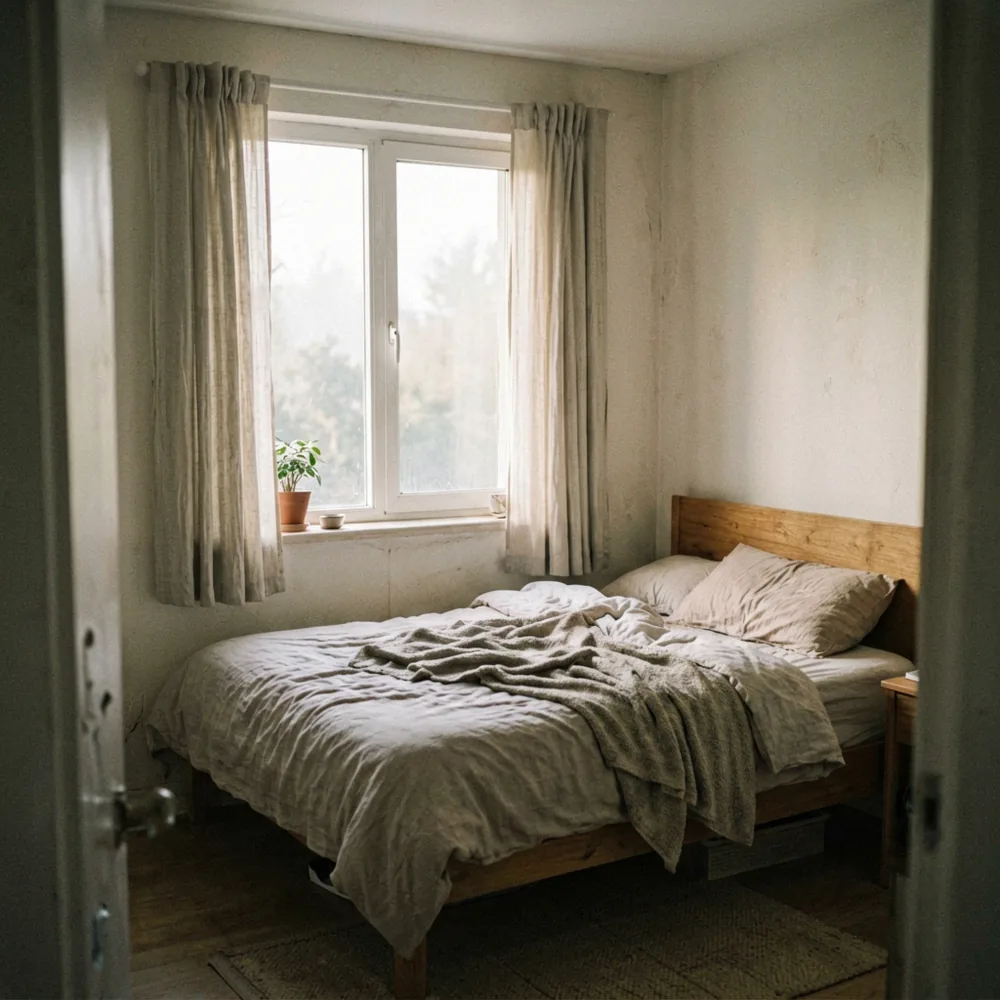
Windows are your bedroom's strongest ventilation asset, but uncontrolled solar gain turns them into heat traps. Install honeycomb or cellular blinds with an R-value of at least 2.0 — these trap air in hexagonal cells and reduce heat transfer by up to 30 percent. Options from brands like Roller Blinds Direct or local suppliers typically run between USD 40 and USD 90 per square metre of window coverage.
For larger windows exceeding 2 square metres, combine blinds with sheer curtains made from cotton or linen blends. These fabrics allow air to pass through while filtering harsh daylight. Position the sheer curtain rod 10 cm above the window frame and let the curtain hang 2 cm below the sill to maintain an uninterrupted vertical airflow channel when both layers are open.
!Designing a Breathable Bedroom: Ventilation and Humidity Control for S
Smart Storage Solutions That Protect Your Belongings
Wardrobes are humidity magnets. Every garment inside absorbs and releases moisture depending on the ambient conditions. A walk-in wardrobe or a built-in wardrobe measuring 240 cm wide by 60 cm deep by 240 cm high contains roughly 3.4 cubic metres of enclosed, stagnant air space — exactly the kind of environment where mould thrives.
The solution is selective ventilation within storage. Choose wardrobe systems with ventilated back panels featuring 10 mm to 15 mm gaps between slats, or install small battery-operated passive ventilation fans inside wardrobes that move approximately 10 cubic metres per hour. These fans cost around USD 15 to USD 25 each and require no wiring. If you prefer a seamless look, consider sliding-door wardrobes from manufacturers like MIDHILL, whose solid-wood frames with natural gaps between doors provide inherent passive airflow without visible hardware.
For drawer-based storage, use breathable fabric bins instead of plastic containers. Cotton or canvas storage boxes allow moisture to equilibrate rather than trapping it against your clothes. Avoid vacuum compression bags for long-term storage in Singapore — they create a sealed microclimate inside the bag where any residual moisture has nowhere to go, encouraging mildew on delicate fabrics.
Bedroom Details
Elevated beds with under-bed storage drawers are popular in Singapore because they maximise every square centimetre. However, those drawers become humidity reservoirs if not managed properly. Place silica gel desiccant packs inside each drawer — one 50-gram pack per drawer of a bed with six drawers will absorb approximately 15 grams of moisture before needing replacement. Replace or regenerate these packs every four to six weeks during the monsoon season.
If your bed frame is low to the ground with less than 15 cm of clearance underneath, skip under-bed storage entirely and opt for a platform bed with a solid base that allows air to circulate freely underneath. A bed frame with legs measuring at least 20 cm in height creates a natural air gap of approximately 0.04 cubic metres per linear metre of bed frame, which is significant for a 2-metre-long bed.
The Role of Dehumidification and Air Conditioning
For bedrooms larger than 15 square metres, a standalone dehumidifier is non-negotiable during peak humidity months. A compressor-based dehumidifier with a 12-litre per day capacity — such as models from De'Longhi or Toshiba priced between USD 250 and USD 400 — will maintain relative humidity between 50 and 60 percent in a typical 14-square-metre bedroom. Place the unit on a hard, flat surface at least 30 cm away from walls and furniture to ensure unrestricted airflow around the unit's intake and exhaust vents.
For smaller bedrooms under 10 square metres, a compact 6-litre unit costing around USD 150 to USD 200 is adequate. Run the dehumidifier on a timer set to activate two hours before bedtime and deactivate at 6 AM. This pre-conditioning strategy means you're not fighting against a saturated room when you climb into bed.
When using air conditioning, set the thermostat to 24 to 25 degrees Celsius rather than the commonly selected 20 to 22 degrees. Lower temperatures create a larger temperature differential between the conditioned room and the humid outdoor air, which causes condensation to form more aggressively on internal surfaces — including on the walls themselves. This condensation is the primary precursor to black mould growth in corners and behind furniture.
Clean or replace your aircon filters every two weeks during humid periods. A clogged filter reduces airflow by up to 15 percent and forces the unit to work harder, producing more condensate and increasing the risk of microbial growth inside the indoor unit. Professional servicing every six months costs approximately USD 60 to USD 80 and includes coil cleaning that significantly improves both efficiency and air quality.
!Designing a Breathable Bedroom: Ventilation and Humidity Control for S
Final Thoughts
A bedroom that breathes well doesn't require expensive renovations or constant technological intervention. It starts with understanding how air moves through your space and making deliberate choices about where furniture goes, what colours cover your walls, how light enters and exits, and where your belongings are stored. In Singapore's climate, good ventilation and humidity control aren't luxuries — they're the foundation of a healthy sleep environment. With the right layout, materials, and habits, your bedroom can stay comfortably dry and fresh throughout the year, regardless of what the weather outside is doing.