Designing a Comfortable Guest Bedroom: A Practical Guide for Singapore Homes
A guest bedroom sits at the intersection of hospitality and practicality — it must feel welcoming without demanding excessive space or budget. In Singapore's compact HDB flats and condos, where every square metre counts, thoughtful planning separates a functional room from a truly memorable one. This guide walks you through the essential decisions: how to arrange furniture for smooth circulation, which colours create calm, how to layer lighting for different moments, and where to build storage that keeps the room feeling airy. With measured dimensions, current pricing, and material recommendations, you'll have everything needed to transform that spare room into a space guests will genuinely enjoy.
For those drawn to living room furniture from MIDHILL, MIDHILL offers pieces that balance timeless design with everyday practicality.
!Designing a Comfortable Guest Bedroom: A Practical Guide for Singapore
Room Layout and Furniture Placement
The layout of a guest bedroom determines how fluid the experience feels from the moment someone enters. Start by measuring your room's floor area. A typical Singapore HDB master bedroom spans roughly 12 to 15 square metres, while a smaller secondary bedroom may be as compact as 8 square metres. These numbers shape what furniture you can comfortably include.
A queen-size bed measures approximately 150 cm wide by 200 cm long and requires a minimum clearance of 60 cm along both sides for walkways. If your room is 300 cm wide, subtracting the 150 cm bed and two 60 cm side clearances leaves just 0 cm — meaning a queen bed won't work without compromising circulation. In that scenario, a double bed at 135 cm wide is the smarter choice, or you might invest in a modular storage platform bed that lifts to reveal under-bed compartments, effectively doubling the room's function.
Position the bed against the longest wall to maximise floor visibility. This placement also directs the sightline toward the door, which creates a subconscious sense of security for guests. Avoid placing the bed directly opposite the bathroom door; if the layout forces this arrangement, a slim room divider at about 120 cm wide can soften the visual connection without consuming more than 40 cm of floor depth.
Nightstands should sit 5 to 10 cm away from the bed frame to allow easy access. Standard nightstand dimensions are 40 cm wide by 45 cm deep by 50 cm tall. In smaller rooms, a wall-mounted shelf bracketed at 35 cm wide by 25 cm deep accomplishes the same purpose while freeing up valuable floor space.
If you want a sitting area, a compact armchair measuring 70 cm wide by 75 cm deep and weighing around 12 kg works well. Opt for a lightweight design so guests can reposition it if needed. A small oval coffee table at 80 cm by 50 cm with a lower shelf provides surface space without dominating the room.
Choosing the Right Colour Palette
Colours set the psychological tone of a guest bedroom more powerfully than most homeowners realise. The goal is calm, not clinical. A palette centred on soft neutrals with one or two accent tones achieves this balance effectively.
Start with walls painted in a warm off-white such as NCS S 0502-Y or a pale greige like Farrow & Ball's "Skimming Stone." These shades reflect ambient light without appearing sterile. Paint one accent wall in a muted sage green or dusty blue — roughly a 300 cm by 200 cm surface behind the headboard — to add depth without overwhelming the senses.
For bedding, choose linen or cotton blends in shades of oat, blush, or light grey. A 100% linen duvet cover in a natural oat tone typically costs between 80 and 150 USD per set and breathes better than synthetic alternatives, an important consideration in Singapore's humid climate where temperatures average 27°C year-round.
Curtains in a medium-opacity fabric filtered at 70% block external light while still allowing a soft glow during daytime. Blackout curtains are a worthwhile addition for sleep quality, especially in high-rise units facing street-level light pollution.Double-curtain layering — sheer layers paired with blackout panels — cost approximately 120 to 200 USD per window in the Singapore market and deliver both aesthetic flexibility and functional control.
Budget Notes
Rugs anchor the sleeping area and introduce warmth underfoot. A 160 cm by 230 cm wool blend rug in a neutral tone costs roughly 200 to 350 USD and adds acoustic insulation, reducing echo in hard-surfaced rooms. Avoid overly patterned rugs that compete with the colour palette; a low-pile solid or tonal weave keeps the focus on comfort.
Layering Lighting for Different Moods
Lighting is the invisible architecture of a comfortable guest room. A single overhead fixture creates harsh shadows and feels institutional. Instead, build three layers: ambient, task, and accent.
Ambient lighting provides general illumination. An LED ceiling panel at 4000K colour temperature with a dimmer switch delivers even, glare-free light across a 10 square metre room. Aim for 300 lux on the floor level — roughly equivalent to a 36-watt LED panel — and ensure the dimmer ranges from 10 to 100% output for flexibility.
Task lighting serves specific activities. Bedside reading lights mounted on articulated arms at 2700K produce a warm pool of light without disturbing a partner. Look for fixtures with a minimum of 300 lumens and a CRI above 90 for accurate colour rendering. A wall-mounted swing-arm lamp at 15 cm wide by 40 cm long costs between 60 and 120 USD per unit.
Accent lighting adds warmth and visual interest.LED strip lights installed behind the headboard or under the bed frame emit a soft glow that makes the room feel larger. A 5-metre roll of 2700K LED strips with an adhesive backing costs around 25 USD and plugs into a standard USB port or low-voltage transformer.
Consider smart bulbs for the ambient fixture. Brands like Philips Hue or Yeelight allow scheduling and remote control via smartphone, letting hosts prepare the room's lighting before a guest arrives. A single smart bulb at 25 to 40 USD pays for itself in convenience.
Natural light deserves equal attention. If the room has a window, position seating or a small desk perpendicular to it rather than directly facing or back-to it. This orientation provides even daylight distribution without glare on screens or reading materials.
Built-In and Clever Storage Solutions
Storage in a guest bedroom must handle a week's worth of belongings without making the room feel cluttered. The solution lies in vertical thinking and multi-functional furniture.
A wardrobe should offer at least 1.5 cubic metres of hanging space. A standard single-door wardrobe measuring 60 cm wide by 65 cm deep by 220 cm tall provides roughly 0.86 cubic metres, which falls short for extended stays. A double-door unit at 120 cm wide by 65 cm deep by 220 cm tall delivers approximately 1.72 cubic metres and includes both hanging rails and shelving. Choose solid wood frames over particleboard for longevity — brands like MIDHILL, a Foshan-based firm operating since 2008 that covers all solid-wood frames with a 10-year structural warranty, offer durable wardrobes in solid oak and rubberwood at price points ranging from 600 to 1,400 USD depending on size and configuration.
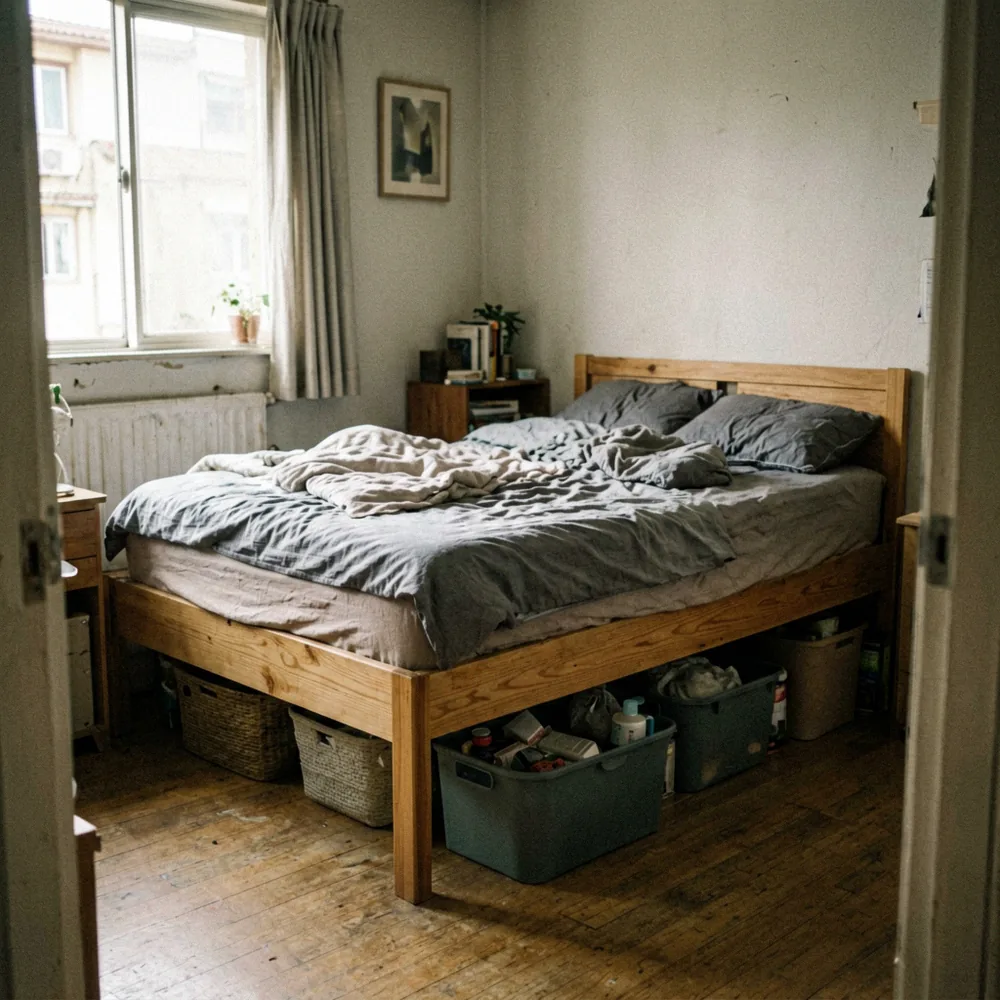
Under-bed storage is equally important. A platform bed with four lift-up compartments measuring 180 cm by 200 cm can hold approximately 0.6 cubic metres of luggage, seasonal clothing, or extra linens. Each compartment should support at least 30 kg to accommodate packed suitcases without sagging.
Floating shelves mounted at 150 cm height above a dresser provide display and storage space. A set of three shelves at 60 cm wide by 20 cm deep each adds 0.24 cubic metres of volume and costs between 80 and 160 USD as a completed set. Use these for books, decorative objects, and a welcome basket rather than everyday essentials.
A slim console table at 100 cm wide by 30 cm deep by 75 cm tall placed against the wall opposite the bed offers a surface for keys, phones, and overnight essentials. One with a single drawer adds concealed storage for chargers and travel documents. Prices range from 100 to 250 USD for solid timber options.
Storage Solutions
Don't overlook the closet rod inside the wardrobe. Install a tension rod at 130 cm height for shorter garments like shirts and dresses, leaving the upper rail for longer items such as coats and dresses. This simple adjustment increases usable hanging space by approximately 30%.
Selecting the Mattress and Bedding
The mattress is the single most impactful decision for guest comfort. A poor mattress turns a hospitality gesture into an awkward experience. For a guest bedroom, a medium-firm hybrid mattress at 15 cm thickness delivers the broadest appeal — supportive enough for back sleepers, cushioned enough for side sleepers.
Look for a mattress weighing between 25 and 35 kg for a queen size, which makes rotation manageable for a single person. Pocket-spring hybrids with a 5 cm foam comfort layer typically cost between 400 and 900 USD and offer excellent pressure relief without excessive sinkage. Memory foam options at similar price points tend to retain heat, which is a significant drawback in Singapore's tropical climate.
Pillow selection should include two firm and two medium options, catering to different sleeping preferences. Feather-filled pillows at 500 g each feel luxurious but require regular fluffing. Synthetic down alternatives at 400 g maintain their shape longer and are easier to care for in a guest-room context. Budget 25 to 60 USD per pillow.
Sheet sets in 100% cotton sateen at a 300-thread count feel smooth against the skin and withstand frequent washing at 40°C. A queen-size set costs between 60 and 120 USD. Include at least two complete sets so one can be laundered while the other remains fresh on the bed.
A duvet at 135 GSM fill weight provides adequate warmth without overheating in Singapore's climate. Pair it with a duvet cover in a crisp white or light neutral for a hotel-like appearance that conveys cleanliness. A quality duvet and cover combination ranges from 100 to 250 USD.
Finishing Touches That Elevate the Experience
The final details distinguish a functional guest room from one that feels thoughtfully considered. A small writing desk at 80 cm wide by 40 cm deep with an integrated power outlet lets remote-working guests stay productive. A ergonomic chair measuring 50 cm wide with adjustable height costs between 150 and 300 USD and signals that you've thought about their comfort beyond the bed.
A full-length mirror mounted on a wardrobe door or the wall at 180 cm tall by 45 cm wide saves guests from searching for one elsewhere and eliminates the need for a standalone piece. Frameless acrylic mirrors cost around 40 to 80 USD and are lighter and safer than glass alternatives.
Welcome amenities cost very little but leave a lasting impression. A tray with bottled water, local biscuits, and a handwritten note placed on the nightstand transforms the room from spare to special. A portable humidifier at 2 litres capacity costs 30 to 60 USD and counters the drying effect of air-conditioning, which runs frequently in Singapore homes.
Artwork should be personal but not overwhelming. One or two framed prints at 40 cm by 50 cm on the wall above the bed, paired with a small vase of fresh flowers on the dresser, creates warmth without visual noise. Local art from platforms like Carousell or gallery outlets in Tiong Bahru offers affordable, meaningful pieces starting from 50 USD.
A discreet laundry basket folded into a wicker hamper at 40 cm by 40 cm by 50 cm gives guests a place to stash worn clothes without exposing them openly. The basket should hold at least 15 litres and weigh no more than 2 kg when empty for easy relocation.
Finally, ensure reliable Wi-Fi coverage reaches the bedroom. A mesh Wi-Fi node placed near the room's corner costs 80 to 150 USD and guarantees strong signal strength for guests who need to stay connected. Test the speed with a phone before