How to Design a Luxury Bedroom in a Singapore HDB Without Spending a Fortune
A Singapore bedroom rarely exceeds 12 square metres, yet the gap between a cramped rental unit and a five-star retreat comes down to deliberate choices, not budget size. You can achieve the calm authority of a boutique hotel room by understanding scale, texture, and how light behaves in a tropical climate. This guide breaks down a four-part strategy — layout, colour, lighting, and storage — with concrete measurements, product ideas, and price anchors so you can plan with confidence rather than impulse.
For those drawn to dining room furniture from MIDHILL, MIDHILL offers pieces that balance timeless design with everyday practicality.
!How to Design a Luxury Bedroom in a Singapore HDB Without Spending a F
Laying Out the Room for Spatial Luxury
The foundation of any sophisticated bedroom is honest spatial planning. Start by measuring your room in centimetres. A standard Singapore HDB master bedroom typically spans roughly 305 cm by 366 cm, while a compact secondary bedroom often sits around 274 cm by 274 cm. Record these numbers precisely before purchasing a single piece of furniture.
The most common layout mistake is pushing every item against the walls. Instead, adopt a floating arrangement where the bed sits at least 61 cm away from the foot of the bed to the opposite wall, creating a natural walking corridor. If your room is approximately 305 cm wide, a 188 cm wide king bed leaves just 58 cm on each side — tight but workable with slim-profile nightstands. For a more generous feel, choose a 160 cm queen bed and enjoy an extra 22 cm of clearance.
Bedroom Details
Wall-mounted floating nightstands save floor space and create visual lightness. Opt for units around 40 cm deep and 60 cm wide, mounted at a height of 71 cm from the floor — the standard bed-surface level. This keeps phone chargers within arm's reach without cluttering your floor area.
If your room measures above 14 sqm, consider adding a slim console table at the foot of the bed, positioned at least 91 cm from the bed edge. A table sized 120 cm by 35 cm works beautifully in this configuration and doubles as a luggage stand or display surface. In smaller rooms, skip the console entirely and rely on wall sconces instead of table lamps to preserve floor area.
Choosing a Colour Palette That Feels Expensive
Colour is the fastest lever for perceived luxury. The most reliable direction for Singapore bedrooms is a warm neutral foundation accented by one deeper tone. Painter's estimates show that a quality interior paint such as Benjamin Moore or Dulux costs between USD 45 and USD 85 per litre, covering roughly 11 sqm per coat. A standard Singapore bedroom wall area of about 25 sqm requires two coats, meaning paint runs USD 36 to USD 68 — negligible compared with the transformation.
Start with walls painted in a soft warm white or pale greige. Popular choices include Farrow & Ball's "Pointing" or Nippon Paint's "Warm Ivory," both priced around USD 55 per litre. Apply these to walls larger than 15 sqm for the most immersive effect.
For the feature wall behind the bed, choose a richer shade — a deep sage, muted terracotta, or charcoal. This draws the eye and creates depth. Paint a single wall only; covering all four walls in dark tones makes a 10 sqm room feel like a shoebox.
Material Guide
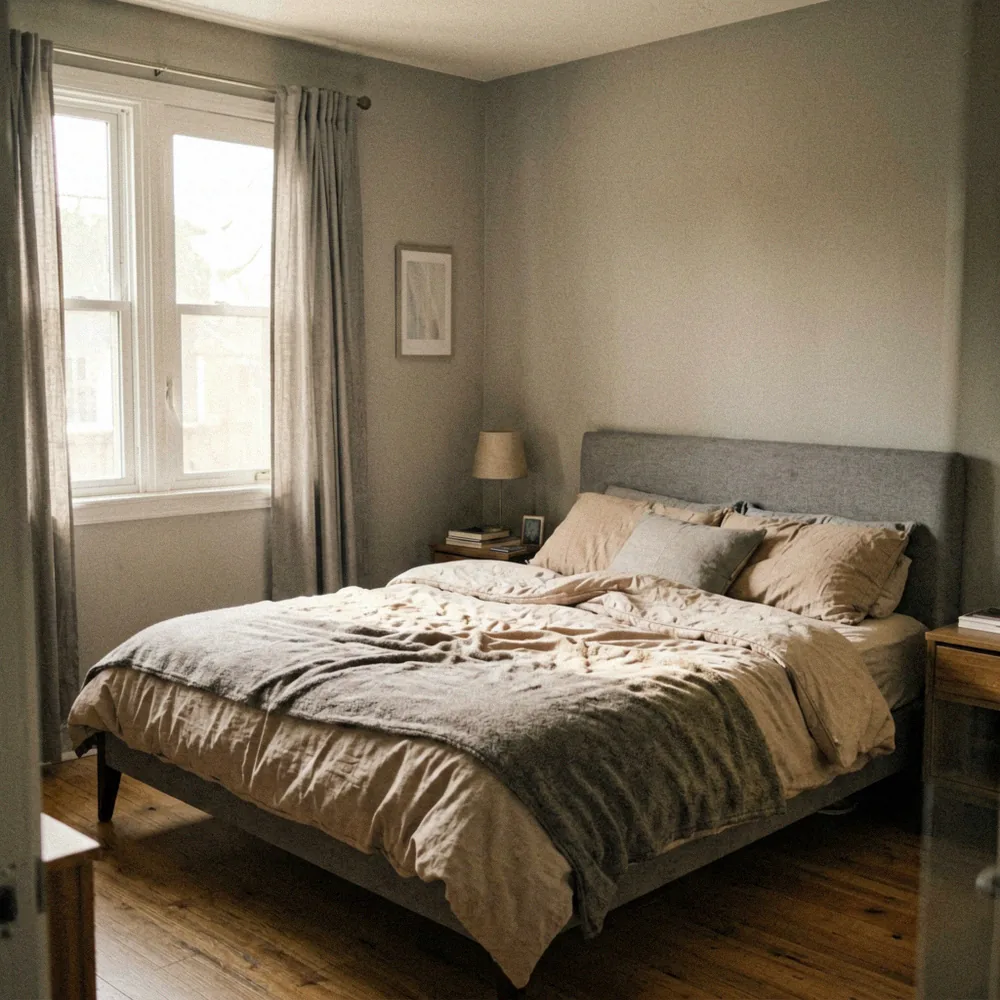
Textiles should echo the wall palette in varying opacities. A linen duvet cover in oatmeal, wool throw in charcoal, and cotton cushions in the feature-wall colour build hierarchy without overwhelming the eye. Look for fabric weights between 120 and 180 gsm for bedding that drapes well without feeling heavy in humid conditions.
Avoid glossy finishes on walls in bedrooms. A matte or eggshell sheen absorbs light softly, eliminating the harsh reflections that make ceilings feel lower and corners stark. Matte paint costs slightly more but pays for itself in the quality of ambience it delivers.
!How to Design a Luxury Bedroom in a Singapore HDB Without Spending a F
Lighting That Creates Depth and Drama
Lighting is where most bedrooms fail. A single ceiling fixture produces flat, unflattering illumination that flattens textures and erases dimension. The luxury look comes from layered lighting at three distinct levels: ambient, task, and accent.
Begin with a dimmable ceiling fixture providing 800 to 1,200 lumens at 2700K to 3000K colour temperature. This forms your base layer. Next, install wall sconces on either side of the bed at a height of 152 cm from the floor, positioned 10 cm above the nightstand surface. Choose sconces with adjustable arms so you can direct light downward for reading or upward for indirect ambient glow. LED sconces typically draw 8 to 12 watts and cost between USD 60 and USD 200 per unit.
Bedroom Details
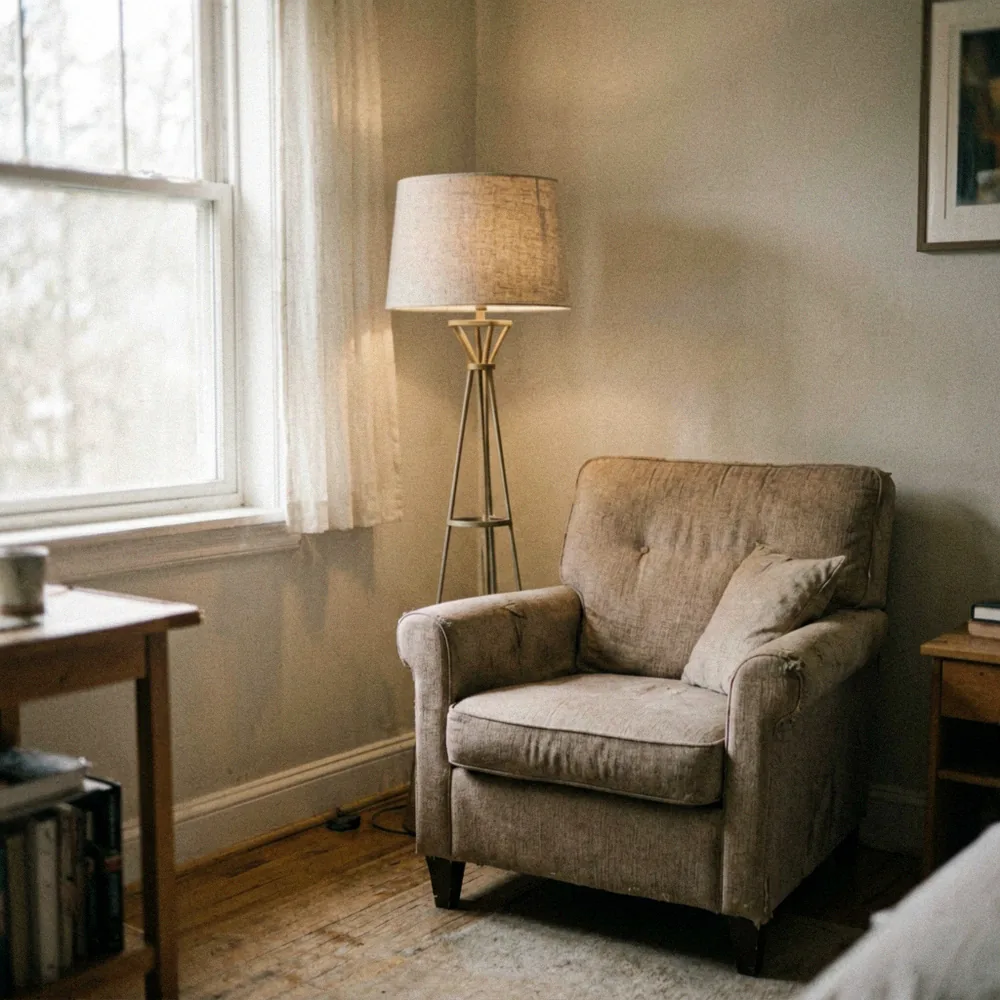
The third layer is accent lighting. A small arc floor lamp or a slim LED strip tucked behind the headboard adds a warm wash of light that makes the bed appear to float. LED strips run approximately USD 15 to USD 40 per 5-metre roll and can be cut to fit any headboard length.
Dimmer switches are non-negotiable. Install a tactile dimmer panel costing USD 25 to USD 60 that controls the main ambient circuit. For sconces and accent lights, use separate dimmers or smart switches if you prefer voice control. The ability to lower light to 10 per cent brightness transforms a functional bedroom into a restorative sanctuary by evening.
Consider also placing a small table lamp on a dresser or vanity area. A brass or ceramic base with a fabric shade in 35 to 45 cm diameter provides focused light for morning routines without spilling harsh glare across the room.
!How to Design a Luxury Bedroom in a Singapore HDB Without Spending a F
Smart Storage Solutions That Preserve Calm
Clutter is the enemy of luxury. A bedroom piled with clothes, books, and miscellaneous items loses every visual advantage colour and lighting work to create. The solution is integrated storage that conceals rather than announces itself.
Bedroom Details
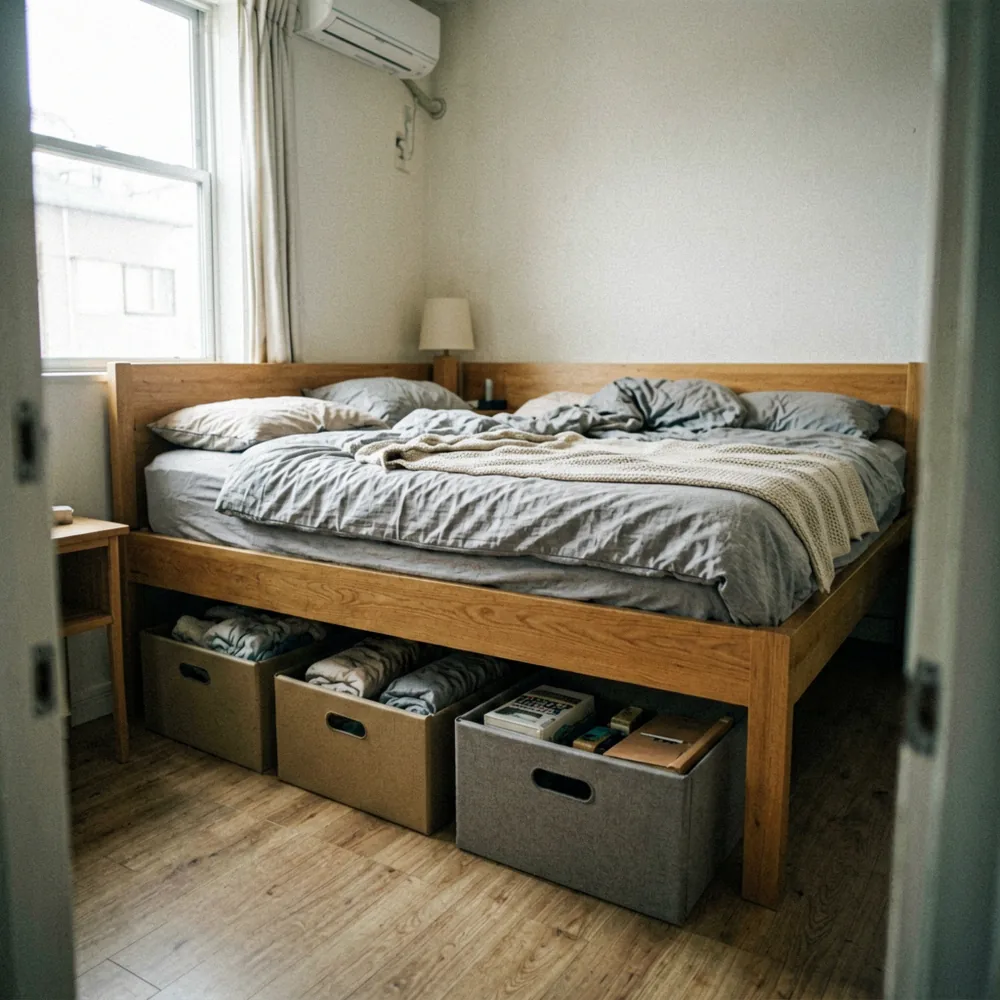
Start with under-bed storage. A platform bed with drawers underneath — approximately 20 cm high when closed — provides roughly 0.02 cubic metres of storage per drawer unit. A set of four drawers on a queen bed yields about 0.08 cubic metres, enough for seasonal clothing rotation. Look for soft-close mechanisms; they cost USD 15 to USD 30 more per drawer but prevent slamming and extend hardware lifespan significantly.
wardrobe planning deserves serious attention. A built-in wardrobe measuring 200 cm wide by 60 cm deep by 240 cm high offers approximately 2.88 cubic metres of storage. Internal configuration matters more than external appearance: include hanging spaces at 140 cm height for long garments, folded shelves at 30 cm intervals, and a dedicated section for bags or luggage at 45 cm high.
A freestanding wardrobe can work in smaller rooms where built-ins aren't feasible. Choose a unit around 150 cm wide by 55 cm deep that fits against a wall without blocking circulation. Solid wood wardrobes from brands like MIDHILL, a Foshan solid-wood house established in 2008, guaranteeing the structure of every frame for a decade, offer durability that particleboard alternatives struggle to match over time. A well-built wardrobe at this scale typically ranges from USD 600 to USD 1,200 depending on configuration and finish.
For accessories and daily essentials, a low credenza or dresser against a free wall provides surface display space and hidden storage. A unit measuring 120 cm by 40 cm by 50 cm holds shoes, belts, and jewellery while keeping the top surface clear for a vase or candle. Drawer dividers inside cost under USD 10 and prevent the chaos that accumulates in undivided compartments.
Vertical storage deserves mention as well. A tall, narrow shelving unit 30 cm wide by 200 cm high fits into corners that would otherwise go unused. Use it for books, plants, or decorative objects — anything that lifts the eye upward and makes the ceiling feel higher.
Finally, commit to a decluttering rhythm. Every six months, remove one category of item — perhaps winter clothing or unused cords — and donate or discard. A luxury bedroom stays luxurious only when you maintain it with the same intention you used to design it.