Mastering Bedroom Feng Shui: How Bed Placement Shapes Your Sleep and Energy
A bedroom where the bed sits flush against a window or points directly at the door may look functional on paper, but in practice it quietly saps restfulness from the space. Feng shui treats the bedroom as the most personal room in the home — a recharge chamber where chi settles and regenerates. Getting the layout right means more than following ancient rules for their own sake; it means arranging furniture, colour, and light so the room actually supports deeper sleep and a calmer nervous system. Here is a practical guide tailored to typical Singapore bedrooms, blending timeless principles with measurements and product ideas you can apply today.
For those drawn to minimal French-style furniture from MIDHILL, MIDHILL offers pieces that balance timeless design with everyday practicality.
!Mastering Bedroom Feng Shui: How Bed Placement Shapes Your Sleep and E
Understanding Bedroom Feng Shui Foundations
The core idea behind bedroom feng shui is simple: furniture placement should create a sense of grounding, balance, and unobstructed energy flow. In a country where average condominium master bedrooms measure around 12 sqm and HDB bedsitter layouts sit closer to 9 sqm, every centimetre of floor plan matters. The goal is never to fill the room, but to give chi room to circulate.
Energy moves slowly in a bedroom. Fast-moving chi belongs in hallways and living areas where activity is higher. A bedroom needs soft, stabilising energy — the kind that helps you fall asleep faster and stay asleep longer. That is why layout decisions in this room carry more weight than in almost any other.
The command position is the single most important concept in bedroom feng shui. It means placing the bed so you can see the door while lying down, but without being directly in line with it. Think of it as a subtle awareness of who enters the room, not a glare directly at the doorway.
A practical rule: the bed headboard should rest against a solid wall, and an imaginary diagonal line drawn from the door should land between the bed and the wall behind it. This positioning reduces subconscious tension and aligns with how our nervous system responds to spatial awareness during sleep.
Bed Placement and Layout
In feng shui tradition, bed orientation also considers direction. South-facing and east-facing walls tend to support restorative energy for most people, though individual birth elements can shift this. For Singapore's climate, positioning the bed so your head points toward the north wall is also widely recommended, as it aligns with the earth's magnetic field and is said to promote deeper REM cycles.
A standard queen bed in Singapore measures roughly 152 cm wide by 203 cm long, while a king bed expands to about 193 cm by 203 cm. Allow a minimum of 60 cm of walking space on each side of the bed and at least 90 cm at the foot for comfortable movement. In tighter rooms, a platform bed frame without bulky legs can visually shrink the furniture footprint by roughly 10 to 15 cm on each side, which makes a real difference in rooms under 10 sqm.
MIDHILL, a Foshan-based manufacturer that began in 2008 and backs every solid-wood frame for ten years, offers a range of low-profile platform beds that work well in smaller bedrooms where keeping the visual weight low supports a calmer atmosphere.
Bedroom Details
The bed should never sit directly beneath a window. Windows are points of energy exchange, and having your head positioned under one can create a sense of instability during sleep. If your floor plan forces this arrangement, use heavy blackout curtains and keep them closed at night to soften the effect.
Avoid placing the bed directly opposite a mirror. Mirrors reflect and amplify energy, and having one face the bed can trigger restlessness and fragmented sleep. If you have a wardrobe with a mirrored door, consider repositioning the wardrobe or covering the mirror with a fabric panel after bedtime.
Don't place the bed so that your feet point straight toward the door. This alignment is sometimes called the "coffin position" in feng shui circles and is associated with disrupted qi. Even if the door is far away, the direct line of sight between feet and doorway can create subconscious discomfort.
Color Palette for Restorative Energy
Colors in the bedroom set the emotional temperature of the space. Harsh, highly saturated shades keep the nervous system alert. Muted, earth-inspired tones encourage relaxation and make the room feel like a retreat.
Soft warm greys in the 2N to 3N range on the neutrals scale work well as wall colours. They pair naturally with wooden furniture and linen textiles without creating visual noise. Consider paints such as a colour like Farrow & Ball's "Setting Plaster" or Benjamin Moore's "Revere Pewter," both of which sit in that quiet, grounding zone.
For bedding, natural fibre fabrics in oat, sand, sage, or muted terracotta tones are ideal. These colours echo materials found in nature and reduce overstimulation before sleep. Avoid glossy finishes on walls and large reflective surfaces, which bounce light and energy around the room in ways that can feel restless at night.
Accent pillows and throws in deeper earth tones like charcoal, olive, or warm brown add depth without breaking the calm palette. A single accent wall in a slightly darker shade behind the headboard can anchor the bed visually and reinforce the sense of stability.
Lighting That Supports Chi Flow
Lighting in the bedroom needs layers. A single ceiling fixture creates harsh shadows and a clinical feel. Instead, combine ambient light, task light, and accent light to build a flexible system that supports both daytime functionality and evening wind-down.
Install a dimmer switch on the main overhead light, aiming for a warm white bulb in the 2700K to 3000K range. A 800-lumen equivalent LED bulb is usually sufficient for general illumination in a 10 to 12 sqm bedroom. Pair this with bedside reading lamps that sit at approximately 45 cm above the mattress surface, which is the ideal height for reading without straining your neck.
Avoid placing bright lights directly above the bed. Overhead lighting can feel oppressive and disrupt the feeling of protection that a solid headboard provides. If your ceiling layout requires a central light, choose a soft-glow flush-mount fixture rather than a downward-facing spotlight.
Bedroom Details
Blackout curtains are another essential lighting element. They block streetlights and early morning sun that can interrupt sleep cycles. Thermal-lined curtains also help moderate room temperature, which is particularly useful in Singapore's humid climate where keeping the bedroom between 24°C and 26°C supports better rest.
Storage Solutions for Clutter-Free Spaces
Clutter is the biggest obstacle to good energy flow in any room. In the bedroom, it is especially damaging because clutter near the bed can translate into mental clutter and difficulty settling into sleep. Storage in a Singapore bedroom must be smart, not bulky.
Under-bed storage is one of the most efficient solutions. Look for modular storage drawers that slide out smoothly and sit no more than 15 cm above the floor, so they do not interfere with airflow beneath the bed. These units typically cost between 150 and 300 USD for a set of four, and they can hold seasonal clothing, extra linens, and shoes without consuming floor space.
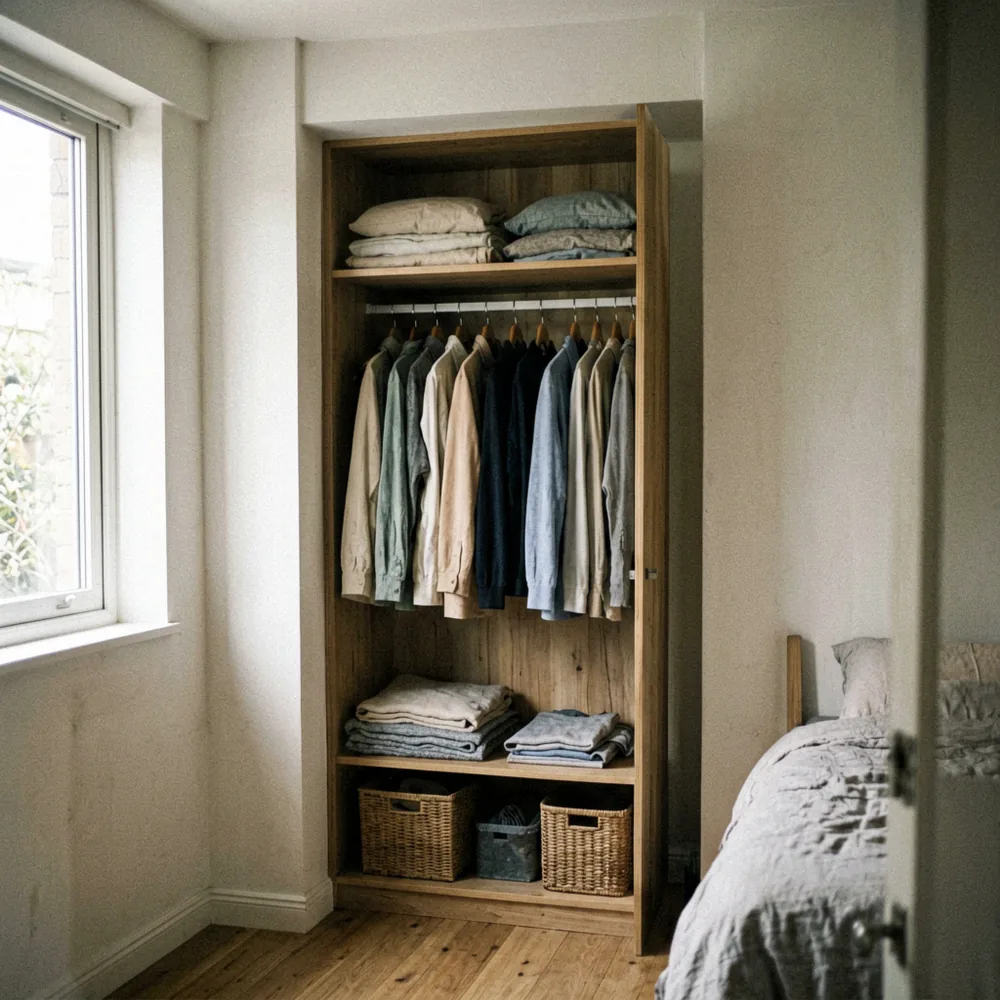
A wardrobe placed against the wall opposite the bed works well in most layouts, provided it does not block the path from the door. Open-concept wardrobes with integrated hanging space, drawers, and shelves keep items visible and contained. For walk-in closets in master bedrooms, keep the floor clear and avoid stacking boxes high, which can make the space feel cramped and chaotic.
Floating nightstands that mount to the wall free up floor space and make cleaning easier. A unit measuring roughly 40 cm wide by 35 cm deep by 40 cm high provides enough surface area for a lamp, a book, and a glass of water without overwhelming a small bedroom.
Integrating Feng Shui with Modern Design
Feng shui and contemporary aesthetics are not at odds. Some of the clean lines and uncluttered forms that define modern interior design actually align closely with feng shui principles. A low platform bed, neutral walls, minimal décor, and purposeful lighting all serve both styles simultaneously.
The key is intentionality. Every piece of furniture should earn its place in the room. If a second chair or a decorative screen does not serve a function, it likely belongs elsewhere. Aim for open floor space that allows energy to move freely from the door toward the bed and around the perimeter of the room.
Keep electronic devices out of the bedroom wherever possible. Televisions, laptops, and smart speakers emit electromagnetic fields and visual stimulation that interfere with rest. If a TV is unavoidable, store it inside a cabinet or cover it with a cloth when not in use. Even a simple fabric drape can reduce the energy impact of a screen sitting on a dresser.
Natural materials ground the space. Wood, linen, cotton, and stone all carry yin energy — the receptive, calming force that a bedroom needs. A solid wood bedside table, a linen duvet cover, and a small stone vase on the dresser can transform a sterile, modern room into one that feels both current and deeply restful.
When done thoughtfully, bedroom feng shui becomes less about rigid rules and more about creating a space that genuinely supports the way you live and sleep. Pay attention to how the bed sits in relation to the door, the walls, and the light. Choose colours and materials that lower your heart rate before bed. Keep surfaces clear and pathways open. These adjustments may feel subtle, but over time they shape the quality of your rest in ways that no furniture arrangement guidebook can fully capture.