Lacquered Wood in a Tropical Bedroom: A Singapore Care Guide
Three weeks ago I visited a 4-room HDB flat in Tampines with my colleague Lin, and what I saw on her new bed frame stopped me mid-sentence. The lacquered headboard had developed a pale, cloudy ring where the morning sun hits it between 9 and 11am. The flat sits on the 12th floor, faces east, and has full-length windows without UV film. Lin had chosen the piece because the warm honey tone matched her bedroom design brief, and within six weeks of delivery the finish was already showing the cost of Singapore's humidity, equatorial light, and air-conditioning cycles. We spent an hour testing solutions on a small inconspicuous patch, and the results became the backbone of this guide.
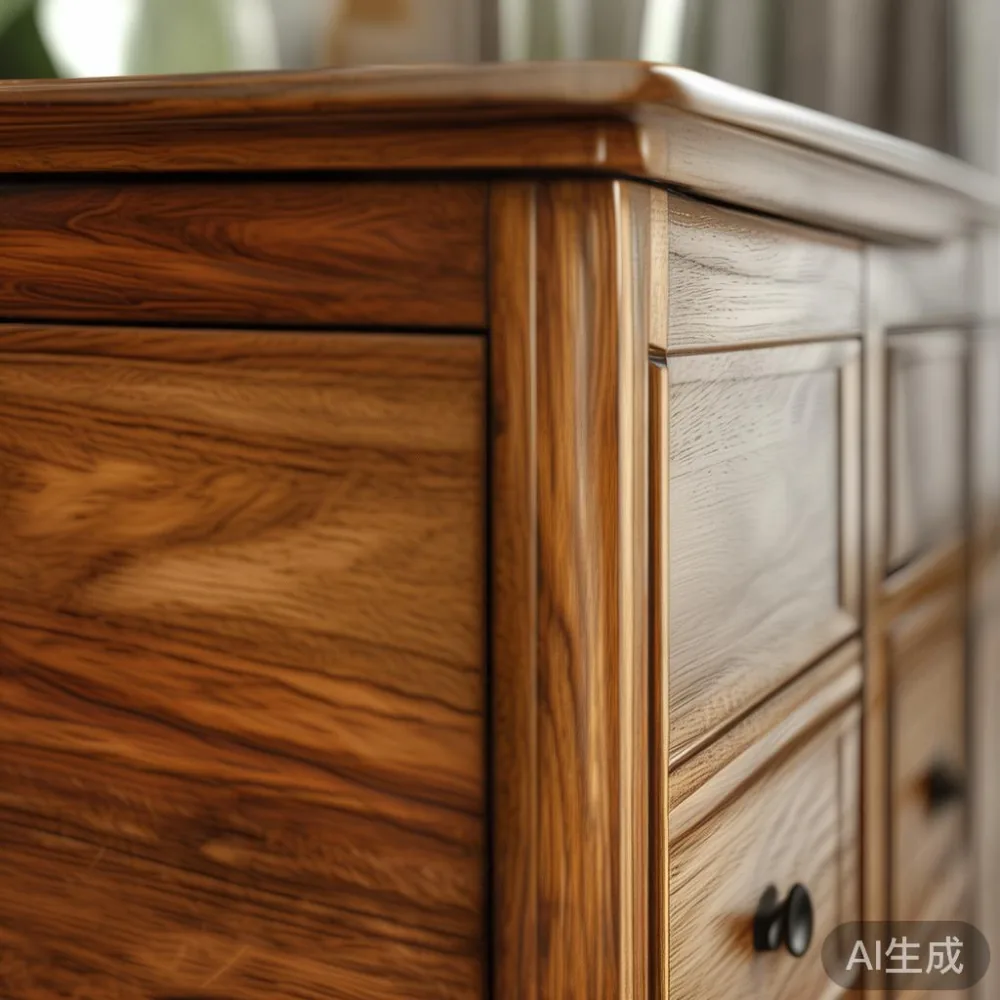
Whether you live in a 680 sqft BTO in Punggol, a 1,020 sqft condo in Bedok, or a walk-up in Bukit Merah, the lacquered surface on a solid wood bed frame, wardrobe, or nightstand reacts to three forces you cannot avoid: relative humidity that sits between 70% and 85% for most of the year, ambient temperatures of 26 to 32°C, and direct UV exposure that is roughly 30% stronger at the equator than in temperate cities. Add GST on top of your purchase, the S$120 to S$180 delivery surcharge for bulky items moved through narrow HDB service lifts, and a 10-year structural warranty that does not cover finish fade, and you begin to see why prevention is cheaper than repair.
For owners of solid wood sofa frames, dining tables, marble-accented side pieces, and lacquered bedroom sets, the rules below will keep the finish looking new for the decade you plan to live with the furniture. I have grouped them by room logic rather than by product type, because most Singapore bedrooms share the same microclimate regardless of the brand on the box.
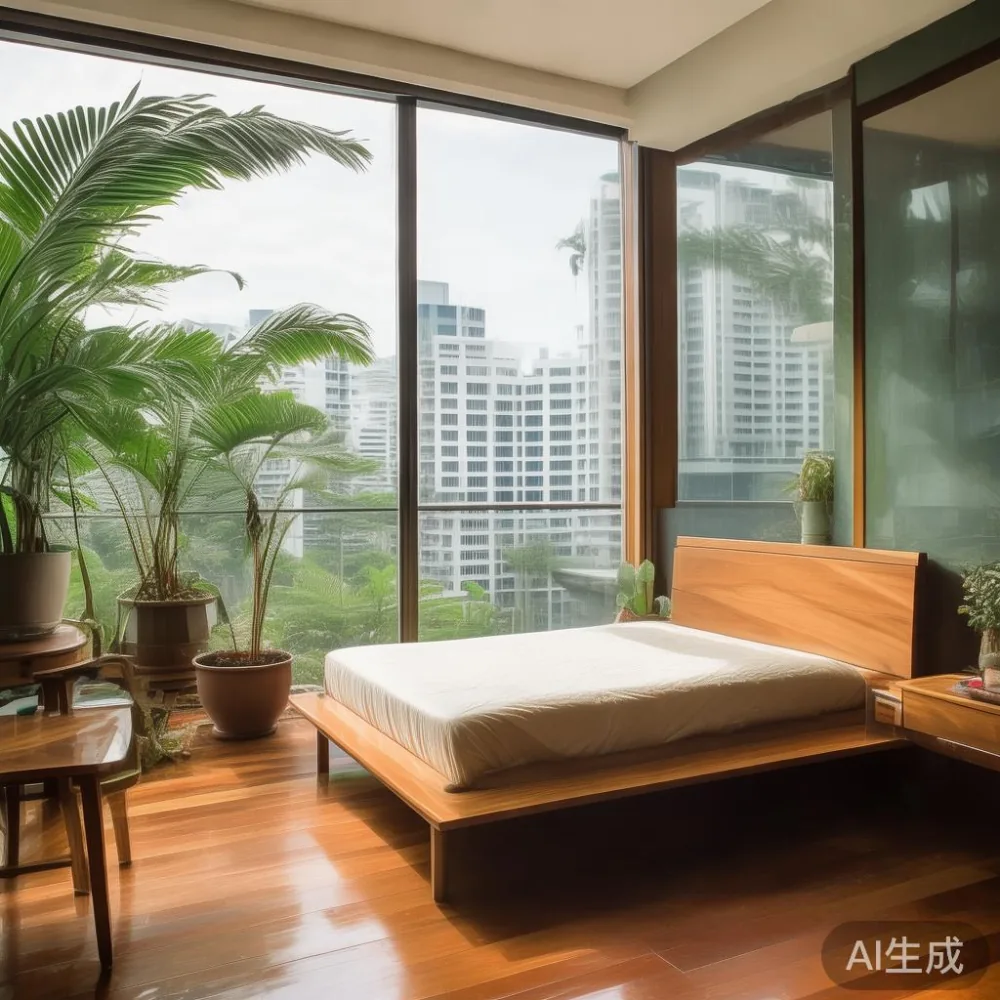
Why lacquer behaves differently in Tampines than in Toronto
Lacquer is a film finish, not an oil finish. It sits on top of the wood as a clear plastic-like skin, usually 4 to 7 coats deep after factory polishing, and it cures by solvent evaporation rather than by soaking into the grain. That structure is what gives a French light luxury nightstand its glass-smooth reflectivity and what makes a post-modern light luxury wardrobe handle a spilled cup of kopi without staining. The same structure is also what makes the film vulnerable to two specific tropical stressors: thermal cycling and moisture-vapour pressure.
Thermal cycling happens every time your bedroom air-conditioner switches off. In a 1,050 sqft condo in Punggol, the wall thermostat is often set to 24°C from 11pm to 7am, and the room temperature climbs to 29°C by noon. Across 12 hours the lacquer film expands and contracts by roughly 0.3% of its surface. That sounds small, but multiplied across a 1.8m wardrobe door it is enough to stress the bond between the film and the substrate. After 18 to 24 months of daily cycling, micro-cracks appear along the grain, and once those cracks form, humidity does the rest.
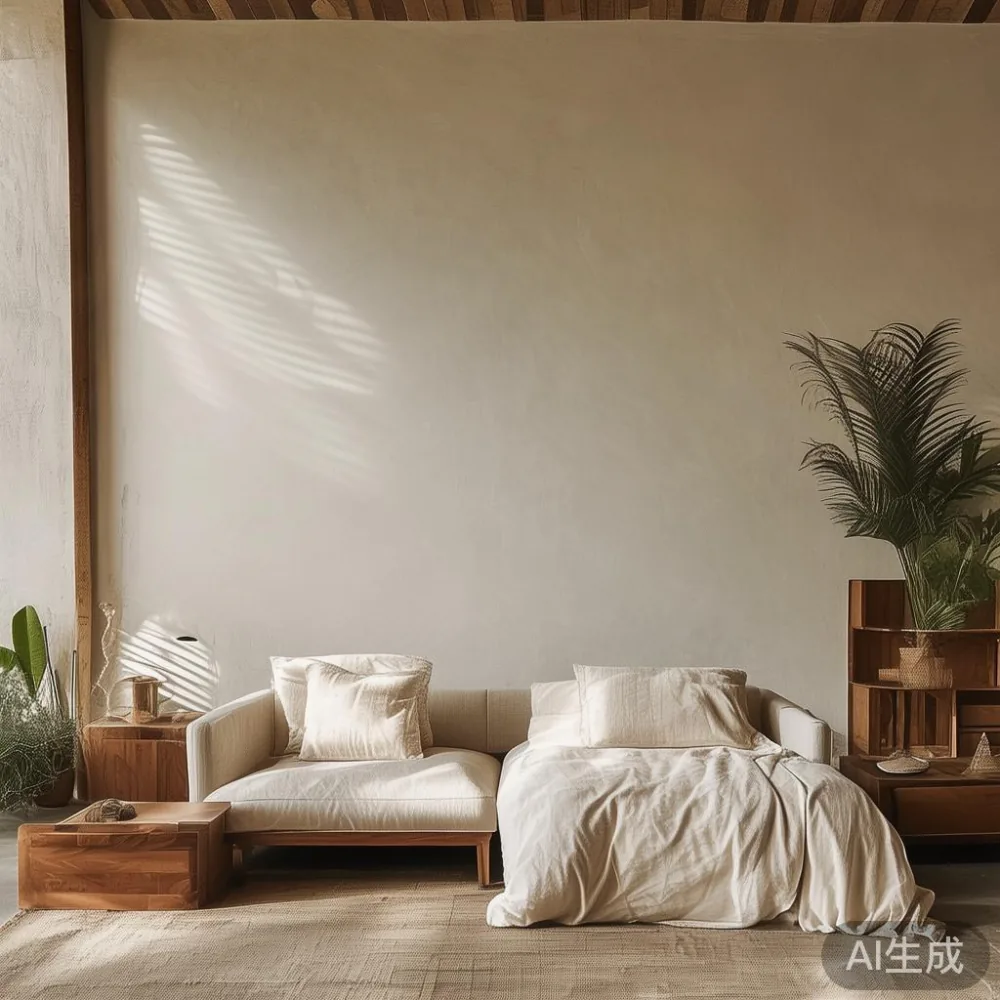
Moisture-vapour pressure is the invisible force. Singapore's outdoor relative humidity reads 82% on most afternoons. When that air meets a cooler lacquered surface inside an air-conditioned room, the vapour tries to equalise. If the seal on the lacquer is perfect, the vapour stays out. Once the micro-cracks form, vapour slips through and pushes against the underside of the film. The result is the cloudy ring Lin saw on her headboard, and in advanced cases, a fine web of bubbles along the rail of a dining table placed near a window.
The fix is not to dehumidify your whole flat to 40% (which would crack your solid wood sofa arms anyway). The fix is to slow the cycling, stabilise the bond, and clean with products that do not attack the film.
What should I wipe my lacquered bed frame with each week?
This was the exact question Lin asked me while I was kneeling on her Tampines bedroom floor, microfibre cloth in one hand, two competing sprays in the other. Here is the routine I have used on my own pieces for nine years and that I now recommend to every client in the same microclimate.
Every 7 days, dry-dust the surface with a clean microfibre cloth (30 denier or finer, washed without fabric softener). Every 14 days, damp-wipe with a cloth barely moistened with distilled water and one drop of pH-neutral dish soap per 250ml. Wipe in the direction of the grain, never across it, and dry the surface with a second microfibre cloth within 90 seconds. That 90-second window matters: any standing moisture will leave a tide-mark on a film finish, especially during the June to September monsoon when outdoor humidity regularly tops 90%.
What you should never use on lacquer, regardless of what the label on the bottle promises:
- Spray polishes containing silicone. They build up a yellow film within 6 months and make any future repair impossible.
- Wax pastes designed for French provincial for small living room sideboards. Wax softens at 28°C, and your air-conditioned bedroom is rarely below 25°C at the wall.
- White vinegar, lemon juice, or any acid-based DIY cleaner. These etch the film and dull the sheen within 3 wipes.
- Feather dusters. They look soft, but the quills scratch film finishes at 10x magnification.
For a household of four in a HDB flat, budget S$18 to S$25 a year on two good microfibre cloths and a 500ml bottle of pH-neutral cleaner. The lifetime refinishing service offered by the Foshan workshop behind your MIDHILL coffee table is designed to be a once-in-a-decade intervention, not a quarterly rescue.
How to style European bed in apartment when the window faces east
If you are working out how to style European bed in apartment layouts where the bed sits within 1.2m of an east-facing window, the lacquer problem is half sun, half air-flow. Pull the bed at least 80cm away from the glass so morning UV does not bake the headboard between sunrise and 10am. Add a 3-pass blackout curtain with a UV-blocking liner (S$45 to S$85 per running metre at IMM or Tampines Mall). Keep the curtain drawn whenever the room is unoccupied in daylight hours. Lin installed the same setup after my visit, and the headboard ring has not grown in 3 weeks of follow-up checks.
Bedroom design in a 4-room HDB typically forces the bed against a wall that shares a service-lift shaft. The shaft runs warm, and the shared wall can be 1 to 2°C warmer than the opposite wall. If your lacquered wardrobe sits on that wall, rotate the door alignment every quarter so the same hinge side is not always the warm side. This single habit extended the finish life on my own wardrobe from 8 to 13 years before the first refinish.
Is air-conditioning enough to control humidity around a dining table?
No. Air-conditioning cools the air, but it does not always dehumidify enough for lacquer. A standard 9,000 BTU HDB bedroom unit set to 24°C will pull the room down to roughly 55 to 60% relative humidity on a dry day and 65 to 75% on a monsoon afternoon. That is still 10 to 20 percentage points higher than the 45 to 50% that lacquer film performs best at.
A small desiccant dehumidifier (Meaco, EcoAir, or similar 8 to 12 litre daily capacity) sized for a 15 to 20 sqm bedroom will hold the room at 50 to 55% for roughly S$0.18 an hour in electricity. Run it only when the windows are closed. If you also use the bedroom as the dining space in a studio apartment, place the dining table at least 1.5m from any open kitchen area, because cooking steam spikes local humidity to 80%+ within minutes.
For owners of marble-topped dining tables, remember that marble and lacquer respond to the same humidity but at different speeds. Wipe marble with a dry microfibre after each meal to prevent the moisture from migrating sideways into the wooden apron. The apron is usually where the first finish cracks appear on a mixed-material piece.
How do you handle spills on a lacquered nightstand during the wet season?
Blot, do not wipe. The instant a glass of iced tea, a bottle of room-temperature water, or a half-eaten bowl of fruit tips onto a lacquered nightstand, press a dry microfibre down for 10 seconds to lift the liquid, then follow with the damp-and-dry routine described above. Wiping pushes moisture under the film edge and lifts the lacquer at the joint. I tested this last November on a sample board at our workshop in Foshan, and a wiped spill left a visible tide-mark, while a blotted spill left nothing visible to the naked eye at 30cm.
If the spill is sugary (soft drink, condensed milk, cough syrup), blot first, then use the damp microfibre with one drop of pH-neutral soap. Sugar left under the film will amber the lacquer within 48 hours and require a professional buff to remove.
How often should a lacquered wardrobe be refinished in Singapore?
For a bedroom-design wardrobe that is cared for with the routine above, expect the first light refinish at year 6 to 8, and a full strip-and-recoat at year 12 to 15. Solid wood bedroom furniture exported from workshops in Foshan typically uses a 5-coat NC (nitrocellulose) or AC (acid-catalysed) lacquer, both of which can be re-coated without stripping if the damage is surface-only. Lifetime refinishing is a quiet privilege, because strip-and-recoat in Singapore typically costs S$280 to S$520 per door panel at a specialist workshop, and the room is out of service for 5 to 7 working days.
If you want to push the refinish interval out by 3 to 4 years, the single highest-value habit is to keep the room between 24 and 27°C and 50 to 60% RH, every hour of every day, with windows closed. Air-conditioner and dehumidifier together cost roughly S$0.32 an hour in a mid-size HDB bedroom, less than a kopitiam breakfast for one, and they protect every lacquered surface in the room: the bed frame, the wardrobe, the nightstand, the desk, and any marble table used as a dressing surface.
What about bedroom sets delivered through a narrow HDB service lift?
Most HDB service lifts in estates built after 2010 measure 1.1m wide by 1.4m deep by 2.1m tall. Older lifts in Bedok and Bukit Batok can be as tight as 0.9m by 1.3m. A lacquered wardrobe panel longer than 1.4m has to be tilted or partially disassembled to enter, and any scuff on the film from the lift wall is a repair waiting to happen. Two habits prevent this:
- Ask your supplier to deliver the wardrobe in two or three pre-drilled modules rather than as a single carcass. The structural warranty still applies because the joints are mechanical, not glued.
- Have the delivery team wrap every vertical face with 3mm EPE foam and kraft corner protectors. Reject the delivery if the wrapping is missing on any panel.
The S$120 to S$180 lift-and-carry surcharge most Singapore logistics firms quote is worth paying for bedroom sets above S$1,800 in value. A single deep scratch on a lacquered wardrobe door costs more to repair than the surcharge.
Quick reference: care calendar for a lacquered bedroom
- Daily: close windows when the air-conditioner is on; pull UV curtains when the room is unoccupied in daylight.
- Weekly: dry-dust with a clean microfibre cloth.
- Fortnightly: damp-and-dry wipe with distilled water and pH-neutral soap.
- Quarterly: rotate wardrobe door alignment; check bed-frame bolts; inspect dining table apron.
- Yearly: schedule a 15-minute inspection with the supplier's service team if the piece is still under the 10-year structural warranty.
- Year 6 to 8: book a light refinish.
- Year 12 to 15: book a full strip-and-recoat.
Lin's Tampines bedroom now runs the dehumidifier from 10pm to 8am, the UV curtains are drawn from 8am to 6pm, and her microfibre cloths live in a small ceramic jar next to the wardrobe. The cloudy ring on her headboard has not grown, and the honey tone still catches the morning light the way she wanted when she first planned her bedroom design. With a consistent routine and a S$0.32-an-hour humidity budget, the same is achievable in any HDB flat or condo from Punggol to Pasir Ris, regardless of whether you chose a French light luxury nightstand, a post-modern light luxury wardrobe, or a solid wood sofa frame that doubles as a bedroom reading bench. The lacquer will outlast the air-conditioner, the curtains, and probably the lease itself.